ETF vs. investment fund: key differences and which one to choose depending on your situation
Essential Points
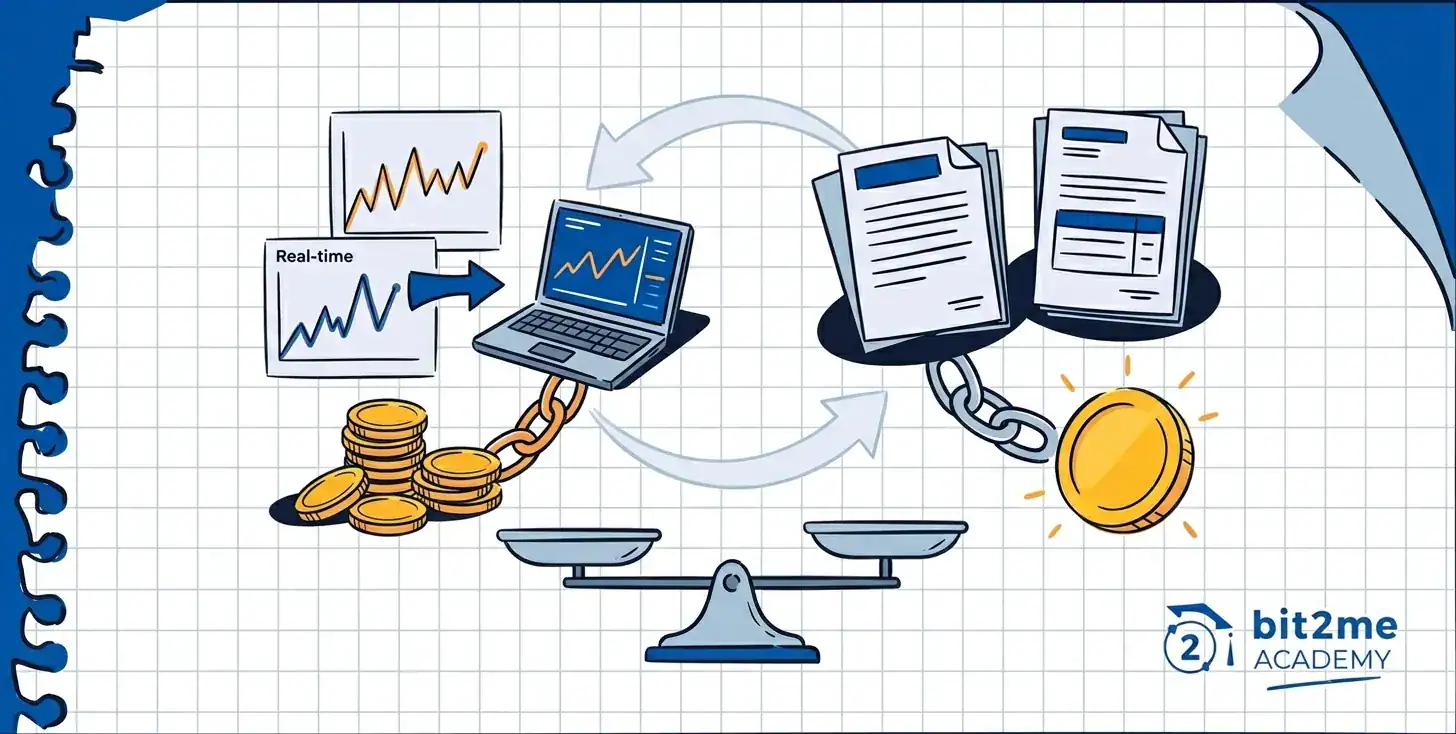
- ETFs are traded on the stock exchange in real time; funds are valued at the close of trading, which changes how and when you can trade.
- In Spain, funds allow capital to be transferred between funds without tax until the final redemption, an advantage that ETFs do not have.
- Indexed ETFs have TERs of between 0,05% and 0,25% per year, generally below that of actively managed funds, which is around 1-2,5%.
- For portfolios with frequent rebalancing, funds win due to the tax advantage; for very long horizons without rebalancing, the indexed ETF is hard to beat in cost.
The ETF vs. mutual fund debate has been on the table for years for any Spanish investor looking to build an efficient portfolio. Today, with more access platforms, a wider variety of products, and increasingly clear regulations, the choice between the two is not trivial: in Spain, there is a structural tax difference that can significantly impact your net returns in the long term.
In this article, we compare both vehicles using specific criteria: costs, taxation, liquidity, minimum investment amounts, and real-world use cases. By the end, you'll know when it makes sense to choose an ETF, when an investment fund is more suitable, and when the smart solution is to combine both.
ETF vs mutual fund: the key differences
Before delving into the details that truly matter, it's important to establish a common foundation: both ETFs and mutual funds are Collective Investment Institutions (CIUs). They pool the capital of multiple investors to invest collectively in a diversified basket of assets, whether stocks, bonds, commodities, or other instruments. The difference lies not in their underlying assets, but in how they are structured, traded, and taxed.
A traditional investment fund is subscribed to and redeemed directly with the fund manager or through an authorized distributor. It is not traded on any secondary market, and its price—the net asset value (NAV)—is calculated once a day at the close of trading. This means that when you place a subscription or redemption order, you don't know the exact price at which it will be executed until the following day.
An ETF (Exchange Traded Fund), as explained in detail in How does an ETF work?It works differently: it's traded on the stock exchange just like a stock, and you can buy or sell it at any time during market hours at a price visible in real time. This gives it operational flexibility that a conventional fund doesn't have.
This distinction in the trading mechanism has consequences for costs, taxation, and liquidity, which we will analyze below. It is precisely here that the ETF vs. investment fund debate becomes truly practical.
Costs: TER, fees and the real impact on your profitability
The TER (Total Expense Ratio) is the most widely used indicator for comparing the annual cost of a fund or ETF. It includes the management fee, custody fee, and other operating expenses of the vehicle, expressed as a percentage of assets under management.
Index ETFs are the cheapest on the market. Their TER ranges from 0,05% to 0,25% annually, depending on the index they track and the issuer. Large ETFs tracking the MSCI World or the S&P 500 from asset managers like Amundi, Vanguard, or iShares fall at the lower end of this range. Passively managed index funds are also competitive, with TERs between approximately 0,15% and 0,50%.
Actively managed funds are another category. Their typical TER ranges from 1% to 2,5% annually, which is four to ten times higher than a comparable index ETF. The problem is that this higher cost rarely translates into higher returns: according to data from the S&P Dow Jones Indices SPIVA Europe Scorecard, less than 25% of actively managed funds manage to outperform their benchmark index over a ten-year period.
The difference in TER may seem small in absolute terms, but its impact accumulates over time. A €50.000 portfolio growing at 7% annually for 20 years generates a final net worth of approximately €193.000 with a TER of 0,20%, compared to around €161.000 with a TER of 1,5%. The difference exceeds €30.000, solely due to management fees.
However, the TER cost isn't the only cost that matters. ETFs require a broker to trade, and some charge a commission on each buy and sell transaction. Furthermore, and this is crucial, every time you sell an ETF to rebalance your portfolio, you can trigger a tax event that incurs an additional cost. This brings us to the most important section of this comparison.

Main Cryptocurrencies Course
Basic levelBit2Me Academy We bring you a new course where you will learn everything you need to know about the most important cryptocurrencies that exist today.
Empezar ahora ›Taxation in Spain: the big difference between ETFs and funds
This is the section that can save you the most money—or cost you the most—in the long run if you invest from Spain.
The advantage of transferring between funds
In Spain, Article 94 of the Personal Income Tax Law establishes that it is possible to transfer capital from one investment fund to another without paying tax on the accumulated capital gains at that time. The tax is deferred until the final redemption, that is, until you convert the money into cash. The article [Transfer of funds: change funds without paying taxes](article C14) explains in detail how this mechanism works and how to apply it in practice.
A concrete example: you have an equity fund with €10.000 in accumulated capital gains. You decide to rebalance your portfolio and transfer that capital to a fixed-income fund or a fund with a different geographical focus. At that moment, you don't pay any taxes. The money that would otherwise have been taxed continues to work for you, generating returns. You will only pay taxes when you finally withdraw the money in cash, in the tax year in which that withdrawal occurs.
This has a direct implication: the longer the tax payment is deferred, the larger the base on which returns are generated during the deferral period. It's the same principle that makes compound interest so powerful, applied to taxation.
ETFs do not have this advantage
When you sell one ETF to buy another, a tax event occurs. If there are capital gains, they are taxed in the year of the sale and cannot be carried forward. This difference is not a minor detail: for an investor who rebalances their portfolio every one or two years, the accumulated tax cost of trading ETFs can erode a significant portion of the TER advantage they had over mutual funds.
Capital gains from ETFs and funds are taxed under the savings income tax base according to the following scale in force in 2025:
- 19% on the first €6.000 of profit
- 21% of €6.001 to €50.000
- 23% of €50.001 to €200.000
- 27% starting from €200.000
When does the tax cost of the ETF pay off?
The TER difference between an index ETF (0,10%) and an equivalent index fund (0,30%) is 0,20 percentage points per year. If you never rebalance or sell, this cost saving accumulates without being affected by taxation. For a very long horizon and without rebalancing, the ETF may be the most net-efficient option.
Conversely, if you rebalance a portfolio with significant capital gains annually, the tax cost of selling ETFs can far outweigh the TER savings. The fund regains the advantage through tax-free transfers. There's no one-size-fits-all answer: it depends on your investment horizon, the frequency of rebalancing, and the size of your capital gains.
Liquidity and accessibility: when and how you can buy or sell
The liquidity of both vehicles is sufficient for most individual investors, but they work differently and that difference has practical implications.
ETFs are traded on exchanges in real time during market hours. You can buy or sell at any time while the market is open, with price visibility before placing your order. This feature is valuable if you need immediate liquidity or want to execute trades with precise timing.
Investment funds, on the other hand, are subscribed to and redeemed at the closing net asset value (NAV) of the day. If you submit a redemption order before the fund manager's cutoff time (usually midday or 15:00 PM), it will be executed at the NAV of that same day. If you submit it afterward, it will be executed at the NAV of the following day. The money takes between one and three business days to become available in your account. For a long-term investor, this difference rarely matters in practice.
Accessibility also varies. To trade ETFs, you need an account with a broker that provides access to the markets where those ETFs are listed, such as Euronext, Xetra, or the London Stock Exchange. For mutual funds, you access them directly through the fund manager or an authorized distributor, without the product needing to be listed on a secondary market.
When should you choose an ETF and when should you choose an investment fund?
There is no single answer. The choice depends on your strategy, your time horizon, and how often you plan to adjust your portfolio. These are the criteria that determine which vehicle is best suited to each situation:
Choose an ETF if:
- Your time horizon is very long (more than 15 years) and you won't be rebalancing frequently. The TER advantage accumulates without any tax implications.
- You want access to very specific markets, sectors, or themes. ETFs offer thousands of options with real-time liquidity.
- You prioritize maximum flexibility for quick tactical adjustments and value knowing the exact price before trading.
- Your portfolio is simple and you are willing to assume the tax cost of each rebalancing because you rebalance infrequently.
Choose an investment fund if:
- You rebalance your portfolio regularly (every one or two years) and accumulate significant capital gains. The tax-free transfer is a real and quantifiable advantage.
- You want to change your investment strategy without triggering an immediate tax event.
- You prefer to operate without the need for a broker and manage everything through a single funds platform.
- You are in an active accumulation phase and plan to make regular contributions with frequent adjustments to the portfolio composition.
The key is that the difference between an ETF and an investment fund is not one of quality but of structure. Both can replicate the same index, with identical assets, at a similar cost if we compare equivalent passively managed products. Taxation and operational factors are the variables that tip the scales one way or the other.

Frequently asked questions about ETFs vs. investment funds
What is the main difference between an ETF and an investment fund?
The fundamental difference lies in how each vehicle is traded. An ETF trades on the stock exchange in real time during market hours, like a stock. An investment fund is subscribed to and redeemed directly with the management company at the closing net asset value (NAV), without the product being traded on any secondary market.
Why do funds have a tax advantage over ETFs in Spain?
Because Spanish regulations (Article 94 of the Personal Income Tax Law) allow the transfer of capital from one fund to another without paying tax on the capital gains accumulated up to that point. The tax is deferred until the final cash redemption. ETFs do not have this mechanism: each sale generates a taxable event if there are gains.
Can I transfer an ETF to a fund without paying taxes?
No. The tax-free transfer regime applies only between investment funds registered in Spain. An ETF is a different vehicle from a regulatory standpoint, and its sale always triggers a tax event if there are capital gains.
How much does an ETF cost on average compared to an actively managed fund?
A global index ETF typically has a TER of between 0,05% and 0,25% per year. A traditional actively managed fund usually has a TER of between 1% and 2,5% per year. The difference may seem small in percentage terms, but its cumulative impact on long-term net worth is very significant.
Are actively managed funds worth their higher cost?
In most cases, the data doesn't support this. According to the S&P Dow Jones Indices SPIVA Europe Scorecard, less than 25% of actively managed funds outperform their benchmark over a ten-year period. A higher total expense ratio (TER) rarely translates into superior net returns.
When is an ETF better than an equivalent index fund?
When your investment horizon is very long, you don't plan to rebalance frequently, and you want the lowest possible management costs, the ETF's TER savings accumulate without being offset by the tax costs of rebalancing. This is also true when you need access to very specific themes or markets that aren't available in a fund format.
Can I combine ETFs and funds in the same portfolio?
Yes, and it's a common strategy among investors with more established portfolios. A typical approach is to use index funds for the core of the portfolio—where tax pass-through is most valuable during rebalancing—and ETFs for specific exposures or tactics where operational precision matters more.
What are accumulation ETFs and why do they matter for tax purposes?
Accumulation ETFs automatically reinvest dividends within the fund, rather than distributing them to the investor. This avoids the tax implications of dividend payments and allows capital to grow more efficiently through compound interest. For long-term accumulation investors, accumulation ETFs are generally more efficient than distribution ETFs.
What is the minimum investment for an ETF or a fund?
For an ETF, the minimum investment is the price of a share on the secondary market, which can range from a few euros to several hundred depending on the ETF. For funds, the minimum varies considerably depending on the manager: there are index funds accessible from €1 on digital platforms and others with minimums of €1.000 or more with traditional managers.
What happens to ETFs and funds if I change platforms or brokers?
If you have investment funds and want to move them to another platform, you can request a transfer between asset managers without incurring taxes, as long as the funds remain in fund format. If you have ETFs, changing brokers doesn't trigger a tax event in itself—the ETF is simply transferred to the new account—but any sale will be taxable if there are capital gains.


«Investment in cryptoassets is not fully regulated, may not be suitable for retail investors due to high volatility and there is a risk of losing all invested amounts»
Share this article!Continue learning
Best crypto card in Spain: what to look for before choosing one
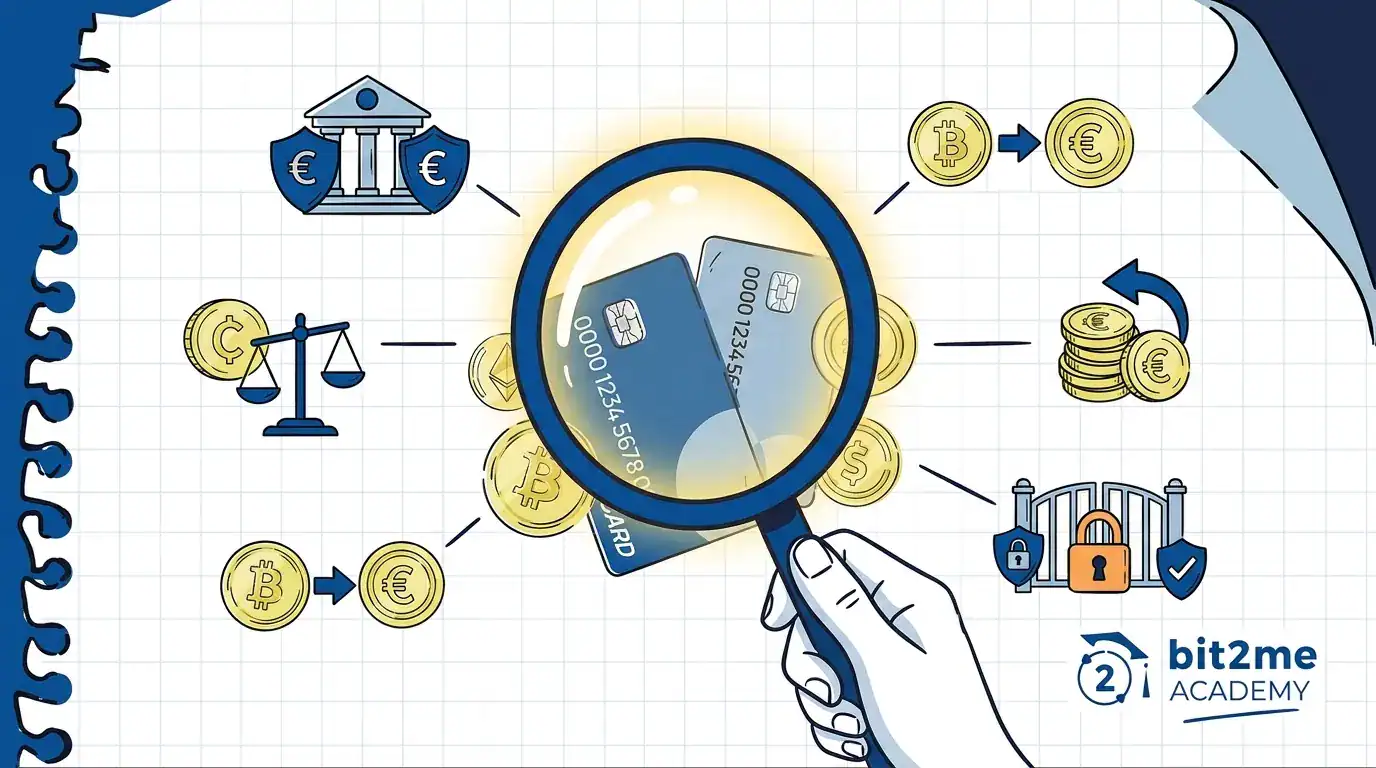
What to look for when choosing a crypto card in Spain: regulated issuer, conversion, fees, cashback, limits and security, without comparing brands or rankings.
Taxation of shares in Spain: taxation and the two-month rule
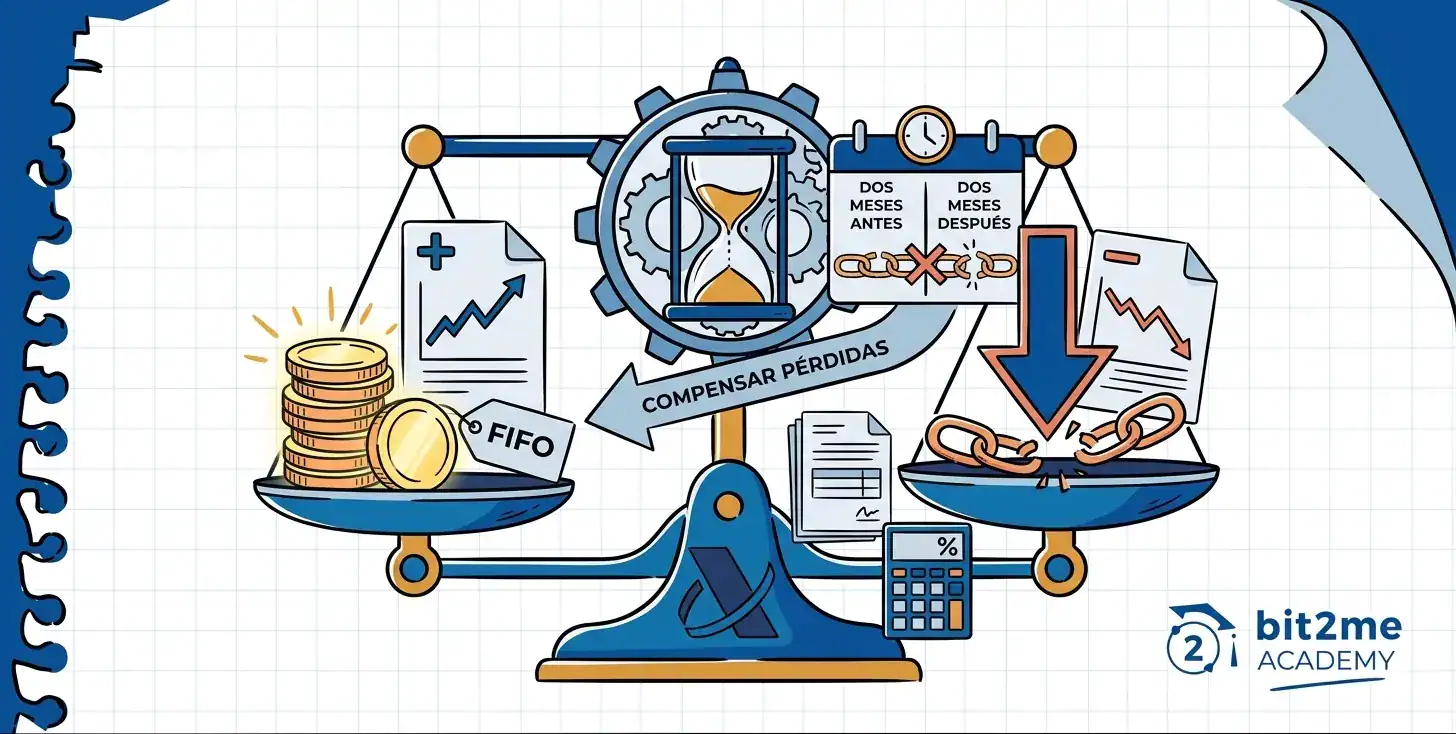
Taxation of shares in Spain: savings base, personal income tax brackets and the two-month rule (art. 33.5 LIRPF) explained step by step, with examples.
ETFs to generate income: fixed income and dividends
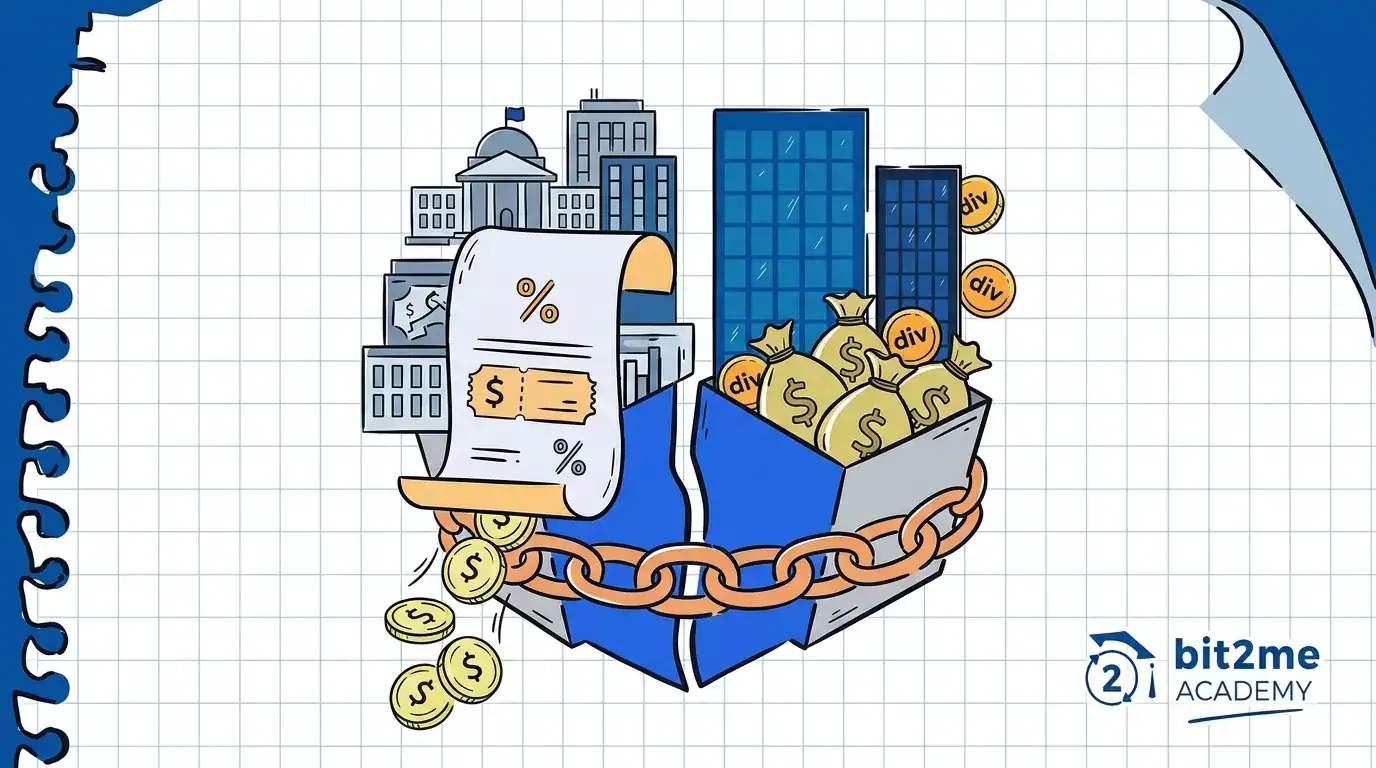
Fixed income ETFs and dividend ETFs: two ways to generate regular income. Compare risks, taxation, and accumulation vs. distribution before choosing.
ETFs vs stocks: advantages of instant diversification
ETFs or individual stocks? Discover the key differences, when each option is right for you, and how the instant diversification of ETFs changes the game.