How to buy bitcoin in Spain safely: a step-by-step guide
Essential Points
- Acquiring your first bitcoin requires identity verification (KYC) because regulated platforms must confirm who you are before allowing you to trade.
- The process follows a logical order: fund in euros, choose the amount, confirm the transaction, and store the acquired bitcoin in a wallet.
- It is useful both for first-time buyers and for those who have already used another platform and only need to adapt the flow to the new provider.
- The wallet where the bitcoin is stored after the purchase can be custodial or non-custodial, and that choice changes how much responsibility you assume yourself.
More and more people in Spain are considering buying Bitcoin, either because they want to understand firsthand how this digital asset works or because they already know about it and are looking to take the plunge with a regulated platform. The most common question isn't "what is Bitcoin," but something more practical: what documents do I need, how do I transfer euros, and what steps do I follow to ensure my first transaction goes smoothly? This guide bridges the gap between understanding Bitcoin and knowing how to buy Bitcoin safely in Spain.
In the following sections, you'll see what you need before you begin, how identity verification works, how to fund your account in euros, and the specific steps to complete the transaction smoothly. We'll also explain where to store your purchased Bitcoin once the transaction is complete, what mistakes to avoid the first time, and what basic security measures you should implement from day one.
Important: This article is for educational and informational purposes only. The content does not constitute financial, legal, or tax advice. Cryptocurrencies are high-risk assets and their value can fluctuate significantly. Consult a qualified professional before making any acquisition or participation decisions.×What do you need before you start buying bitcoin?
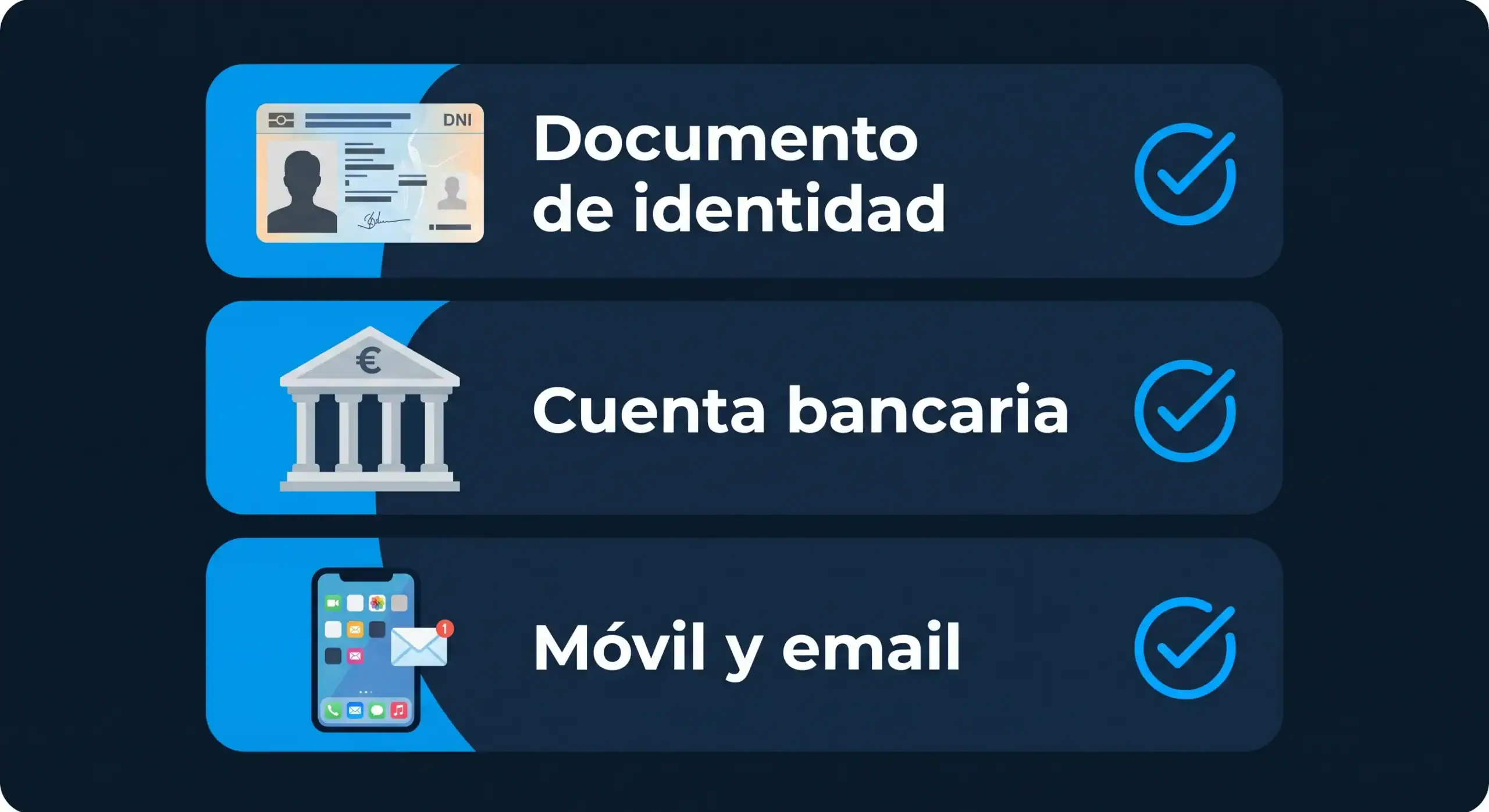
Before starting the process, it's a good idea to have a couple of things on hand to streamline each subsequent step. The first is a valid identity document—national ID card, foreign resident's card, or passport, depending on your situation—because regulated platforms need to verify your identity before allowing you to trade. The second is a bank account in your name, which you'll use later to transfer euros to your user account on the exchange platform.
You'll also find it helpful to have access to your email and mobile phone, as both are used to confirm registration and activate additional security measures. You don't need any prior technical knowledge or experience with digital assets: the process is designed so that anyone can complete it by following the correct order. It is advisable, however, to choose a platform that operates within the European regulatory framework, something you should review in detail in the general guide of Bit2Me Academy on how to choose a regulated exchange in Spain within the cluster of exchanges and wallets.
Identity verification: what is KYC and why is it mandatory
KYC (Know Your Customer) is the process by which a regulated platform confirms the true identity of the person registering. It's not a company whim: it's a legal obligation stemming from European anti-money laundering regulations, applicable to any authorized cryptocurrency service provider operating in the European Union.
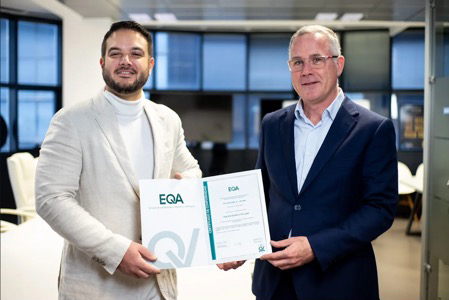
BITCOINFORME, PSC, SL, which operates under the trading name BIT2ME, is a crypto asset service provider authorized and regulated by the National Securities Market Commission (CNMV) In Spain, in accordance with Article 59 of Regulation (EU) MiCA, and therefore this step is part of the process.
In practice, KYC usually consists of three simple steps: uploading a photo of your ID, completing a brief facial verification using your phone's camera, and confirming some personal information such as your address. The process typically takes only a few minutes, although in some cases it may take longer if the system requires additional manual verification. This same process protects your account against identity theft, so it's best to view it as a layer of security rather than a bothersome procedure.
How to fund your euro account
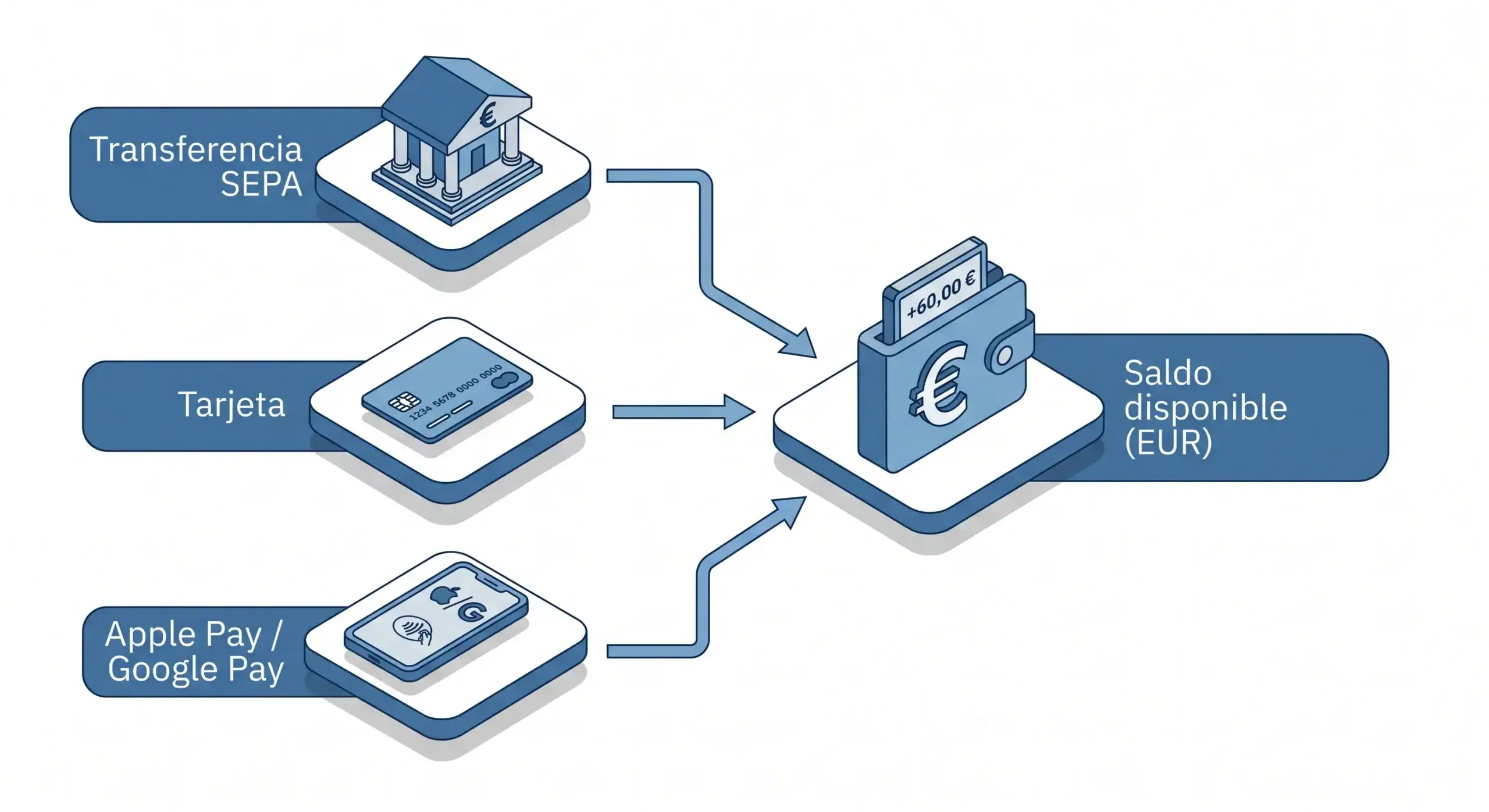
Once your identity is verified, the next step is to fund your user account so you can buy Bitcoin directly with euros, without any intermediate steps. Regulated platforms in Spain typically offer several payment methods: SEPA bank transfer or debit/credit card. SEPA transfers are usually the least expensive option, although they take a little longer to process than card payments, which are virtually instantaneous.
Before choosing a payment method, check the associated fees: each method may have a different cost, and this difference is especially important if you plan to make the transaction frequently. It's also a good idea to first fund a small amount to familiarize yourself with the process before transferring larger sums. Once the funds in euros are available in your account, you can proceed with the actual purchase.
Main Cryptocurrencies Course
Basic levelBit2Me Academy We bring you a new course where you will learn everything you need to know about the most important cryptocurrencies that exist today.
Empezar ahora ›The steps to buy bitcoin in Spain
With your account verified and your euro balance available, the process is reduced to five steps that you repeat each time you want to make a new purchase. It's best to follow the order exactly as shown, especially for your first transaction.
- Verify your identity (KYC)Complete the registration and upload your identity document if you haven't already; without this step you will not be able to operate.
- Fund your account in eurosTransfer the amount you wish to allocate to the purchase using SEPA, card or another method available on the platform.
- Select bitcoin and the amount.: search for BTC in the asset list and enter the amount in euros you wish to allocate to the transaction.
- Confirm the purchaseCheck the price, the applied commission, and the total before pressing the final confirmation button.
- Save the bitcoin you acquired in your wallet.Once the order is executed, the purchased bitcoin is reflected in your wallet within the platform, ready to be used or transferred.
This process applies whether it's your first purchase or you've bought BTC before on another platform: the general logic hardly changes between regulated providers. The main difference is usually in the interface and the time it takes for each payment method to be confirmed, not in the order of the steps.
Where to store the bitcoin acquired after purchase
Once the transaction is complete, the balance is deposited into a wallet within the platform itself, generally known as a custodial wallet: the platform manages the cryptographic keys on your behalf, and you access it through your user account. This is the most convenient option for beginners because it doesn't require managing recovery phrases or additional backups.
The alternative is a non-custodial wallet, where you control the private keys yourself and, with them, total control over the acquired Bitcoin. This option offers more autonomy, but also places all the responsibility on you: if you lose your recovery phrase, no one can restore access for you. Given that this topic is quite complex on its own, Bit2Me Academy It dedicates a specific guide within the cluster of exchanges and wallets to comparing custodial and non-custodial wallets in more detail.
Common mistakes to avoid on your first purchase
The first purchase usually goes well when you follow the steps carefully, but there are some common mistakes among beginners. Knowing them beforehand prevents unnecessary surprises and saves time.
- Buying without having previously checked the fees of the chosen payment method, which can increase the cost of the transaction without the user realizing it.
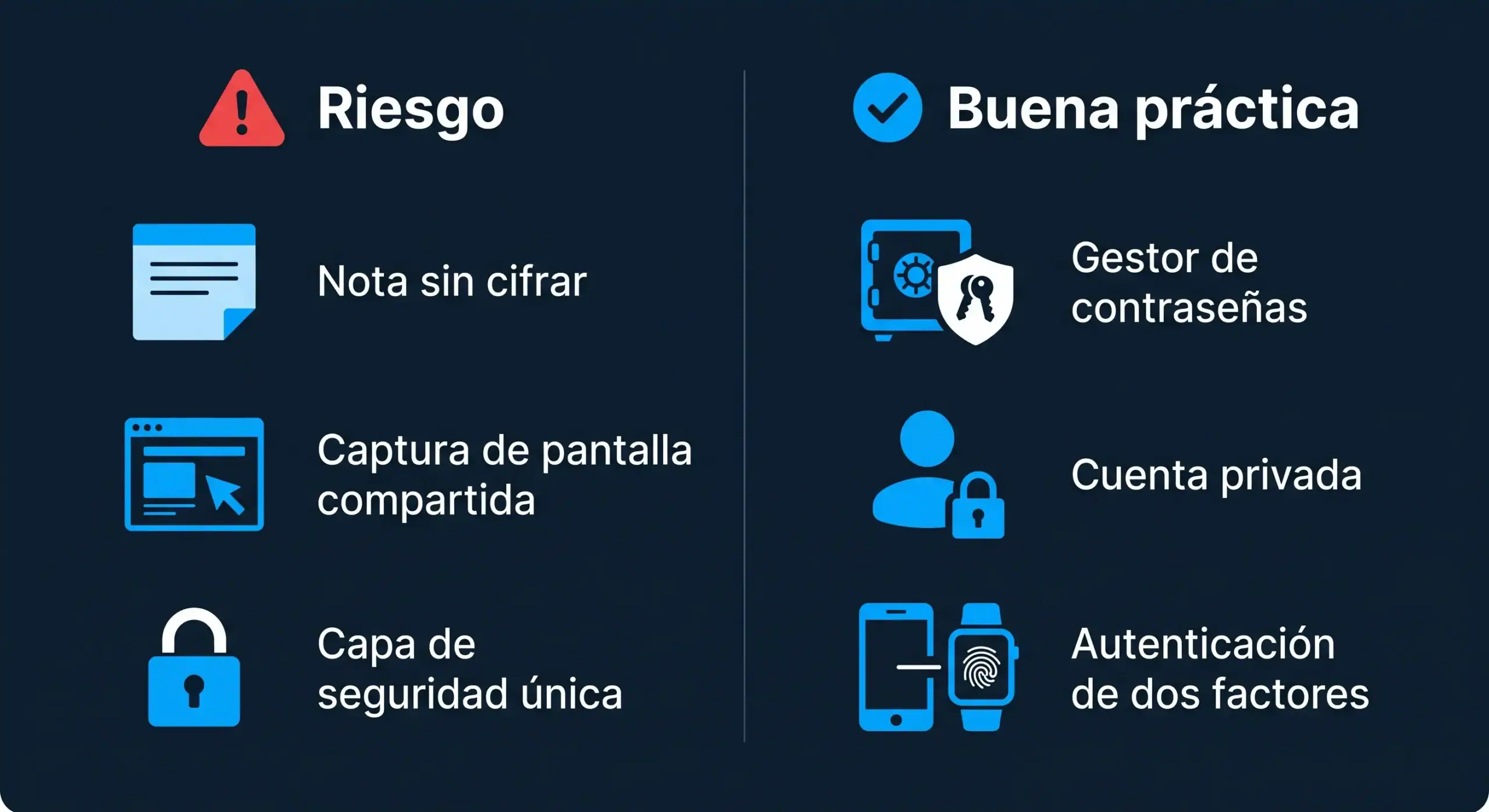
- Save your password or verification codes in unencrypted notes, instead of using a password manager or writing them down in a secure physical location.
- Ignoring confirmation messages before pressing the final button, without checking that the amount and the selected asset are correct.
- Sharing screenshots of your account or balance on social media exposes information that should be kept private.
- Activate only one layer of security when the platform offers additional protection, such as two-factor authentication.
None of these mistakes are exclusive to first-time buyers; even users experienced with other platforms make them when switching providers because they assume the interface works the same everywhere. Taking an extra minute to review each screen before confirming is often the difference between a smooth purchase and an avoidable mishap.
Basic security to protect your bitcoin
Beyond your initial purchase, there are a few security practices you should maintain consistently. Two-factor authentication (2FA, a second verification in addition to your password) significantly reduces the risk of someone accessing your account even if they know your password. Activating it takes less than two minutes and is probably the single measure with the greatest impact on your account security.
It's also wise to be wary of any message, email, or link that asks for your credentials or recovery phrase: no reputable platform requests this type of information through these channels, and giving in to such a request is often the root of the most common phishing attacks. If you ever decide to move your acquired Bitcoin to a non-custodial wallet, keep your recovery phrase on paper in a secure physical location, and never photograph it or store it in the cloud. These routines, applied consistently, cover most of the risks that a typical user encounters.
Once you have Bitcoin in your wallet, many users also look to use it for everyday expenses: converting part of that balance into daily spending is possible thanks to products like the crypto card from Bit2MeWithin the Card cluster, this feature allows you to pay in euros using your cryptocurrency balance without having to sell it separately beforehand. It's a topic that deserves its own discussion, but it's worth noting that this practical exit option exists once the purchase is complete.
Buying Bitcoin in Spain doesn't have to be complicated if you follow the correct order: identity verification, funding in euros, selecting the amount, confirmation, and secure storage. What makes the difference between a good experience and a bad one isn't so much the platform itself, but the attention you pay to each step in between. If you already know which document you're going to use and which bank account you'll transfer the euros from, the next logical step is to create an account on a regulated platform and complete the verification process calmly, without rushing to close the transaction on the first try.

Frequently asked questions about buying bitcoin in Spain
What do I need to acquire my first bitcoin in Spain?
You need a valid ID, a bank account in your name to transfer euros, and access to your email and mobile phone to complete registration. No prior experience with digital assets is required.
Is it legal to buy bitcoin in Spain?
Yes, it is a legal activity as long as it is carried out through a cryptocurrency service provider authorized under the MiCA framework in the European Union. Regulations require these platforms to verify the identity of their users before allowing them to operate.
What is KYC and why do I have to go through this process?
KYC stands for Know Your Customer and is the procedure by which a regulated platform confirms that you are who you say you are. It is a legal obligation to combat money laundering, not an arbitrary decision by the company.
How long does identity verification take?
In most cases, the review is completed within a few minutes after uploading the document and performing facial verification. Occasionally, it may take longer if the system requires additional manual verification.
Can I buy Bitcoin with euros using any payment method?
It depends on the platform, but you can usually buy Bitcoin with euros via SEPA transfer, debit or credit card, and in some cases Bizum. Each method has different processing times and fees, so it's a good idea to compare them before choosing.
Is it safe to buy bitcoin through a regulated platform in Spain?
Using an authorized provider adds layers of protection like KYC and two-factor authentication, but no system completely eliminates risk. Ultimate security also depends on the user's own practices, such as protecting their credentials and recovery phrase.
What happens if I lose access to my wallet?
If your Bitcoin is in a custodial wallet within the platform, you can usually regain access to your account through support channels and identity verification. If it's in a non-custodial wallet and you lose your recovery phrase, access cannot be restored because no one else controls those keys.
What is the difference between a custodial wallet and a non-custodial wallet?
In a custodial wallet, the platform manages the keys on your behalf, and you access them with your user account; in a non-custodial wallet, you directly control the private keys. The former is more convenient for beginners, while the latter offers more autonomy in exchange for greater responsibility.
How much does it cost to buy BTC on a regulated platform?
The cost varies depending on the platform and payment method chosen: SEPA transfers usually have lower fees than card payments. It's advisable to check the exact fee before confirming each transaction, as it may change over time.
What is the current state of regulation in Spain for acquiring bitcoin?
Since the full implementation of MiCA (EU Regulation 2023/1114) in 2024, cryptocurrency service providers operating in Spain must be authorized by the CNMV (Spanish National Securities Market Commission), which strengthens identity verification and user protection requirements. This framework may evolve, so it is advisable to review the current regulations before operating.


«Investment in cryptoassets is not fully regulated, may not be suitable for retail investors due to high volatility and there is a risk of losing all invested amounts»
Share this article!Continue learning
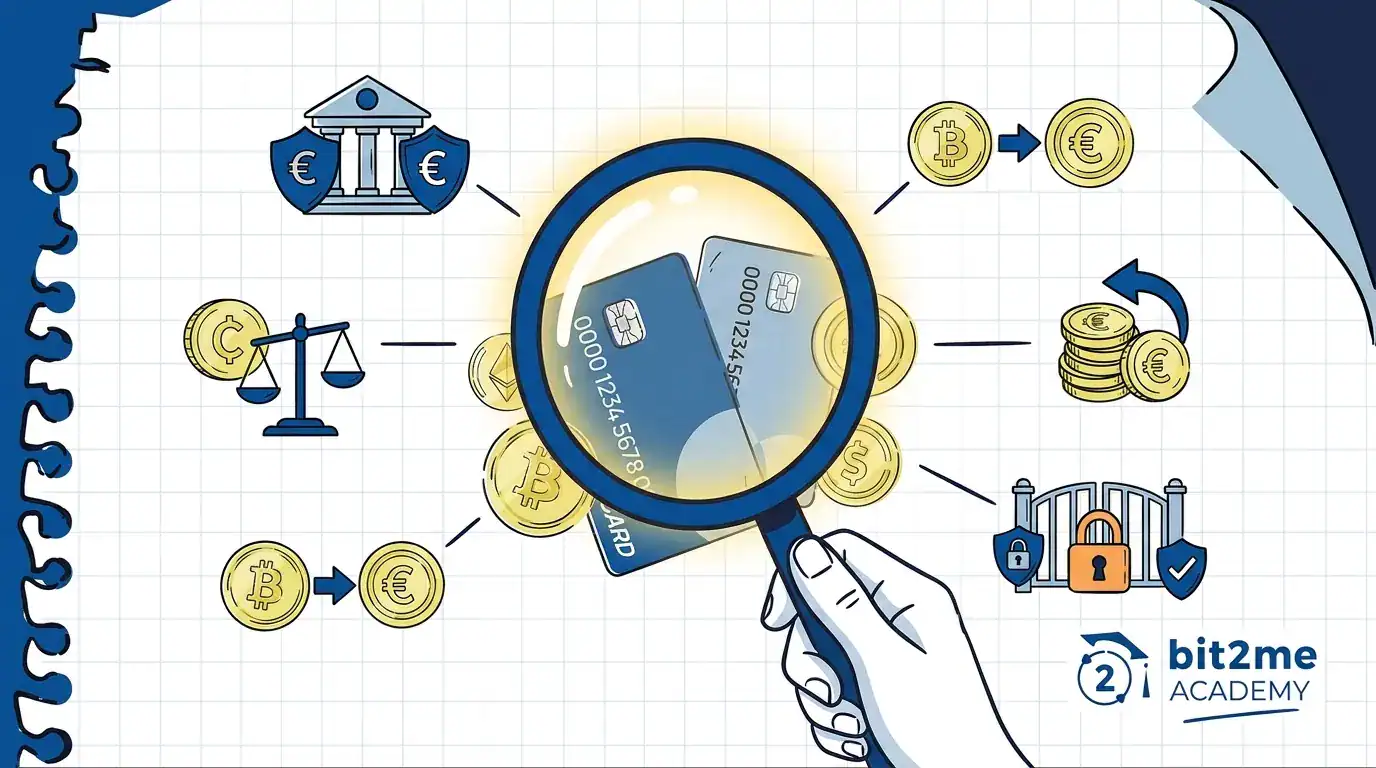
Best crypto card in Spain: what to look for before choosing one
What to look for when choosing a crypto card in Spain: regulated issuer, conversion, fees, cashback, limits and security, without comparing brands or rankings.
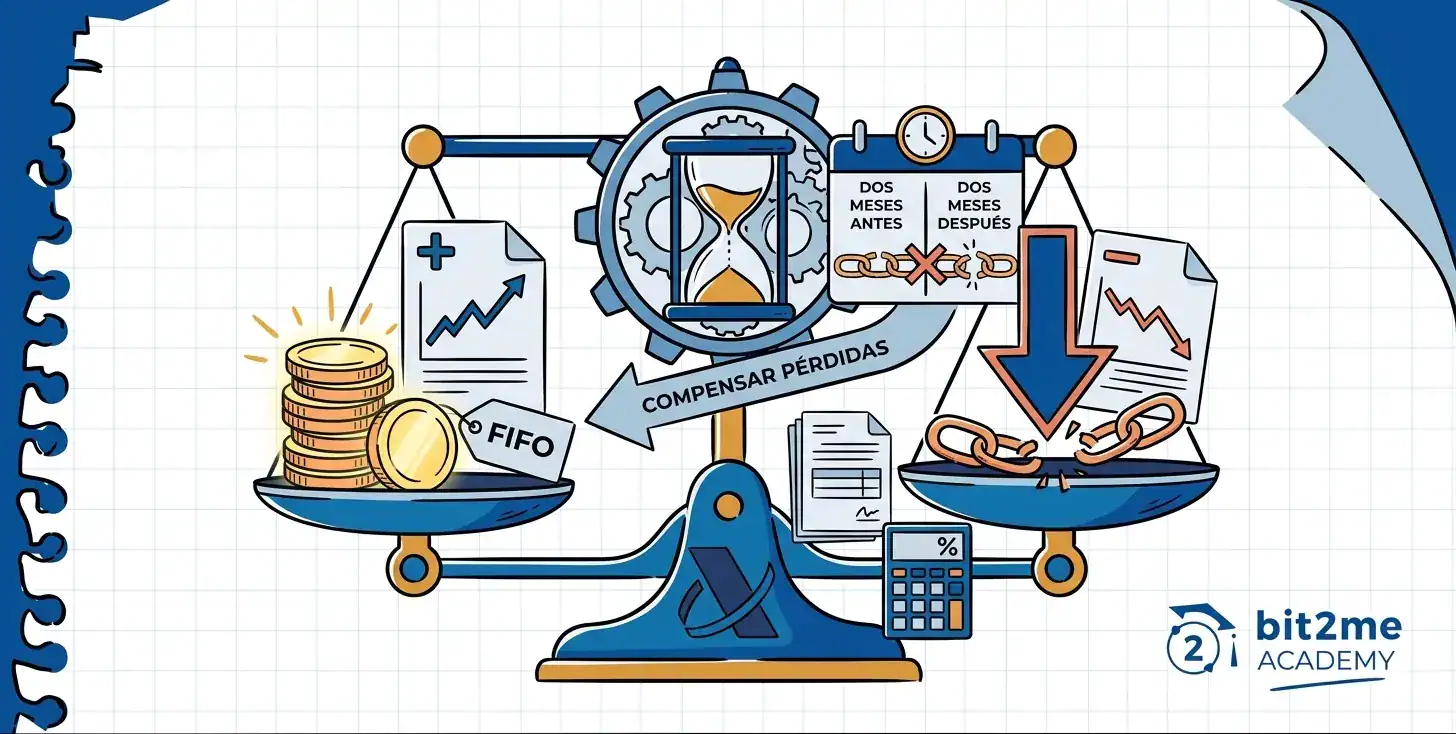
Taxation of shares in Spain: taxation and the two-month rule
Taxation of shares in Spain: savings base, personal income tax brackets and the two-month rule (art. 33.5 LIRPF) explained step by step, with examples.
ETFs to generate income: fixed income and dividends
Fixed income ETFs and dividend ETFs: two ways to generate regular income. Compare risks, taxation, and accumulation vs. distribution before choosing.
ETF vs. investment fund: key differences and which one to choose depending on your situation
ETF vs investment fund: key differences and which one to choose depending on your situation and how to get the most out of both.