ETF vs index fund: differences and which one is right for you
Essential Points
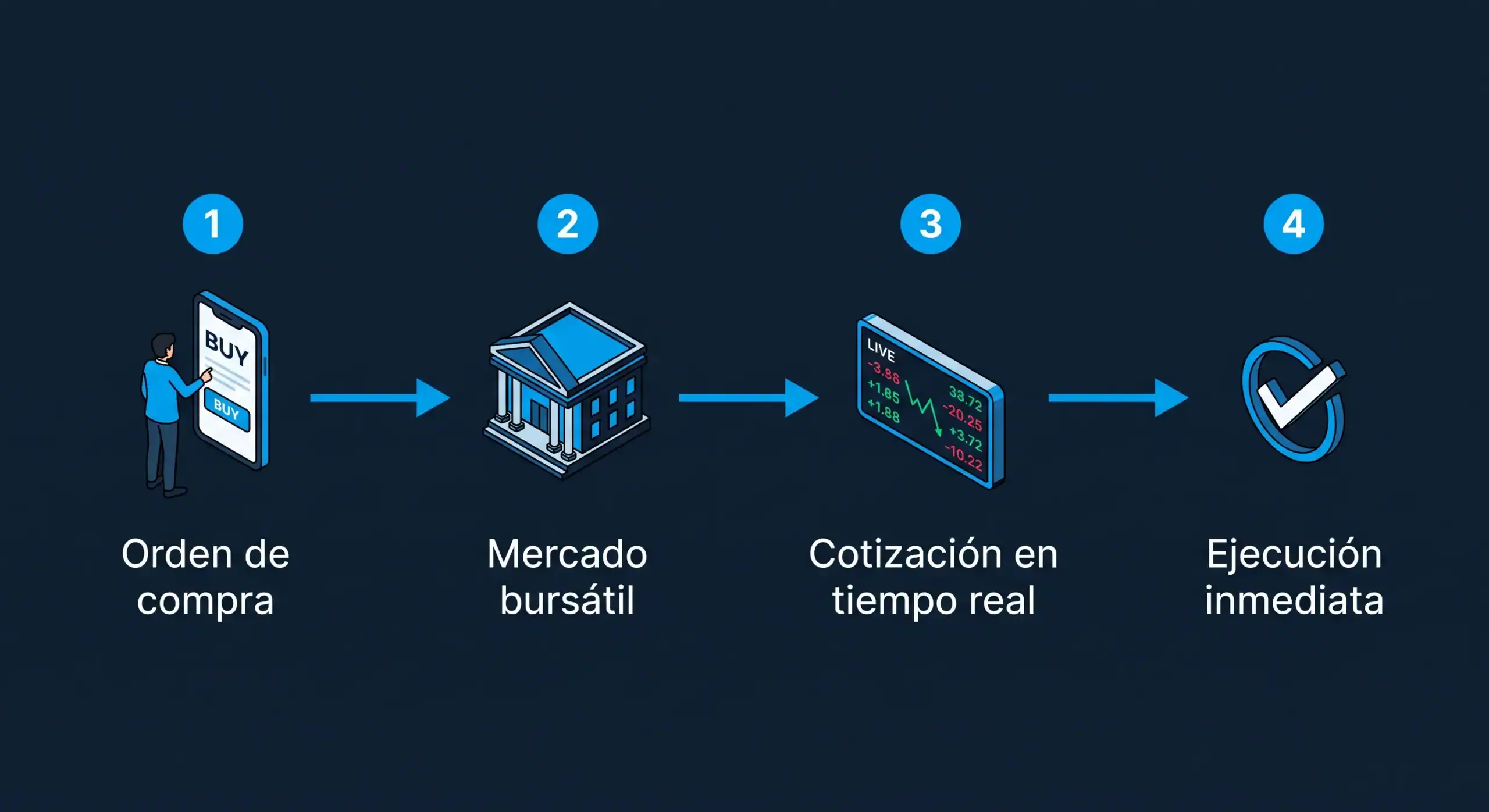
- An ETF trades on the stock exchange in real time; an index fund is bought and sold at a net asset value that is calculated only once a day.
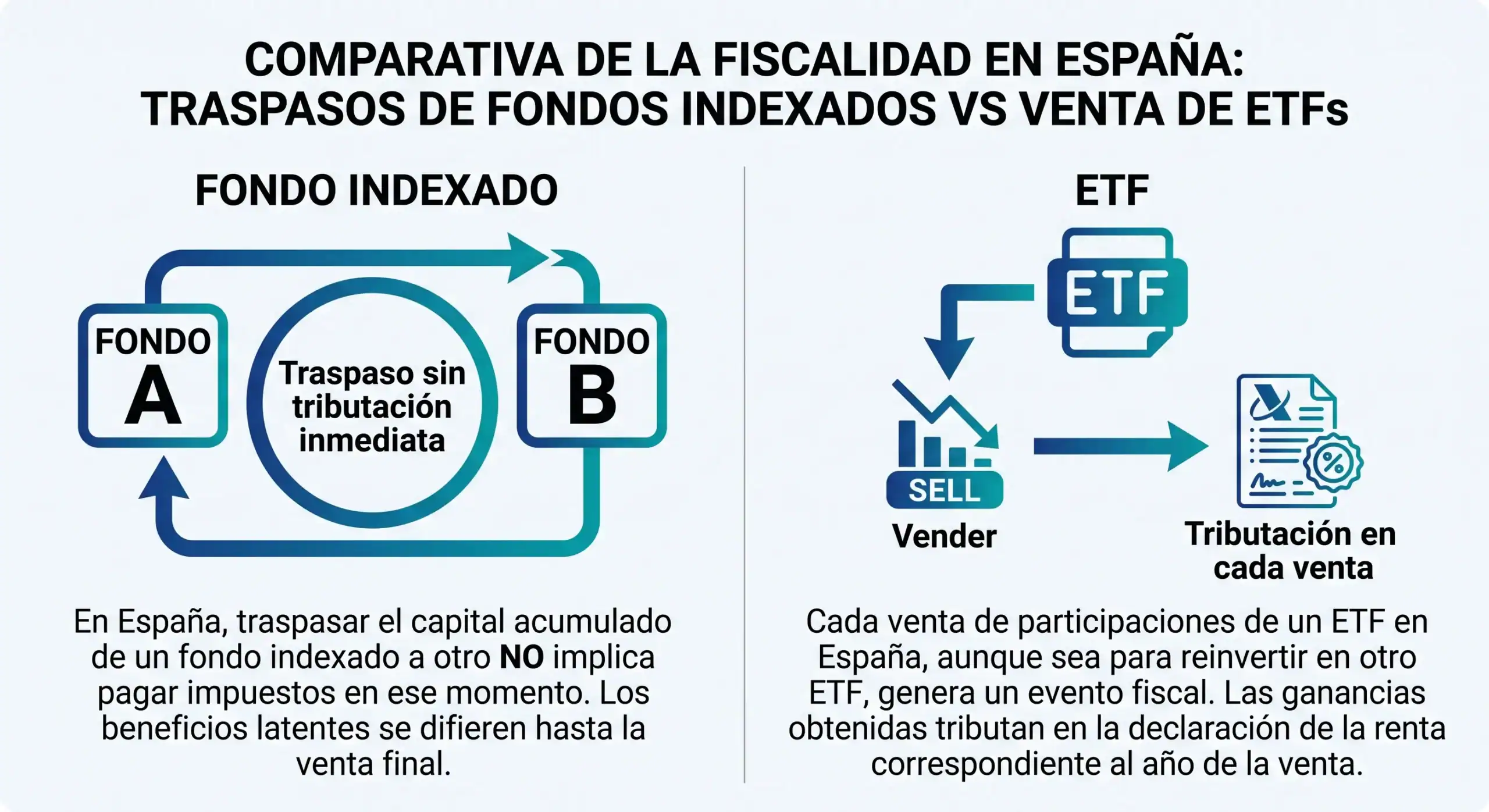
- Taxation makes a real difference in Spain: index funds allow transfers without immediate taxation, something that ETFs do not offer.
- Both track indices with generally low costs, but the ETF adds a brokerage fee per transaction, while the index fund does not.
- There is no absolute winner: the best option depends on whether you value control over the entry time or long-term tax simplicity.
More and more people looking to invest for the long term are facing the same dilemma: ETFs or index funds. Both products track stock market indices, both are known as efficient alternatives to traditional active management, and both are repeatedly recommended in forums and comparisons. This confusion is not accidental: they look very similar on the surface, but internally they function differently in aspects that truly matter to your bottom line.
In this guide, we offer a practical comparison of ETFs and index funds: what each instrument is, how they are traded, the liquidity differences between them, their general tax treatment in Spain, and the impact of fees on the final decision. We conclude with a quick comparison table and a guide to help you choose based on your investor profile.
Important: This article is for educational and informational purposes only. The content does not constitute financial, legal, or tax advice. All investments involve risk, and past performance is not indicative of future results. Consult a qualified professional before making any investment decisions.
Investment services in funds, stocks and ETFs are provided through Bit2Me Stocks, SL, in collaboration with InbestMe, an entity authorized to manage and execute these operations.
×What is an ETF?
An ETF (Exchange Traded Fund) is an investment vehicle that tracks the performance of an index, commodity, or basket of assets, but is bought and sold on a stock exchange just like a stock. This means it has a ticker symbol, a price that fluctuates throughout the trading session, and a market depth visible in real time.
The internal mechanics are simple to understand, although the underlying financial engineering is complex: an asset manager creates ETF shares backed by the assets of the replicated index, and these shares are traded on the secondary market like any other security. The price at which an ETF trades may differ slightly from its theoretical net asset value, although arbitrage mechanisms keep this difference historically small for ETFs with higher trading volumes.
For investors, the most visible characteristic of an ETF is its immediacy: you can buy at ten in the morning and sell at four in the afternoon if the price moves in your favor, something no traditional fund allows. This flexibility comes at an implicit cost, because each buy-sell transaction usually goes through a stockbroker and is subject to the spread between the buy and sell price that exists in the market at that moment.
What is an index fund?
An index fund also seeks to replicate a benchmark index, but it is structured like a traditional collective investment fund: it is not traded on a stock exchange, but rather is subscribed to and redeemed through the fund manager or an authorized distributor. Its official price—the net asset value (NAV)—is calculated only once a day, usually after the close of the markets in which it invests.
This means that when you place a buy or sell order for shares in an index fund, you don't know the exact price at which the transaction will be executed until the net asset value (NAV) for the corresponding day is published. There is no day trading, no visible order book, and no way to react to a market movement within the same trading day.
In return, index funds offer an experience designed for the long term: automated periodic contributions, no stock brokerage fees on each transaction, and, in the case of funds domiciled in Spain, tax treatment that we will see in detail later and which many investors consider one of their most relevant advantages over ETFs.
Key differences in trading and liquidity between the two instruments
The most practical difference between an ETF and an index fund lies in how orders are executed. An ETF trades in real time: the price you see on the screen is the price at which, barring sudden movements, your order will be executed in seconds. An index fund, on the other hand, operates on a daily net asset value (NAV) basis: you place the order today, but the actual price is known at the close, when the fund manager publishes the day's NAV.
This difference in mechanics translates directly into liquidity, although in different ways for each product.
- The liquidity of an ETF depends on the trading volume in the market and the activity of market makers, who commit to providing continuous buy and sell prices.
- The liquidity of an index fund does not depend on the secondary market, because the manager itself is obliged to handle redemptions at the corresponding net asset value, although the money usually takes a few business days to become available.
- In ETFs with low trading volume, the spread between the buy and sell price can widen during periods of low activity, something that does not happen in an index fund because there is no order book.
In practice, no individual investor needs to enter and exit their investment portfolio several times a day, so the advantage of ETF day trading usually weighs less than it seems at first glance compared to the operational simplicity of an index fund.
Basic tax differences in Spain between ETFs and index funds
This is where one of the most crucial differences arises when choosing between ETFs and index funds, especially if you plan to adjust your portfolio over time. In Spain, investment funds—including index funds domiciled here—benefit from the transfer regime: you can move your money from one fund to another without this transaction triggering immediate income tax (IRPF), as the tax impact is deferred until the final cash redemption.
ETFs do not receive the same treatment when traded on markets such as the usual European stock exchanges: each sale is considered a capital gain at the time it occurs, similar to how the sale of shares is taxed, without the possibility of a tax-neutral transfer to another product. This does not mean that an ETF is automatically worse for tax purposes, but rather that you have less control over when you decide to pay taxes if your strategy involves rotating positions frequently.
This is one of the areas where regulations can vary depending on the fund's domicile, the broker used, or future regulatory changes. Therefore, these criteria reflect the Spanish Personal Income Tax (IRPF) regulations in force in August 2026, and it's advisable to review them if some time has passed since reading this article. If you want to delve deeper into specific scenarios, tax return fields, or cases of double taxation, we recommend consulting our guide to the taxation of funds and ETFs, where we go into detail that this article can only summarize. In any case, this content does not constitute tax advice: for your personal situation, always consult a qualified professional.
Main Cryptocurrencies Course
Basic levelBit2Me Academy We bring you a new course where you will learn everything you need to know about the most important cryptocurrencies that exist today.
Empezar ahora ›Fee differences between ETFs and index funds
Neither ETFs nor index funds are free, although both typically have lower cost structures than actively managed funds due to their passive replication nature. The relevant factor is not so much which is "cheaper" in the abstract, but rather when and how those costs are applied to each instrument.
In an ETF, the management fee is usually included in the product itself and is continuously deducted from its value. However, since it is a listed instrument, each purchase and sale may involve a brokerage commission, in addition to the spread between the buy and sell price at that moment in the market. Index funds do not have this stock exchange commission, but the fund manager or distributor may apply management fees, and in some cases, subscription or redemption fees, depending on the terms and conditions of each fund and platform.
The most honest way to compare typical fees between the two products is to look at the whole picture: the frequency of your contributions, the volume you trade per transaction, and whether your broker or asset manager applies additional custody fees. Before deciding, always review the prospectus or Key Information Document (KID) for the specific product you are considering, because exact fees vary from asset manager to asset manager and from one ETF to another within the same category.
How to decide between an ETF and an index fund based on your investor profile?
There's no single answer to whether an ETF or an index fund is better: it depends on how you invest, not just which product you choose. If your strategy is based on regular, automated contributions without needing to monitor the entry price, an index fund is usually a better fit because it eliminates brokerage fees on each transaction and makes it easier to rebalance your portfolio through transfers without immediate tax implications.
However, if you value being able to decide the exact entry or exit point within the trading session, or if you seek exposure to very specific indices that only exist in ETF format, this instrument will give you that additional control. The time horizon also plays a role: the more frequently you plan to adjust your portfolio, the more significant the tax advantage of an index fund becomes compared to an ETF.
Precisely because choosing between ETFs and index funds depends on personal variables and not a single formula, having both products available in one place simplifies the decision over time. Bit2Me We offer an approach that allows you to invest in funds, stocks, and ETFs from a single app, making it easy to compare options and adjust your strategy without relying on multiple platforms. If you'd like to explore how each instrument would fit into your own portfolio, you can learn more. Bit2Me Research and review the details of each product before deciding.

Frequently Asked Questions about ETFs vs Index Funds
Which is more profitable, an ETF or an index fund?
Neither is inherently more profitable, because both track the same types of indices and their performance depends on the underlying market. Past performance is no guarantee of future results, so the real difference between the two usually lies in costs and taxes, not in a superior initial return.
Can I lose money investing in an ETF or an index fund?
Yes, both instruments track indices that can rise or fall, so the value of your investment fluctuates with the market. There are no guarantees of results with either product, and it's advisable to invest only what you can sustain over a reasonable time horizon.
What is the main difference between an ETF and an index fund when it comes to trading?
The practical difference lies in the trading method: ETFs are bought and sold on the stock exchange in real time during the trading session, while index funds are subscribed to and redeemed at a net asset value (NAV) that is calculated once a day. This different mechanism affects when you know the exact price of your transaction.
Do I need a lot of money to start investing in an ETF or an index fund?
Not necessarily: an index fund typically allows regular contributions starting from small amounts, depending on the fund manager, while in an ETF the practical minimum is equivalent to the price of a share at the time of purchase. In both cases, it's advisable to review the specific terms and conditions of the platform before starting.
What is the tax difference between selling an ETF and transferring an index fund in Spain?
Transferring an index fund to another fund does not generate immediate income tax (IRPF), while selling an ETF is considered a capital gain at the time of the transaction. This is a general rule in effect in Spain in 2026, which should be confirmed with a professional based on your specific circumstances.
Do index funds have higher fees than ETFs?
Not systematically: it depends on the fund manager, the specific ETF, and whether the broker charges a commission on each ETF transaction. Comparing the overall costs of each product before deciding is more useful than assuming one is always cheaper than the other.
Is it safe to invest in ETFs and index funds?
Both are regulated instruments widely used in long-term investment portfolios, but no financial product is free from market risk. The value of your investment can fluctuate, and it's wise to understand this risk before investing, rather than being guided solely by the product's popularity.
Can I combine ETFs and index funds in the same portfolio?
Yes, many investors combine both instruments depending on the objective of each position: index funds for the bulk of regular contributions and ETFs for occasional exposures or more specific indices. They are not mutually exclusive products, but rather complementary tools.
What if I want to sell my index fund or ETF urgently?
An ETF can be sold during the trading session, with the money available according to the broker's settlement process, while an index fund is redeemed at the day's net asset value, with the proceeds typically available a few business days later. Neither offers the immediate liquidity of a checking account.
How do I choose between an ETF and an index fund if it's my first time investing for the long term?
If you prioritize simplicity and automated, regular contributions, an index fund is usually the most convenient starting point; if you prefer to decide the exact moment of your trades, an ETF gives you that control. In either case, first define your time horizon and risk tolerance before choosing an investment vehicle.


«Investment in cryptoassets is not fully regulated, may not be suitable for retail investors due to high volatility and there is a risk of losing all invested amounts»
Share this article!Continue learning
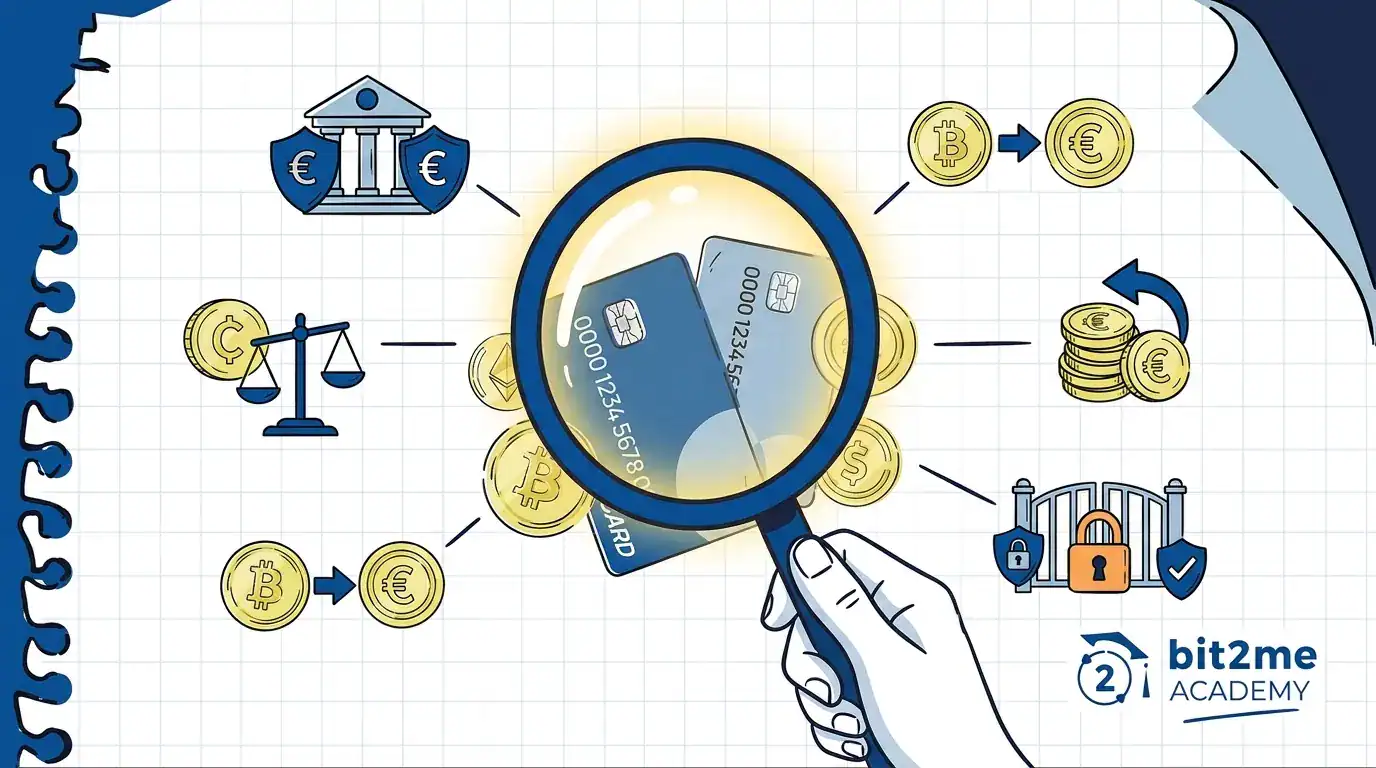
Best crypto card in Spain: what to look for before choosing one
What to look for when choosing a crypto card in Spain: regulated issuer, conversion, fees, cashback, limits and security, without comparing brands or rankings.
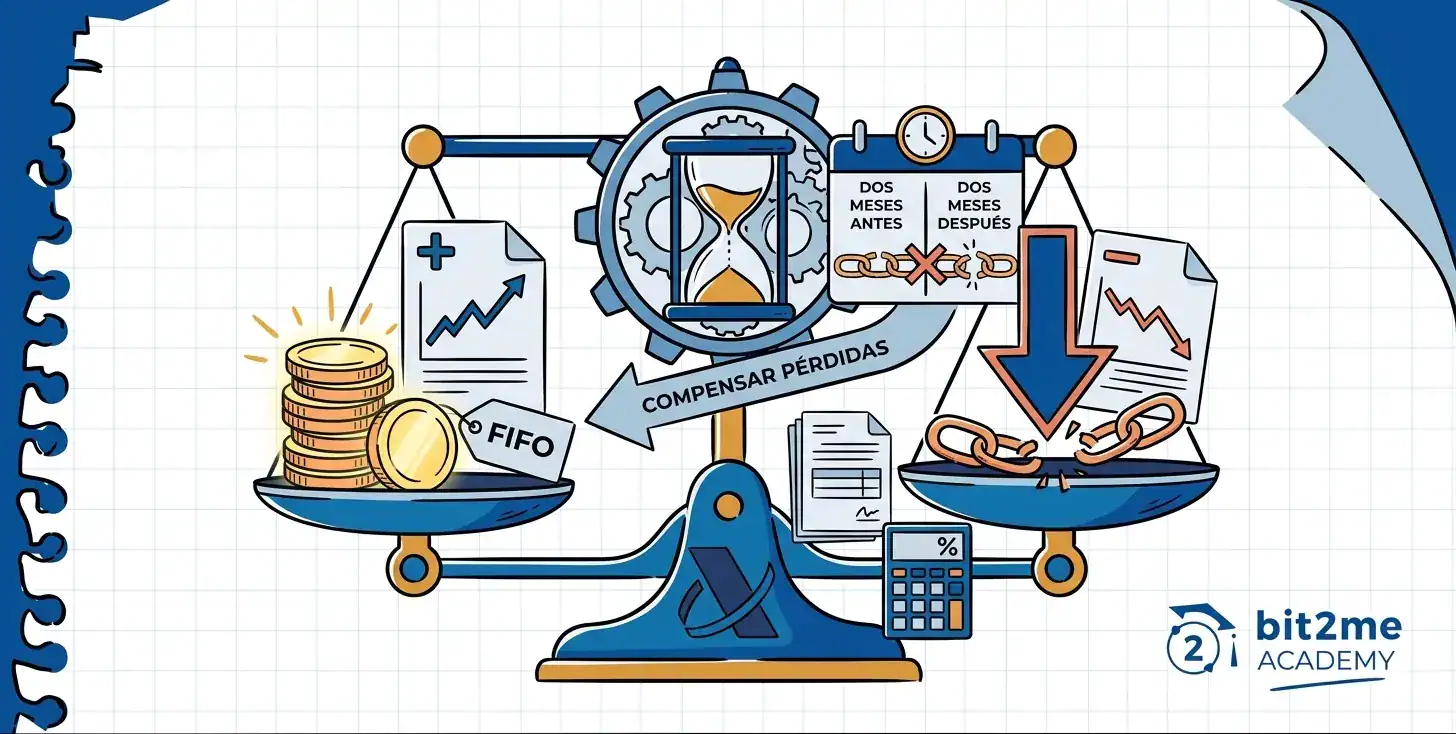
Taxation of shares in Spain: taxation and the two-month rule
Taxation of shares in Spain: savings base, personal income tax brackets and the two-month rule (art. 33.5 LIRPF) explained step by step, with examples.
ETFs to generate income: fixed income and dividends
Fixed income ETFs and dividend ETFs: two ways to generate regular income. Compare risks, taxation, and accumulation vs. distribution before choosing.
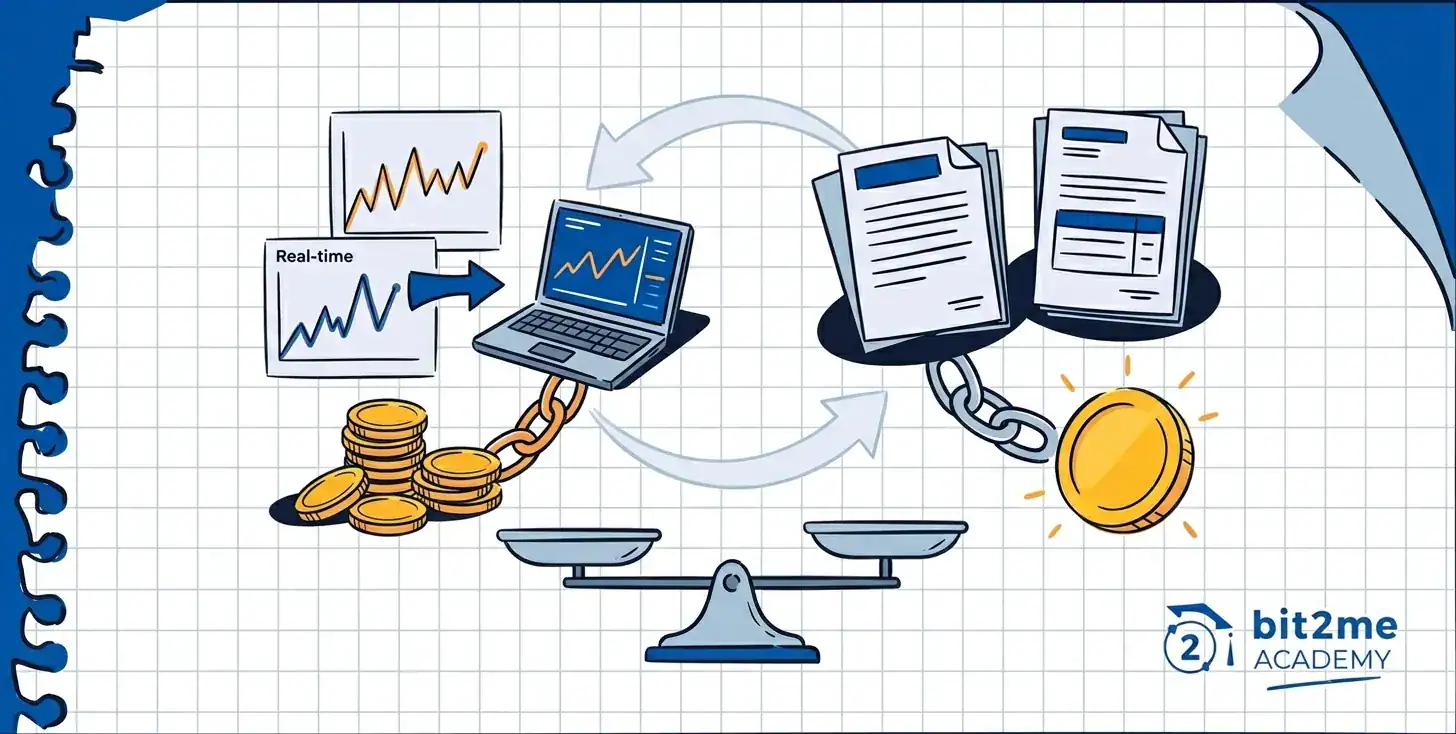
ETF vs. investment fund: key differences and which one to choose depending on your situation
ETF vs investment fund: key differences and which one to choose depending on your situation and how to get the most out of both.