Investment strategy: what it is and how to create your own in 5 steps
Essential Points
- An investment strategy is the plan that defines how, when, and in what you invest so as not to make decisions based on emotional impulse.
- In 5 steps you define objective, time horizon, risk profile, approach (DCA, buy and hold, indexing) and portfolio distribution.
- Following the plan with discipline could turn €100/month for 20 years into approximately €52.000 thanks to compound interest.
- Markets can fall in the short term; without a prior strategy, panic leads to selling at the worst possible time.
We live in a time when investment information is abundant, but practical guidance is scarce. Any day of the week you can find someone on social media boasting about having "hit the right" time to buy, and you can also find someone lamenting having panicked and sold just before the market recovered. Amid all this noise, most people who want to start investing are paralyzed, unsure of where to begin or what exactly to do with their savings.
En Bit2Me Academy We want to change that. This article explains what an investment strategy is, why you need one before you move a single euro, and guides you through five concrete steps to build your own from scratch. You don't need to be an economist or have large savings: you need a clear plan and the discipline to stick to it.
What is an investment strategy and why do you need one?
An investment strategy is the set of rules and decisions you define before investing to guide how, when, how much, and where you will put your money. It's not a prediction of the future or a magic get-rich-quick scheme: it's a framework that protects you from your own impulses when the market becomes chaotic.
Imagine you have €5.000 saved and decide to invest it. Without a pre-established strategy, the questions that arise are paralyzing: Do I buy it all at once or little by little? Now that the market is high or wait for it to drop? What exactly do I invest in? And when do I sell? If you don't have a predefined answer, you'll answer each of these questions in the moment, driven by the emotion of the day, which is rarely the best guide.
The real danger isn't in the market; it's in emotional decisions. Buying when everyone is euphoric (at the highs) and selling when everyone is panicking (at the lows) is the most common pattern among investors without a plan. A good investment strategy protects you from this vicious cycle before it even happens, because you already know what you're going to do regardless of what the market does.
A personal investment plan doesn't have to be complicated. In fact, the simplest and most well-documented approaches are the most effective for individual investors. The five steps we explain below will give you everything you need to define yours.
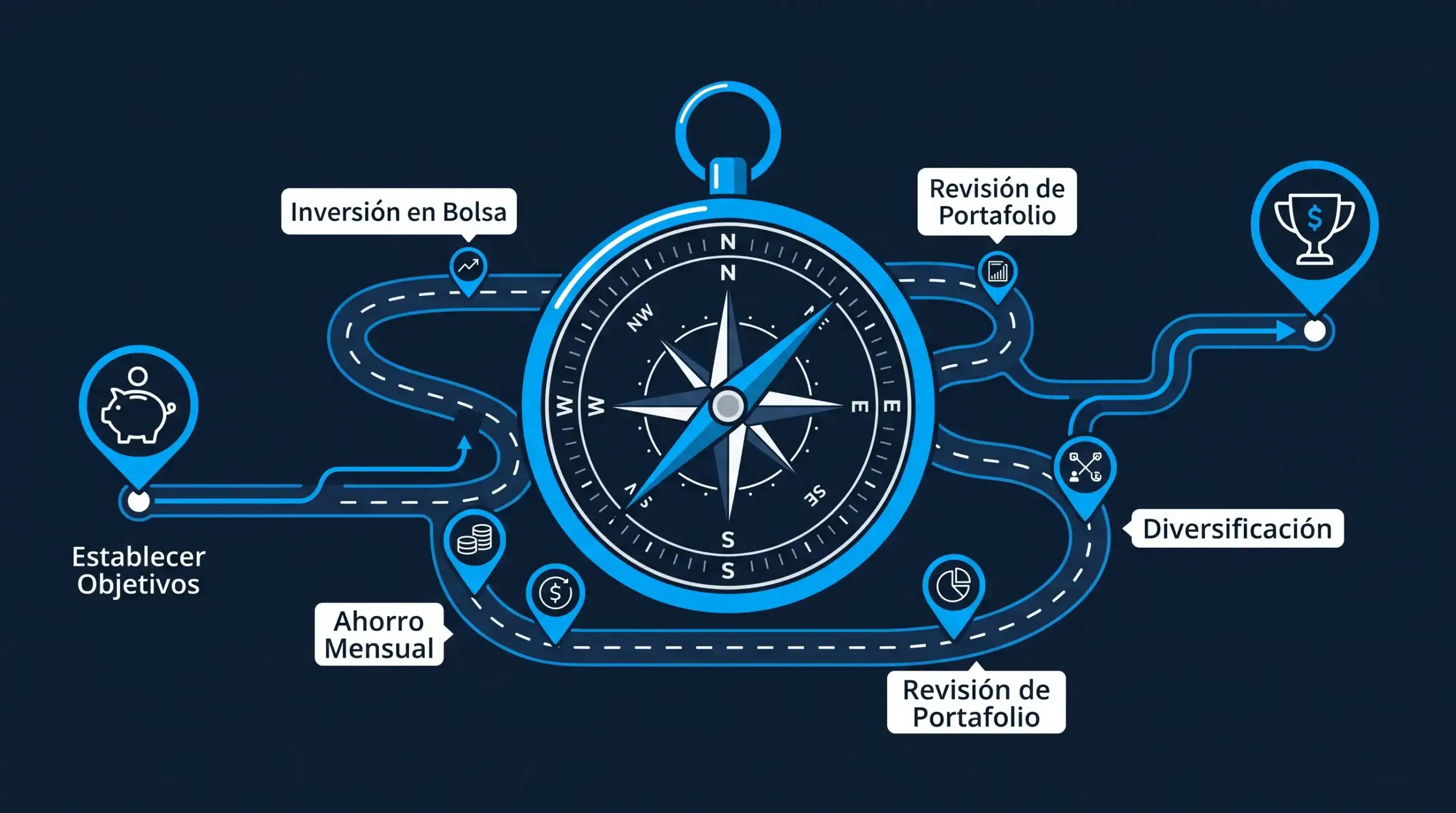
Step 1 — Define your financial goal
The first step in any strategy is knowing what you want to invest for. It seems obvious, but it's the step most people skip. “I want to make money” isn't a goal: it's a wish. A real goal has a name, an approximate figure, and a timeframe.
The most common financial goals are very different from each other, and that difference changes everything. Saving for retirement in thirty years is a very long-term horizon that allows for a lot of short-term volatility. Buying a house in five years is a short-term horizon where losing 30% of the capital at the wrong time could ruin the plan. Building an emergency fund requires total and immediate liquidity, so it's not compatible with investing in the stock market.
Some common examples and their implications:
- Retirement in 20-30 years: long horizon, can tolerate high volatility, more weight in equities.
- Buying a home in 5 years: short-medium horizon, priority capital protection, conservative approach.
- Children's education over 15 years: medium horizon, balanced portfolio between equities and fixed income.
- Financial independence in 10 years: medium-long horizon, greater exposure to growth assets.
There's no right or wrong goal: there's only yours. What is certain, however, is that without a clear goal, all other decisions lack direction. Defining what you're investing for is the foundation upon which you build everything else.
Step 2 — Set your time horizon
The time horizon is the time you have from today until you need to use the invested money. Along with the objective, it's the most crucial filter for your strategy because it directly determines how much volatility you can absorb without jeopardizing your plan.
The logic is simple: financial markets experience short-term ups and downs, but historically they have tended to grow in the long run. If you have ten or twenty years ahead of you, a 30% drop isn't a disaster, but rather an opportunity or simply a temporary setback that time tends to correct. If you need the money in two years, that same drop could force you to sell at the worst possible moment.
A guide based on horizon:
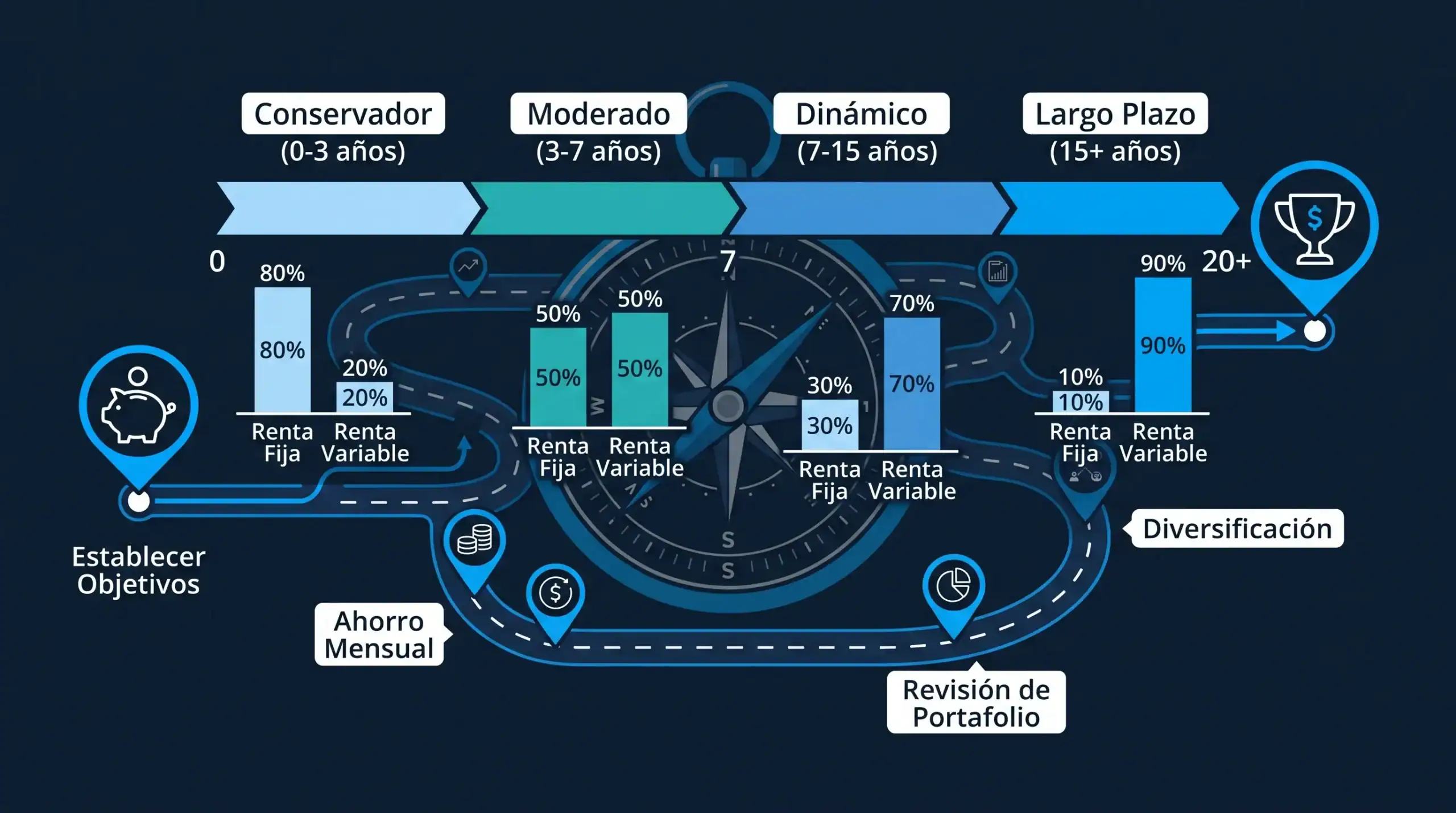
- Less than 3 years: conservative profile. Money market funds or short-term fixed income. Equities are not suitable.
- Between 3 and 7 years: moderate profile. Mixed portfolios with a balance between equities and fixed income.
- Between 7 and 15 years: dynamic profile. Greater weight in diversified global equities.
- More than 15 years: long-term profile. High exposure to indexed equities is more sustainable.
This guide is for educational purposes only and is not a personalized recommendation. Your specific situation may require adjustments. What you should keep in mind is that the longer your time horizon, the more you can let time work in your favor and the less you need to worry about day-to-day volatility.
Main Cryptocurrencies Course
Basic levelBit2Me Academy We bring you a new course where you will learn everything you need to know about the most important cryptocurrencies that exist today.
Empezar ahora ›Step 3 — Know your risk profile
Your risk profile isn't just a number on a form: it's the combination of two distinct things that shouldn't be confused. The first is your risk capacity: can you financially afford for your investment to drop 20% or 30% temporarily without it affecting your daily life? The second is your risk tolerance: even if you can afford it on paper, could you sleep soundly watching your portfolio decline? If the answer is no, you need a more conservative portfolio, even though your investment horizon "should" be able to withstand more volatility.
Both dimensions are equally important. An investor who theoretically has a twenty-year horizon but sells everything when the market falls 15% is acting against their own plan. A strategy you can't emotionally sustain isn't a good strategy for you, regardless of what the numbers say.
Knowing your risk profile before investing allows you to choose instruments and portfolio allocations that will help you stay the course when the market tests your discipline. Bit2Me At Invest you will find a risk profile questionnaire that helps you identify your risk profile in a structured way, before making any investment decisions.
Step 4 — Choose your strategy: DCA, buy and hold or indexing
Once you're clear on your objective, your investment horizon, and your risk profile, it's time to choose how you're going to invest. There are three well-documented approaches that are best suited for individual investors: dollar-cost averaging (DCA), buy-and-hold, and index investing. The most interesting thing is that all three are completely compatible with each other.
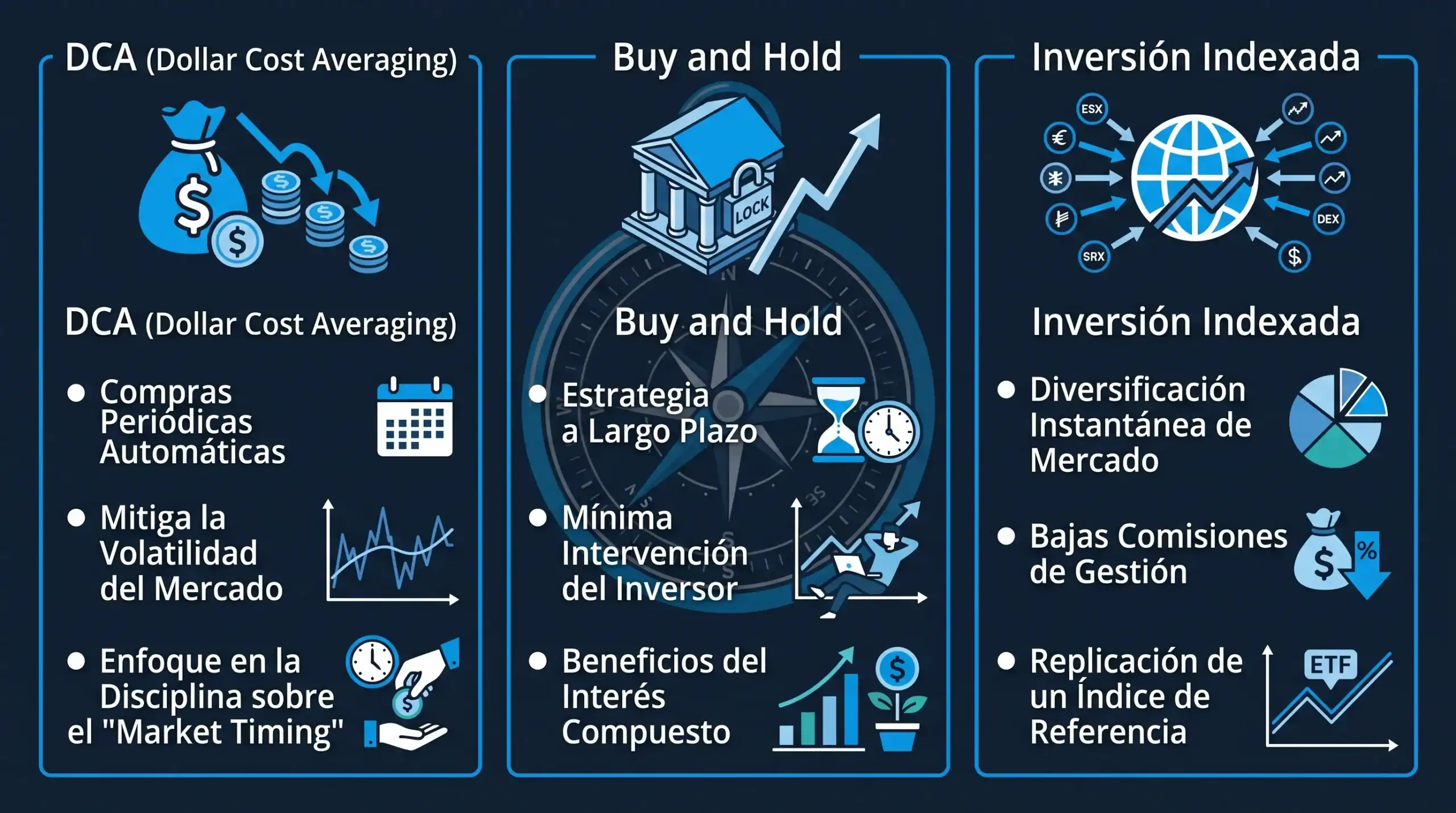
DCA: to contribute periodically and systematically
Dollar-cost averaging (DCA) involves investing a fixed amount of money at regular intervals, regardless of whether the market is high or low at that time. For example, investing €100 every first Monday of the month, without exception.
The main advantage of dollar-cost averaging (DCA) is that it eliminates market timing, which is the attempt to predict the perfect moment to buy or sell. No one can consistently do this, not even professional fund managers. By always investing the same amount, you buy more shares when the price is low and fewer when it's high, thus averaging the purchase price over time. Furthermore, it makes saving an automatic habit.
The mathematical example is clear: by contributing €100 per month for 20 years with an average annual return of 7%, you could accumulate approximately €52.093, more than double the €24.000 you would have contributed in total. This difference is generated by compound interest acting on your monthly contributions. These figures are for illustrative purposes only and do not guarantee any specific outcome.
Buy and hold: buy and keep without looking at the noise
Buy and hold is exactly what its name suggests: you buy quality assets and hold them for years, without selling in response to market fluctuations. The logic behind it is sound: global markets have tended to recover from every crisis throughout history, and those who sold at the point of panic missed out on part of that recovery.
The biggest mistake this strategy combats is selling when the market falls and re-entering when it has already risen again, which is precisely what most investors without a plan do. Time spent in the market is more valuable than trying to choose the exact moment. Buy and hold doesn't require constant analysis or frequent decisions: it requires conviction and patience.
Indexed investing: the entire market, with minimal costs
Index investing involves buying a fund or ETF that tracks the performance of a broad stock market index, such as the S&P 500 or the MSCI World, rather than trying to select individual stocks. The S&P 500 has historically delivered an average real return of approximately 7% per year over the long term, although individual period results vary significantly.
Index funds have very low costs, with total expense ratios (TERs) that can be below 0,3% annually, compared to 1-2% for many actively managed funds. Historically, most actively managed funds fail to outperform their benchmark index over periods of ten years or more.
The combination of DCA + index investing + buy and hold is the standard strategy that experts recommend for most individual investors: simple, low cost, disciplined and historically proven.
Step 5 — Design your portfolio and plan the rebalancing
With your chosen strategy, the final step is to decide how to allocate your money among the different asset classes and how to maintain that allocation over time. This is called asset allocation or portfolio distribution.
Asset allocation is the percentage division of your investment among different asset classes: equities (stocks and equity funds), fixed income (bonds and fixed income funds), and cash. A sample allocation for someone with a moderate risk profile and a 15-year investment horizon might be 70% in global equities, 20% in fixed income, and 10% in cash. This specific distribution is for illustrative purposes only and is not a personalized recommendation.
Over time, a portfolio naturally becomes unbalanced. If equities rise significantly, they can increase from representing 70% to 80% of your portfolio, which implies more risk than you had decided to take. Rebalancing involves adjusting this distribution to return to the target allocation. You sell part of the asset that has grown the most and buy part of the one that has lagged behind.
It's recommended to review and rebalance your portfolio once or twice a year, no more. Doing so too frequently generates transaction costs and potential tax implications. An important detail: in Spain, transfers between investment funds are not taxed at the time of the transfer, which facilitates rebalancing without immediate tax costs. The situation is different with ETFs, so it's advisable to research the specific instruments you use.
Strategy mistakes you should avoid
Knowing the steps to create an investment plan is half the battle. The other half is avoiding sabotaging it with mistakes that almost everyone makes at the beginning, and that many experienced investors also make in times of stress.
The first and most common mistake is market timing: trying to guess when the market is at its lowest point to buy and at its highest point to sell. The most rigorous studies on investor behavior, including professional fund managers, show that no one consistently succeeds. Dollar-cost averaging (DCA) is precisely the antidote to this error, because it eliminates the need to decide the timing.
The second mistake is panicking and selling when the market falls. A 20% or 30% drop is very uncomfortable, but selling at that moment locks in the loss and leaves you out of the recovery that historically usually follows. Maintaining discipline in those moments is precisely what your predefined investment strategy is for.
The third common mistake is overcomplicating the portfolio. More funds don't necessarily mean better diversification: a portfolio with two or three global index ETFs can be more efficient and less expensive than one with twenty overlapping funds. Well-designed simplicity wins.
Finally, don't underestimate the impact of fees. A 1% annual difference in costs may seem insignificant, but compounded over twenty years, it eats away at a huge portion of your accumulated capital. Choosing low-cost instruments is one of the most profitable decisions you can make.

Frequently asked questions about investment strategy
What is the difference between an investment strategy and a savings plan?
A savings plan tells you how much to save each month, but not how to make that money grow. An investment strategy goes further: it defines what you invest in, what criteria you use, and what your investment horizon is. Saving is the starting point; the strategy is what decides where that money goes.
What is the minimum amount of money I need to start implementing an investment strategy?
There is no universal minimum, and many platforms allow you to start with very small amounts. What matters is not the initial amount, but consistency: a modest but sustained regular contribution usually outperforms a large but irregular investment.
What exactly is DCA and why is it so highly recommended?
Dollar-cost averaging (DCA) involves investing a fixed amount periodically, regardless of the current market price. It's recommended because it eliminates the need to predict the ideal purchase time, averages the acquisition cost, and makes investing a habit.
Can I combine multiple investment strategies at the same time?
Yes, and in fact, the most common combination among individual investors is precisely DCA + index investing + buy and hold. They are complementary: DCA defines how and when you contribute; indexing defines what you invest in; buy and hold defines what you do when the market moves.
How often should I review my investment strategy?
An annual review is usually sufficient to ensure your portfolio remains aligned with your objectives and to rebalance if necessary. Reviewing more frequently increases the risk of making emotional decisions based on short-term market movements.
What happens if the market crashes right after you start investing?
It depends on your time horizon. If you have ten years or more ahead of you, an initial drop is statistically a buying opportunity, not a problem. If your horizon is short, it's a sign that perhaps your portfolio allocation was too aggressive for your current situation.
Is index investing right for everyone?
It's suitable for most individual investors with medium to long-term investment horizons, but not for all profiles or objectives. Someone needing the money in less than three years should opt for more conservative instruments, regardless of the low costs of index funds.
How does buy and hold differ from simply “forgetting” about the investment?
Buy and hold is an active and conscious decision not to sell in the face of volatility, based on the conviction that a long-term investment horizon absorbs market cycles. Neglecting an investment strategy can lead to holding unsuitable assets out of inertia. The difference lies in the intention and having a plan for periodic rebalancing.
What are the main risks of following an indexed investment strategy?
The main risk is market correlation: if the index falls, your fund falls with it. There is no active asset selection that can protect you from a general market downturn. Added to this is currency risk if the fund invests in international markets and is not hedged in euros.
Can my investment strategy change over time?
Yes, and that's perfectly normal. As your goal changes, your time horizon shortens, or your financial situation evolves, your strategy needs to be adjusted. The important thing is that any changes are deliberate and well-reasoned, not a reaction to the previous day's market movements.


«Investment in cryptoassets is not fully regulated, may not be suitable for retail investors due to high volatility and there is a risk of losing all invested amounts»
Share this article!Continue learning
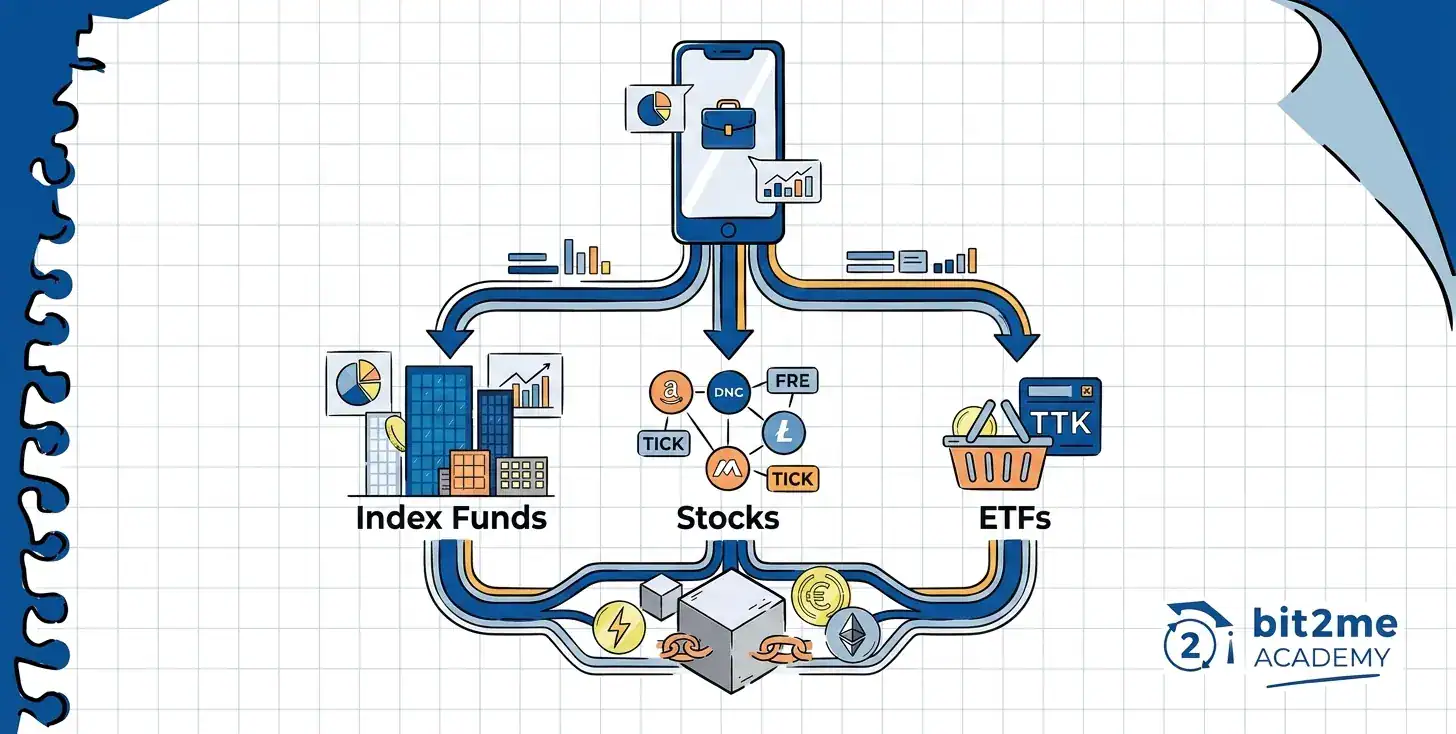
Invest in index funds, stocks, and ETFs from a single app
Discover how to invest in index funds, buy shares online and choose ETFs in Spain from a single app, with a comparative table of costs and taxes.
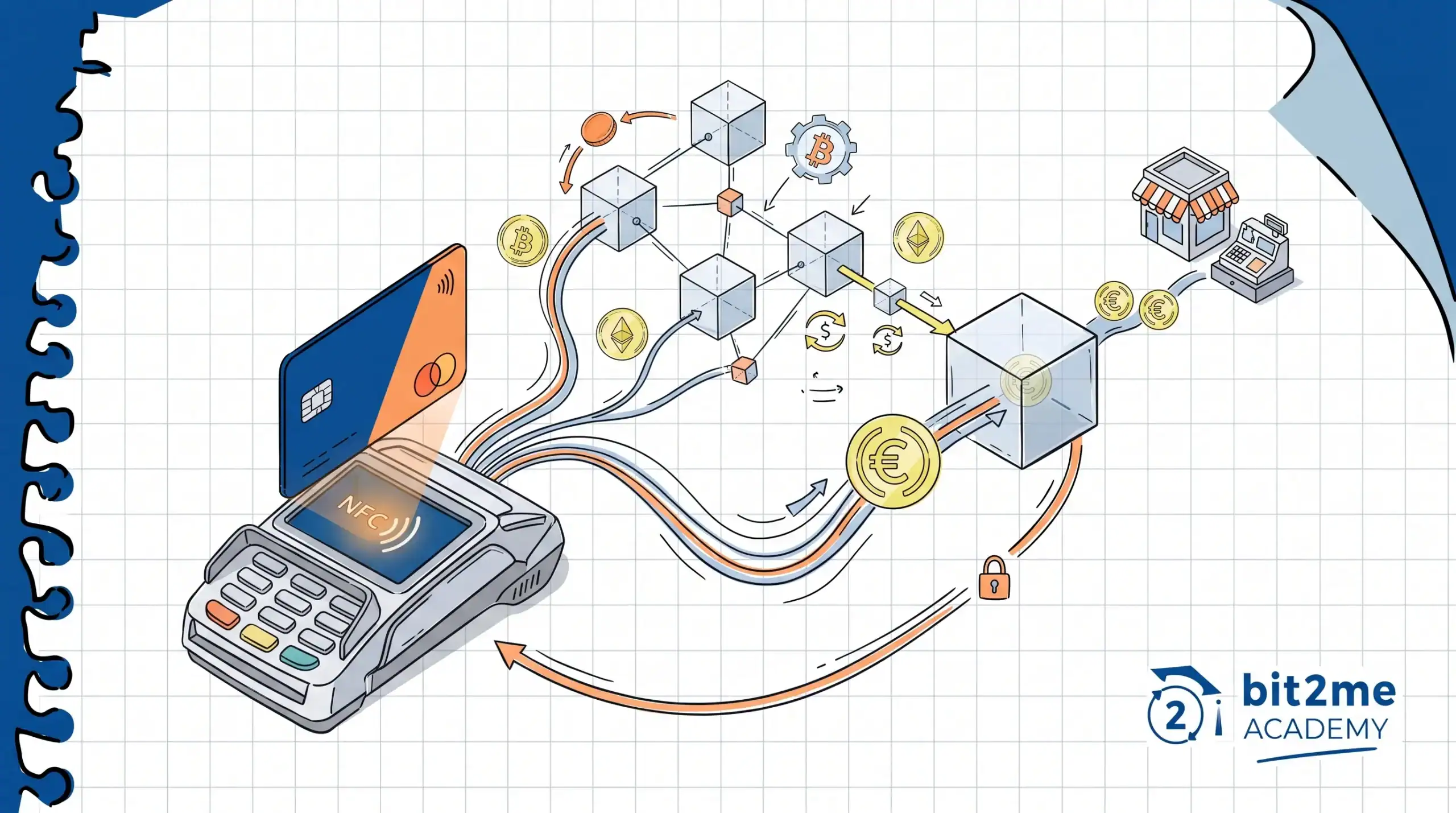
Crypto card in Spain: how it works and what you should know before choosing yours
Discover how a crypto card works in Spain: conversion when paying, regulatory framework, types, cashback, security and key criteria for choosing one.
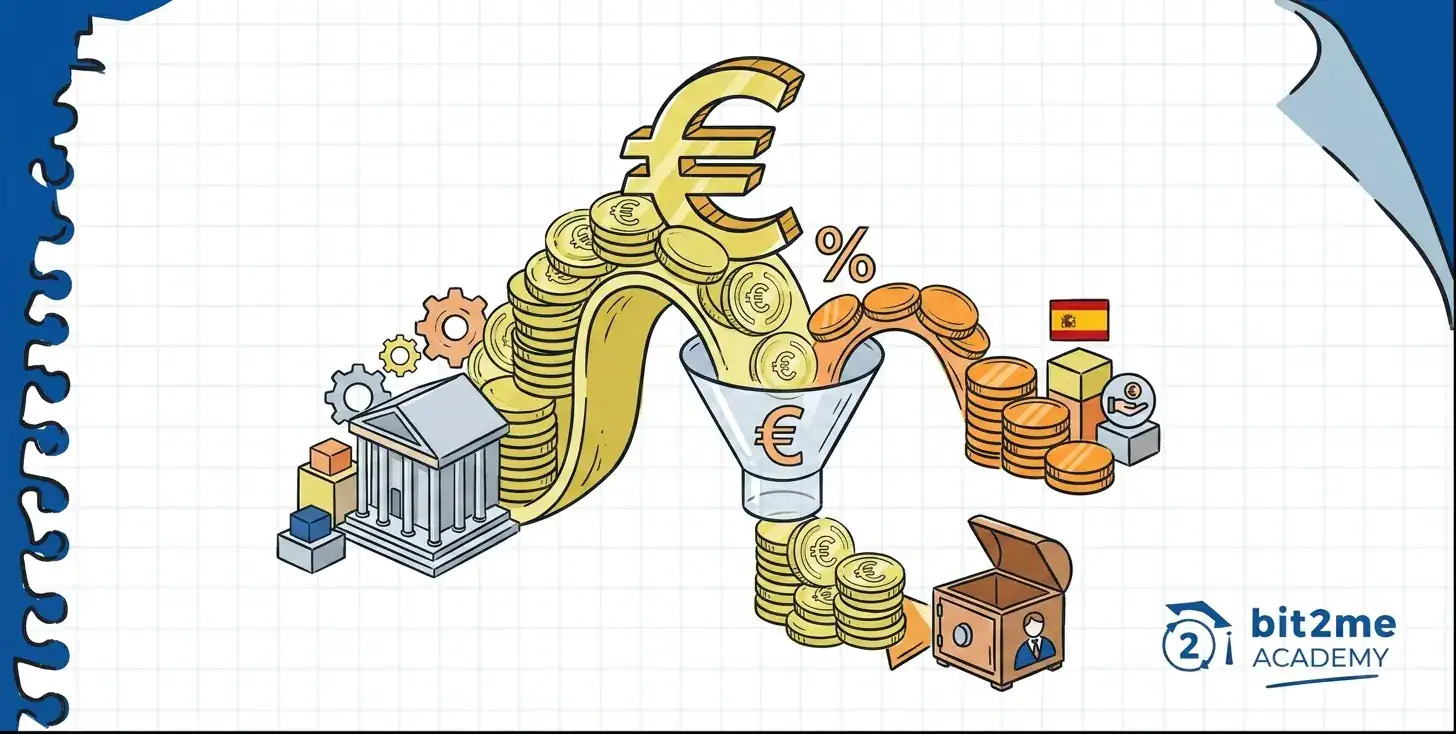
Dividends and tax withholding: how much do you really keep?
Understand how the 19% withholding tax on dividends works in Spain, international double taxation, and how to recover the excess in your tax return.
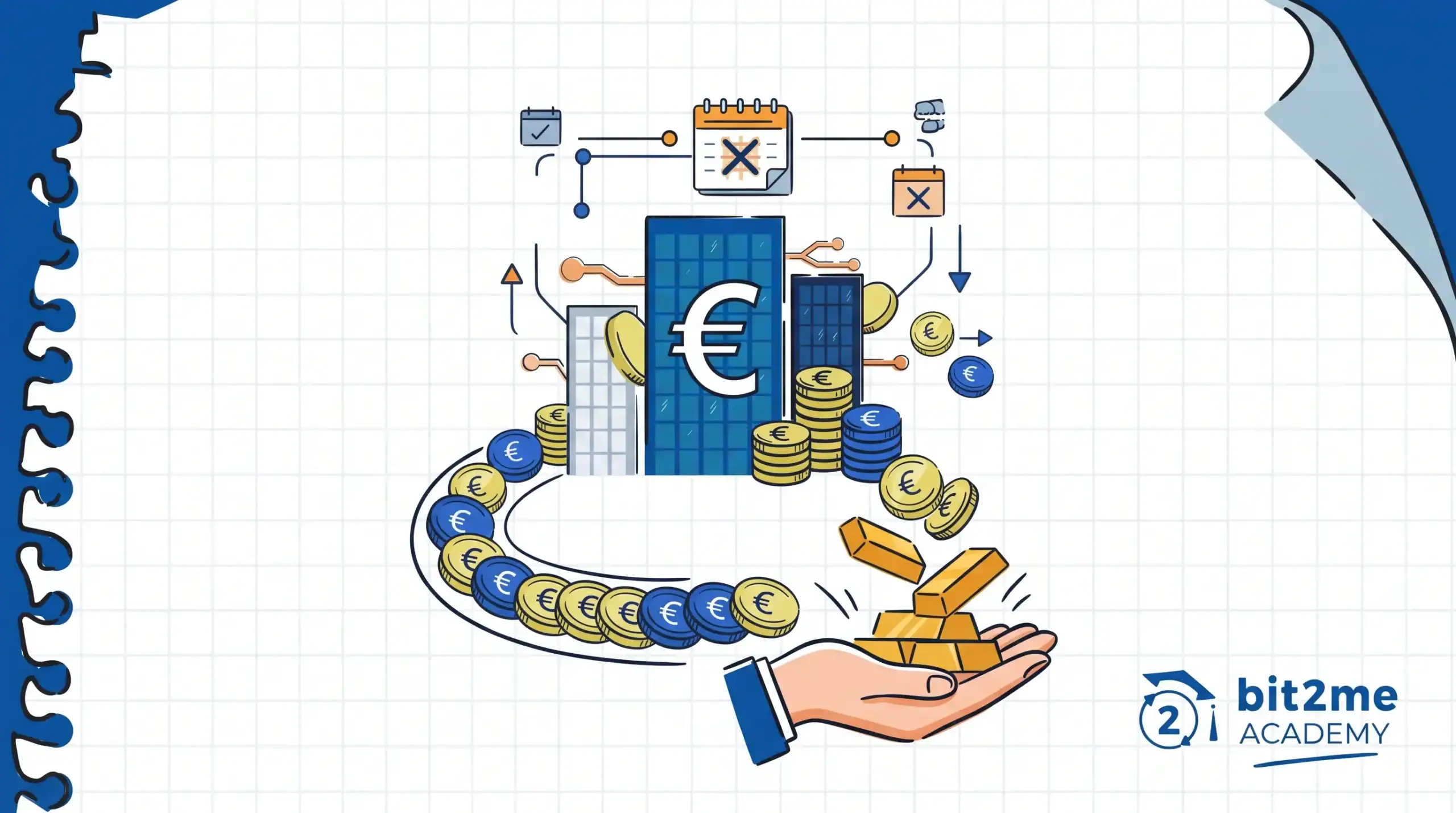
Dividends: how to earn income by investing in stocks
Dividends are the portion of profits that a company distributes to its shareholders. Discover how they work, the ex-dividend date, and withholding tax.