Loans using cryptocurrencies as collateral: the complete guide
Essential Points
- A cryptocurrency loan gives you liquidity in euros or stablecoins without having to sell your crypto assets or give them up.
- It works by providing bitcoin, ether or another digital asset as collateral: if you return it on time, you get back exactly what you contributed.
- It serves to cover expenses, take advantage of opportunities, or manage liquidity without closing your position in the asset you already own.
- The other side of the coin is real: if the price of the collateral falls sharply, you could face the liquidation of part or all of your asset.
If you already own Bitcoin, Ether, or other cryptocurrencies and need liquidity, you face a familiar dilemma: sell some of your holdings or find an alternative that doesn't require you to part with the asset. Cryptocurrency lending has gained traction precisely as a response to this dilemma, because it allows you to convert an asset you already own into available cash without closing your position. It's not a new concept in finance—secured loans have existed for centuries—but applying it to cryptocurrencies adds technical and risk nuances that are worth understanding before taking the plunge.
In this guide, you'll find a clear explanation of what a crypto loan is and how collateral works. You'll learn why some users prefer to maintain their exposure to the asset rather than sell, how LTV is generally calculated, and, most importantly, how liquidation risk works and why it should never be taken lightly. It also includes a comparison table between selling crypto assets and taking out a crypto loan, and a list of objective criteria for choosing a provider. This guide serves as a starting point for the rest of the content. Bit2Me Academy dedicated to the world of crypto lending.
What is a cryptocurrency loan and how does it work?
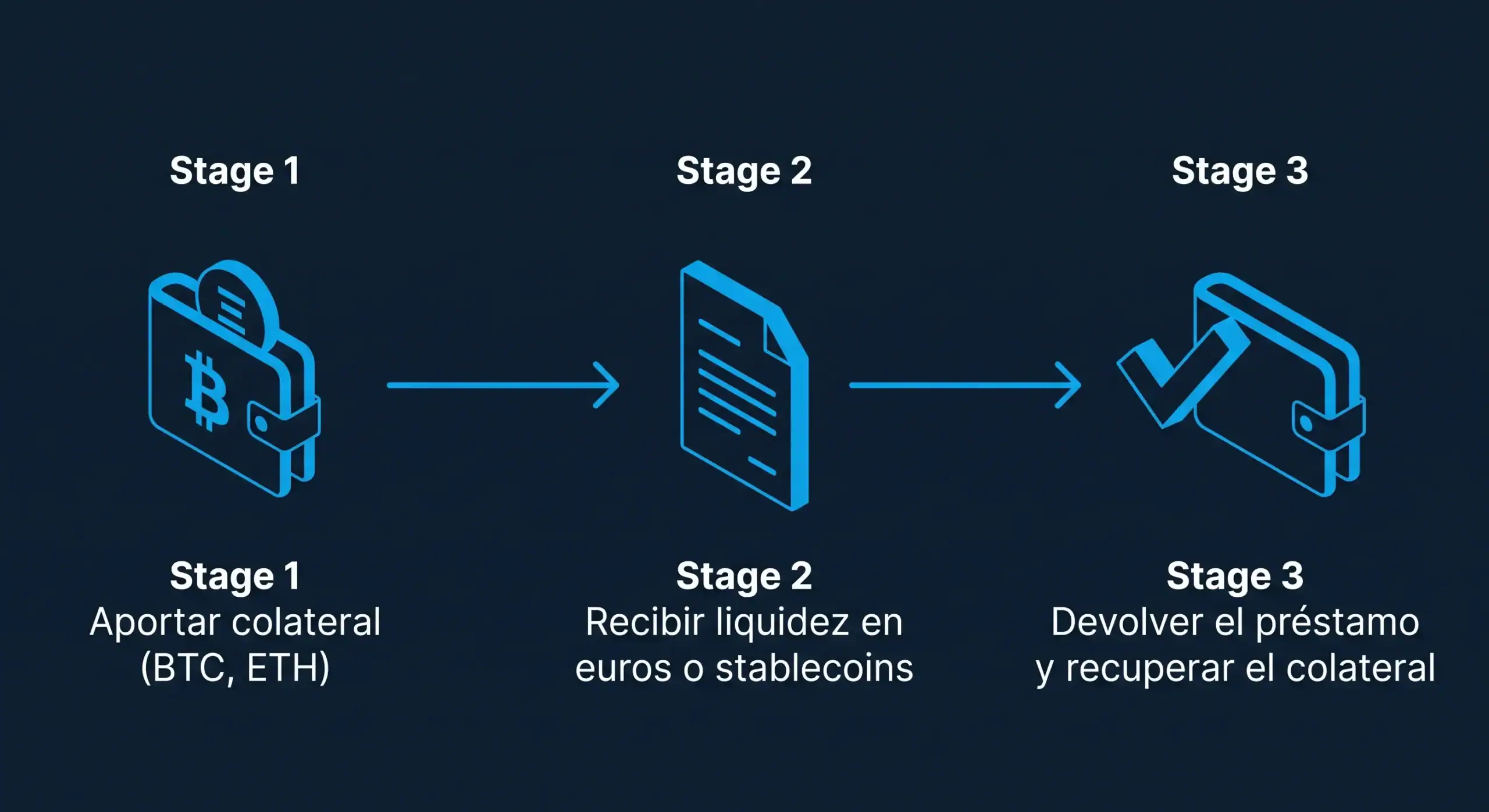
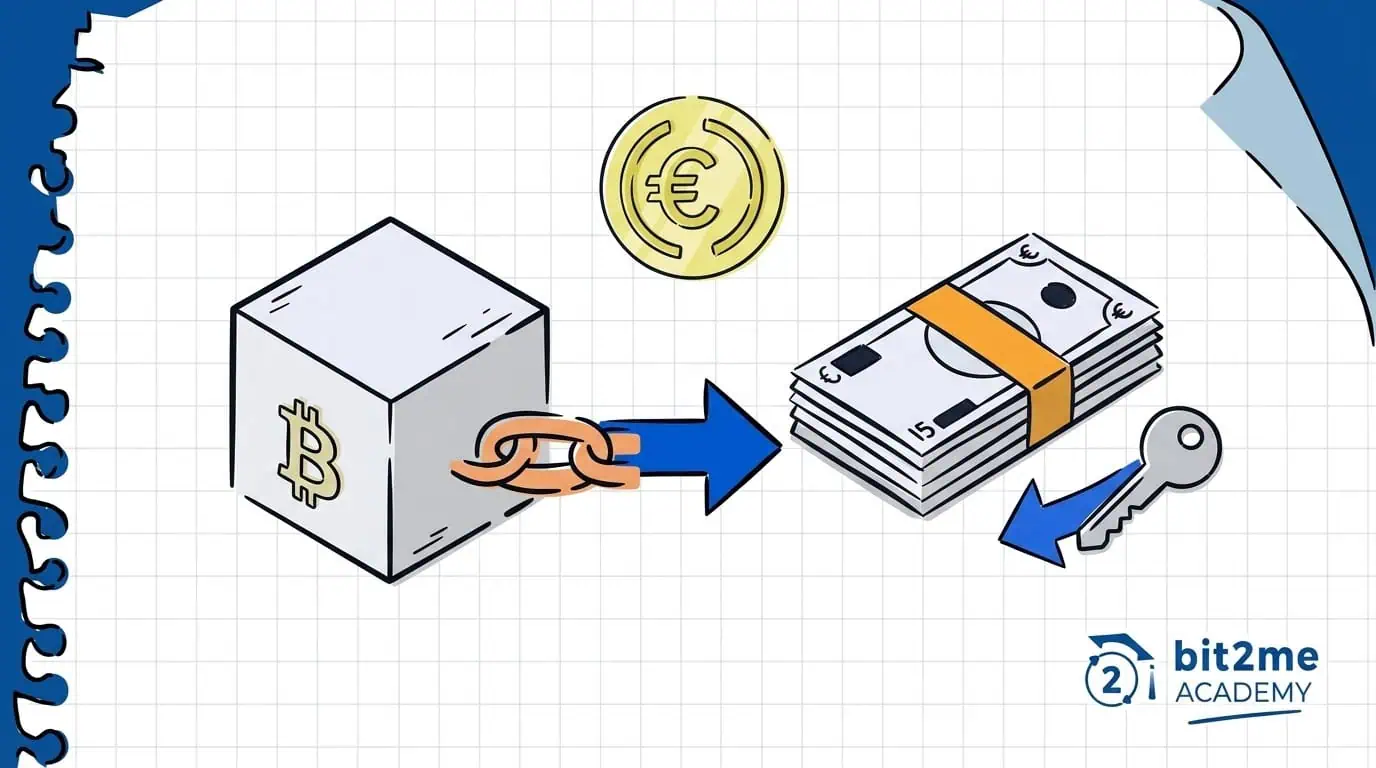
A crypto loan is a transaction in which the user provides crypto assets—such as Bitcoin, Ether, or others—as collateral or security, and in return receives liquidity, usually in euros or stablecoins. The platform granting the crypto loan holds this collateral for the duration of the transaction and returns it to the user once they repay the borrowed amount plus any associated costs. It is not a bank deposit or a savings account: it is a secured loan, in which the digital asset serves the same purpose as real estate in a mortgage or a vehicle in a traditional secured loan.
The key difference compared to selling is that the user does not transfer ownership of the asset to an external buyer. The collateral is held by the crypto loan provider for the duration of the transaction, but it remains, in economic terms, the user's: if the price rises, that additional value still belongs to them once the loan is repaid. The exact mechanics—collateral custody, how the loan amount is determined, and which assets are accepted as collateral—vary depending on the provider, so it's advisable to review the specific terms before contributing any crypto asset.
The typical process follows a simple sequence: the user chooses the asset they wish to contribute as collateral, the platform indicates how much liquidity they can receive based on that collateral, the user accepts the terms (term, cost of the crypto loan, and notification thresholds), and, once the transaction is finalized, receives the agreed amount. Throughout the entire process, the collateral remains in the provider's custody until the crypto loan is fully repaid.
Why maintain exposure to the asset instead of selling?
The main reason a user resorts to a crypto loan instead of selling is to maintain exposure to the underlying asset. Someone who sells Bitcoin to obtain liquidity closes their position: if the price rises afterward, they no longer benefit from that increase, and if they want to have the same amount of the asset again, they will have to buy it back, possibly at a different price. With a crypto loan, the user obtains the liquidity they need without giving up that position, because the asset becomes available to them again when the loan is repaid.
This logic is especially relevant for those who have been accumulating a specific cryptocurrency for some time and don't want to part with it due to a sudden need for cash, whether for personal expenses, to take advantage of another opportunity, or to cover business liquidity needs. Instead of unwinding that position, a crypto loan allows access to part of its value without closing it.
There is also a fiscal nuance that is often mentioned in this context, and it is worth explaining it precisely and without making promises.

Main Cryptocurrencies Course
Basic levelBit2Me Academy We bring you a new course where you will learn everything you need to know about the most important cryptocurrencies that exist today.
Empezar ahora ›How is LTV calculated on a crypto loan, at a high level?
The LTV, or loan-to-valueThe loan-to-value ratio (LTV) is the relationship between the amount of the crypto loan the user receives and the value of the collateral they provide. The lower the LTV, the greater the safety margin against price drops in the collateral, because a steeper decline is needed for the loan to become risky. The higher the LTV, the smaller this margin, and the more sensitive the transaction will be to the volatility of the cryptocurrency.
This relationship is not static: the collateral value is constantly updated because the price of crypto assets fluctuates, while the loan amount remains fixed except for partial repayments. This means that the LTV of a transaction can change without any action from the user, simply because the market moves. Crypto lending providers typically set warning and liquidation thresholds based on this LTV, which are explained in detail in the following section.
The exact calculation, typical thresholds, and how to interpret them based on the type of collateral provided are explained in greater detail in a specific guide on LTV for crypto loans within this same cluster. Generally speaking, the key takeaway for a user considering a crypto loan is understanding that a more conservative LTV reduces the likelihood of facing liquidation, although it also means receiving less liquidity for the same collateral provided.
Liquidation risk: what it is and why you should understand it before taking out a crypto loan
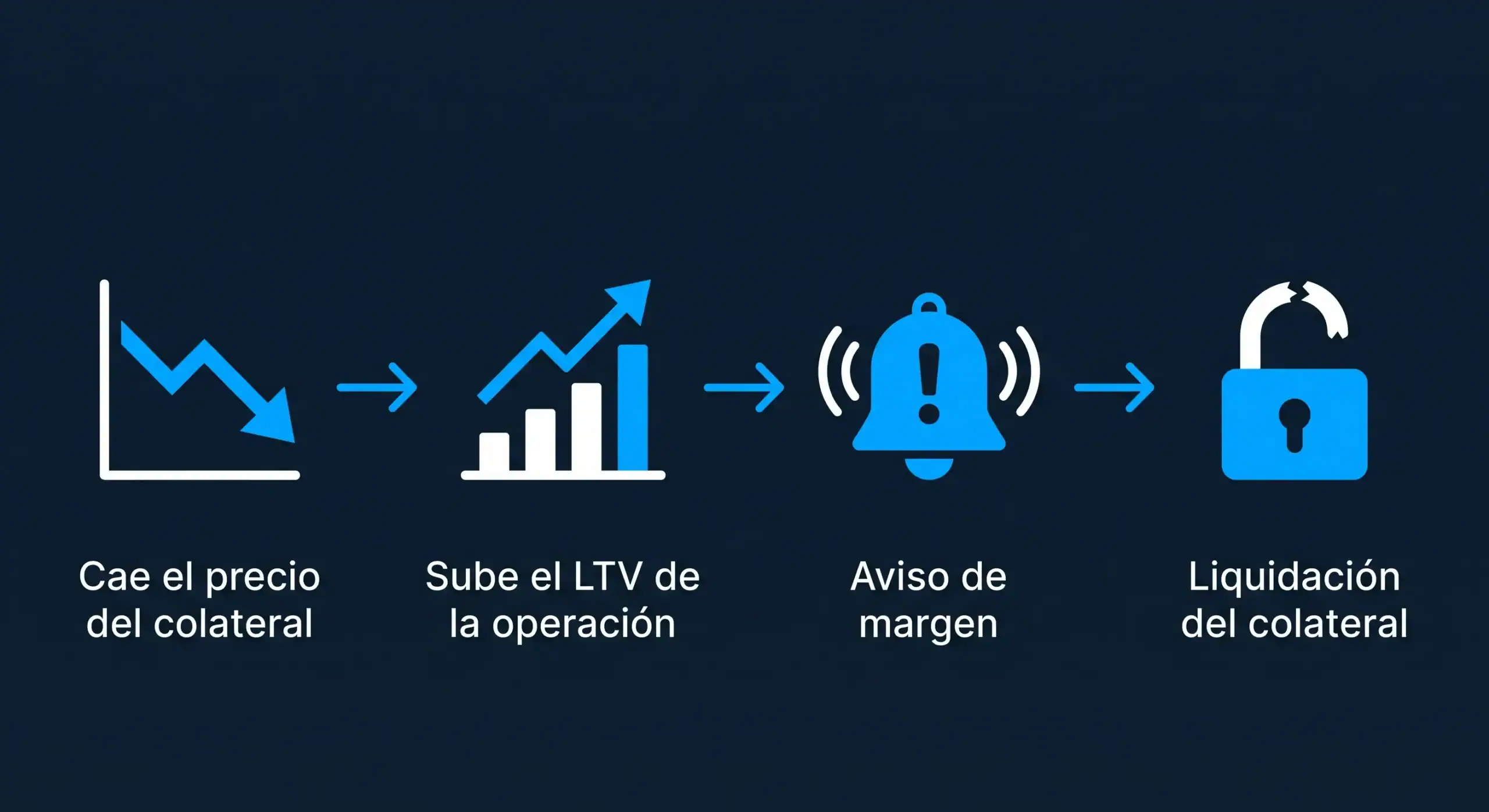
This is probably the most important point in the entire guide. A crypto loan is not risk-free, and anyone who presents it as a transaction without consequences is being inaccurate. If the price of the cryptocurrency offered as collateral falls significantly, the loan-to-value (LTV) of the transaction increases because the collateral is worth less relative to the loan amount. When this LTV exceeds certain thresholds, the platform may require the user to provide additional collateral or repay part of the loan to restore the safety margin.
If the user doesn't respond to the notification, or if the price drop is so rapid that there's no time to react, the lender can liquidate some or all of the collateral to recover the loan amount. This means the user could lose all or part of the digital asset they provided as collateral, and this loss could materialize at a time of low prices—the opposite of what was intended when they didn't sell in the first place. It's a real risk, not a remote possibility, and it increases with the higher the loan-to-value (LTV) of the transaction and the more volatile the cryptocurrency used as collateral.
Therefore, before offering any digital asset as collateral for a crypto loan, it's essential to understand the notification and liquidation thresholds of your chosen provider, maintain a reasonable safety margin, and have a clear plan in place to react if the market moves against you. In a dedicated guide within this cluster, we explain in more detail what liquidation is and how to minimize the likelihood of it occurring, as well as how to obtain liquidity without selling Bitcoin by evaluating different LTV levels. We also have another guide to help you decide, based on your specific situation, whether a crypto loan or selling your crypto assets directly is more suitable.
How to choose a crypto loan provider? Objective criteria
Once you've decided that a crypto loan suits your needs, the next step is to evaluate providers using objective criteria, without being swayed solely by the amount of liquidity offered. Here are the aspects you should review before providing any collateral:
- Transparency in LTV, notice and settlement thresholds, expressed clearly and accessibly before formalizing the transaction.
- Digital assets accepted as collateral and specific conditions for each of them.
- Custody and security of collateral, including whether the provider has verifiable audits or security measures.
- Conditions for early repayment and partial repayment of the crypto loan.
- Total cost of the operation, with no hidden fees or conditions that change after the loan is formalized.
- Regulatory framework of the provider: whether it operates as an authorized crypto asset service provider in the European Union under the MiCA regulation (Regulation (EU) 2023/1114).
Use cases: when does a loan backed by bitcoin or other crypto assets make sense?
A loan backed by Bitcoin or another cryptocurrency usually makes sense in specific situations, rather than as a general-purpose tool. The most common case is that of someone who needs to cover a one-off expense—a renovation, a major purchase, an emergency—and prefers not to sell an asset they've been accumulating for some time, especially if they believe the market isn't right to sell it.
Another common scenario is that of someone who identifies an opportunity—a business deal, the purchase of another asset, a cash flow need—and wants to take advantage of it without giving up their existing cryptocurrency holdings. Freelancers and small businesses with part of their cash reserves in digital assets also use these types of operations to manage liquidity without having to liquidate their positions at times they don't choose.
In all these cases, the decision criterion should not be solely "I need money now," but an honest assessment of whether the risk of liquidation can be assumed if the market moves against you during the term of the crypto loan.

Frequently Asked Questions about Crypto Lending
What is a crypto loan and how does collateral work?
It's a transaction where the user provides crypto assets as collateral and receives liquidity in return, usually in euros or stablecoins, without selling the asset. The collateral is returned to the user when they repay the crypto loan according to the agreed terms. It's not a bank deposit or a savings product.
How does collateral work in a crypto loan?
Collateral is the cryptocurrency the user provides as security to receive the loan. The platform holds it for the duration of the transaction and releases it when the user repays the borrowed amount. If the value of the collateral falls too low, the liquidation process explained in this guide may be triggered.
What digital assets can be used as collateral for a crypto loan?
It depends on the provider, but the most liquid cryptocurrencies with the highest market capitalization, such as Bitcoin or Ether, are usually the most accepted as collateral. Before finalizing any transaction, it's advisable to review the specific list of assets accepted by the chosen provider.
How can I apply for a loan backed by Bitcoin?
The typical process involves choosing the cryptocurrency you want to use as collateral, reviewing how much liquidity you can receive based on the available LTV, and accepting the terms of the crypto loan before finalizing it. The exact process and applicable requirements vary depending on the chosen provider.
Is it safe to take out a crypto loan using crypto assets as collateral?
This operation is not without risk: the main risk is the liquidation of the collateral if the asset price falls sharply and the user does not react to margin alerts. Choosing a conservative LTV and a regulated provider reduces exposure to this risk, but does not eliminate it.
What happens if the price of my collateral falls significantly?
If the price falls enough for the trade's LTV to exceed the established thresholds, the platform may require additional collateral or liquidate some or all of the contributed asset to recover the borrowed amount. This could mean losing your collateral at a time of low prices, so it's advisable to monitor the trade closely.
How does a crypto loan differ from a traditional personal loan?
A traditional personal loan doesn't require collateral and is primarily assessed based on the applicant's creditworthiness, while a crypto loan is granted in exchange for cryptocurrency collateral, without a traditional creditworthiness assessment. We have a dedicated guide in this cluster that compares crypto loans and personal loans in more detail.
Is it better to sell my crypto assets or take out a crypto loan?
It depends on whether you prefer to maintain exposure to the asset, assuming the liquidation risk, or forgo that exposure in exchange for eliminating that specific risk. In another guide in this series, we analyze in more detail how to decide between crypto lending or selling based on your personal circumstances.
What is the current state of crypto lending regulation in the European Union?
In the European Union, the MiCA regulation (Regulation (EU) 2023/1114) governs crypto-asset service providers, including those offering crypto loans, and establishes authorization and transparency requirements (in force since 2024). In Spain, the taxation of these transactions also follows the criteria of the Directorate General of Taxes (DGT) in binding rulings, which do not replace personalized tax advice.


«Investment in cryptoassets is not fully regulated, may not be suitable for retail investors due to high volatility and there is a risk of losing all invested amounts»
Share this article!Continue learning

Investment strategy: what it is and how to create your own in 5 steps
Learn what an investment strategy is and how to create your own in 5 steps: objective, horizon, risk profile, DCA, buy-and-hold and index investing.
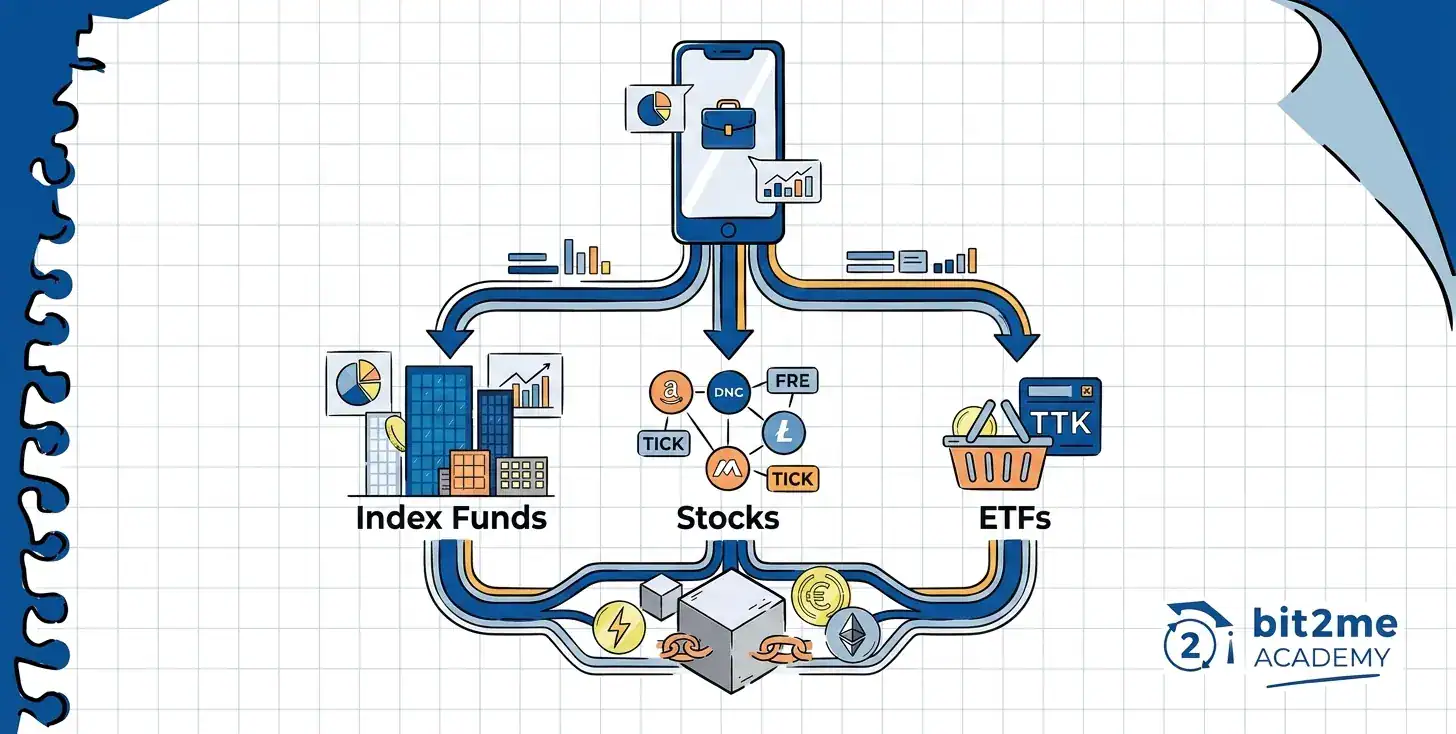
Invest in index funds, stocks, and ETFs from a single app
Discover how to invest in index funds, buy shares online and choose ETFs in Spain from a single app, with a comparative table of costs and taxes.
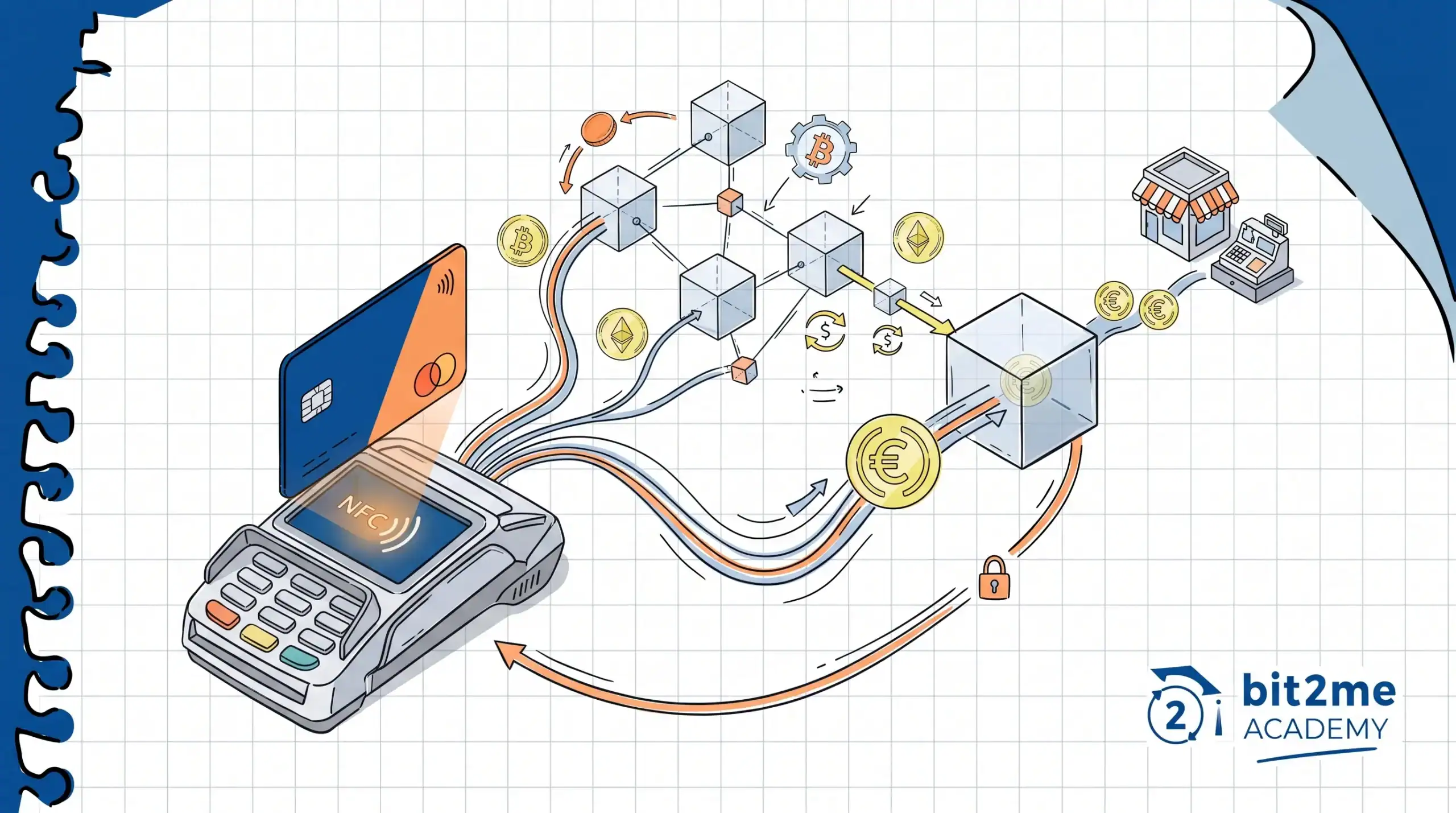
Crypto card in Spain: how it works and what you should know before choosing yours
Discover how a crypto card works in Spain: conversion when paying, regulatory framework, types, cashback, security and key criteria for choosing one.

Dividends and tax withholding: how much do you really keep?
Understand how the 19% withholding tax on dividends works in Spain, international double taxation, and how to recover the excess in your tax return.