Resumen del año cripto 2026: hitos, regulación y qué mirar en 2027
- The crypto summary for 2026 is mainly explained by one structural fact: the European authorization regime for crypto asset providers was already in its second full year of full implementation.
- MiCA (Markets in Crypto-Assets) has ceased to be a regulatory novelty and has become the stable playing field on which exchanges, custodians and issuers of stablecoins operate in the European Union.
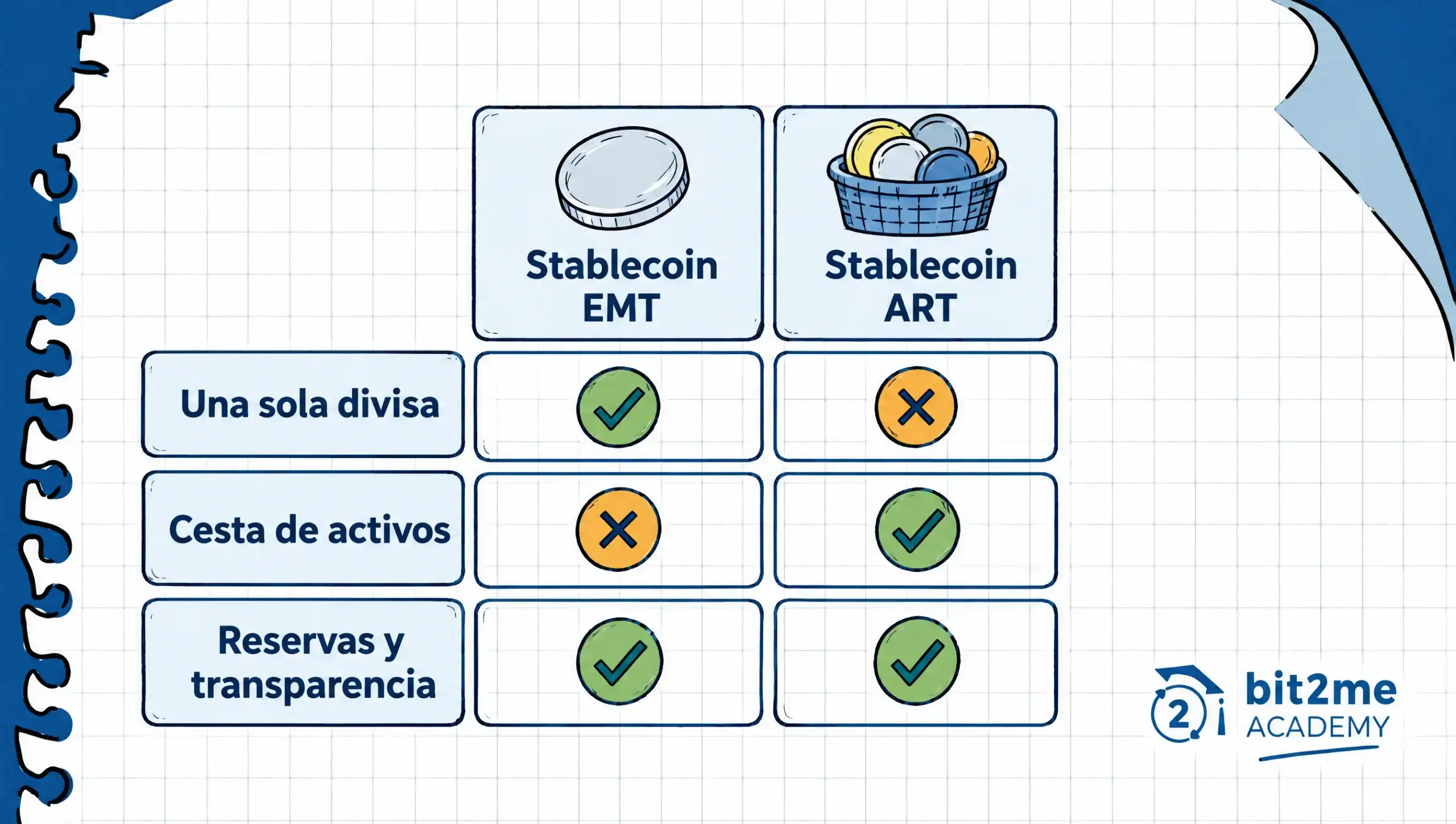
- The EMT and ART regime for stablecoins consolidated clear rules on reserves and transparency, something that previously depended almost entirely on the goodwill of the issuer.
- The big question for cryptocurrencies in 2027 is not whether there will be more regulation, but how that already mature framework will be integrated with traditional banking and finance.
In December, as every year, it's natural to look back and ask what has truly changed in the crypto ecosystem. This 2026 crypto roundup doesn't aim to list isolated headlines or anticipate price movements, but rather to organize the structural facts that can be verified with sources: the implementation timeline for the MiCA Regulation, the status of the Crypto Asset Service Provider (CASP) authorization regime, and the consolidation of the stablecoin framework known as EMT/ART.
In the following sections, you'll find a review of the crypto year 2026 focusing on European regulation, a current overview of the regulatory framework already in place, the underlying trends that shaped the ecosystem, and, finally, the thematic lines—not predictions—to watch for cryptocurrencies in 2027. This content is designed to be shared: if you found this year-end overview helpful, it will likely be useful to someone you know who uses crypto assets.
Important noticeThis article is for educational and informational purposes only. The content does not constitute financial, legal, or tax advice. Cryptocurrencies are high-risk assets and their value can fluctuate significantly. Consult a qualified professional before making any acquisition or participation decisions.
The acquisition of crypto assets is not fully regulated, may not be suitable for all user profiles due to their high volatility, and there is a risk of losing all the amounts intended for their purchase.
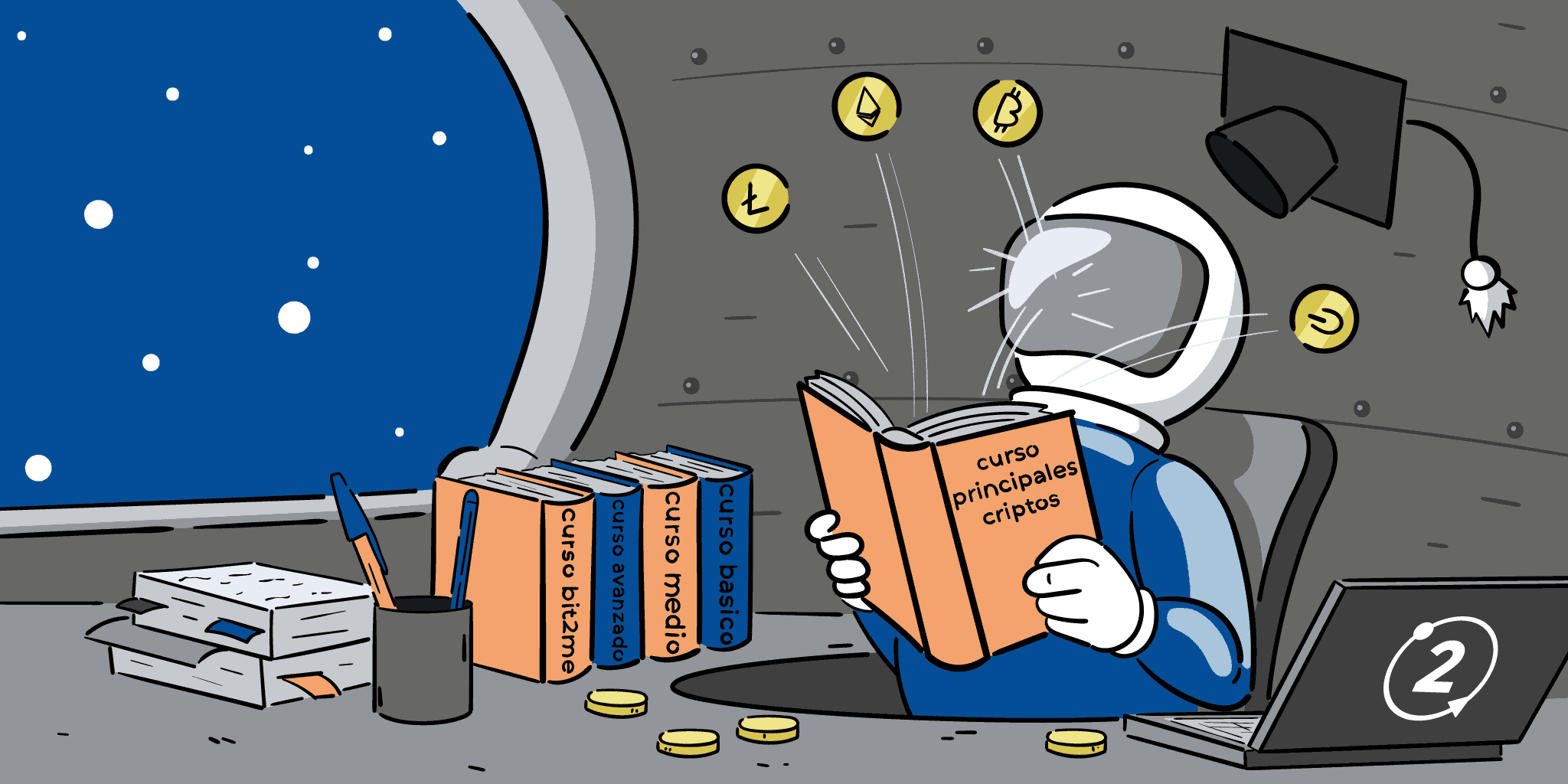
Main Cryptocurrencies Course
Basic levelBit2Me Academy We bring you a new course where you will learn everything you need to know about the most important cryptocurrencies that exist today.
Empezar ahora ›The crypto year 2026 under the MiCA microscope
If there's one thing that characterizes the crypto year 2026, it's that regulation has gone from being an outstanding issue to becoming the framework. The MiCA Regulation, approved by the European Union as the first comprehensive regime for crypto assets, came into force in phases between 2024 and 2025: first the section dedicated to issuers of stablecoins (tokens referenced to assets and electronic money tokens) and, later, the general authorization regime for crypto asset service providers. Bit2Me Academy We dedicate a specific guide to explaining What is MiCA? in detail, something especially useful if you want to understand the origin of all the obligations mentioned in this summary.
The significant development in 2026 is not the appearance of a new regulation, but rather that the authorization regime for CASPs—Crypto Asset Service Providers, or PSCs—reached its second year of full implementation across the European Union. This means that the national transition periods, which allowed entities to continue operating under the previous regime, have ended. money laundering prevention While they were completing their MiCA dossier, the process had already been completed in all Member States. In practice, any platform offering custody, exchange, or order execution for crypto assets within the EU had to operate under a valid and supervised CASP authorization, not under a promise of future compliance.
This shift—from "we're going to be regulated" to "we're already regulated and supervised"—is the common thread throughout much of the crypto year 2026. National regulators, coordinated by the European Securities and Markets Authority (ESMA), have moved from managing authorization applications to exercising continuous supervision over already authorized entities. This distinction is important because it changes the nature of regulatory risk for the user: it's no longer just about whether a platform "is in the process," but whether it maintains its authorization and consistently fulfills its obligations.
The CASP regime and EMT/ART stablecoins, explained without technical jargon
To understand the crypto year 2026, it's helpful to separate two often-confused parts of the same regulation. The first is the CASP authorization regime, which affects any entity that provides services related to crypto assets: exchanges, wallet custodians, trading platforms, and third-party portfolio managers. To obtain and maintain this authorization, an entity must demonstrate minimum capital, corporate governance policies, conflict of interest management procedures, and, above all, the segregation of user funds from the company's own assets.
The second element is the stablecoin system, which MiCA divides into two categories with somewhat unintuitive names but simple concepts. EMTs (Electronic Money Tokens) are stablecoins. referenced to a single currency Official currencies, such as the euro or the dollar, require their issuer to maintain reserves equivalent to 100% of their circulating value. Asset-referenced tokens (ARTs) are stablecoins pegged to a basket of assets, various currencies, or commodities, and are subject to even more stringent reserve and transparency requirements due to their greater complexity.
The combination of both regimes explains much of the sector's consolidation during 2026: an exchange Not only does it need its own CASP authorization to operate, but it must also verify that the stablecoins it lists on its platform come from issuers authorized under the relevant EMT/ART regime. This double layer of requirements—on the platform and on the assets it lists—is one of the most profound differences between the current European crypto market and the one that existed before MiCA.
Current status: supervision of crypto asset providers as of December 2026
As of the end of 2026, the European regulatory framework for crypto assets is in a phase of active consolidation rather than initial construction. The focus of the CNMV in Spain, as with the other national regulators coordinated by ESMA, has shifted from processing new authorization applications to the ongoing supervision of already authorized entities: reviewing their corporate governance policies, verifying the effective segregation of funds, and monitoring their periodic reporting obligations.
This ongoing monitoring phase is, by design of the Regulation itself, a process that extends over time and may incorporate technical adjustments—implementation guidelines, harmonized interpretation criteria across countries—without implying a change in the overall architecture of MiCA. Therefore, this section should be understood as a structural snapshot of the regime's status, not as a closed list of specific resolutions, and will be updated with verified year-end data at the time of the article's final publication.
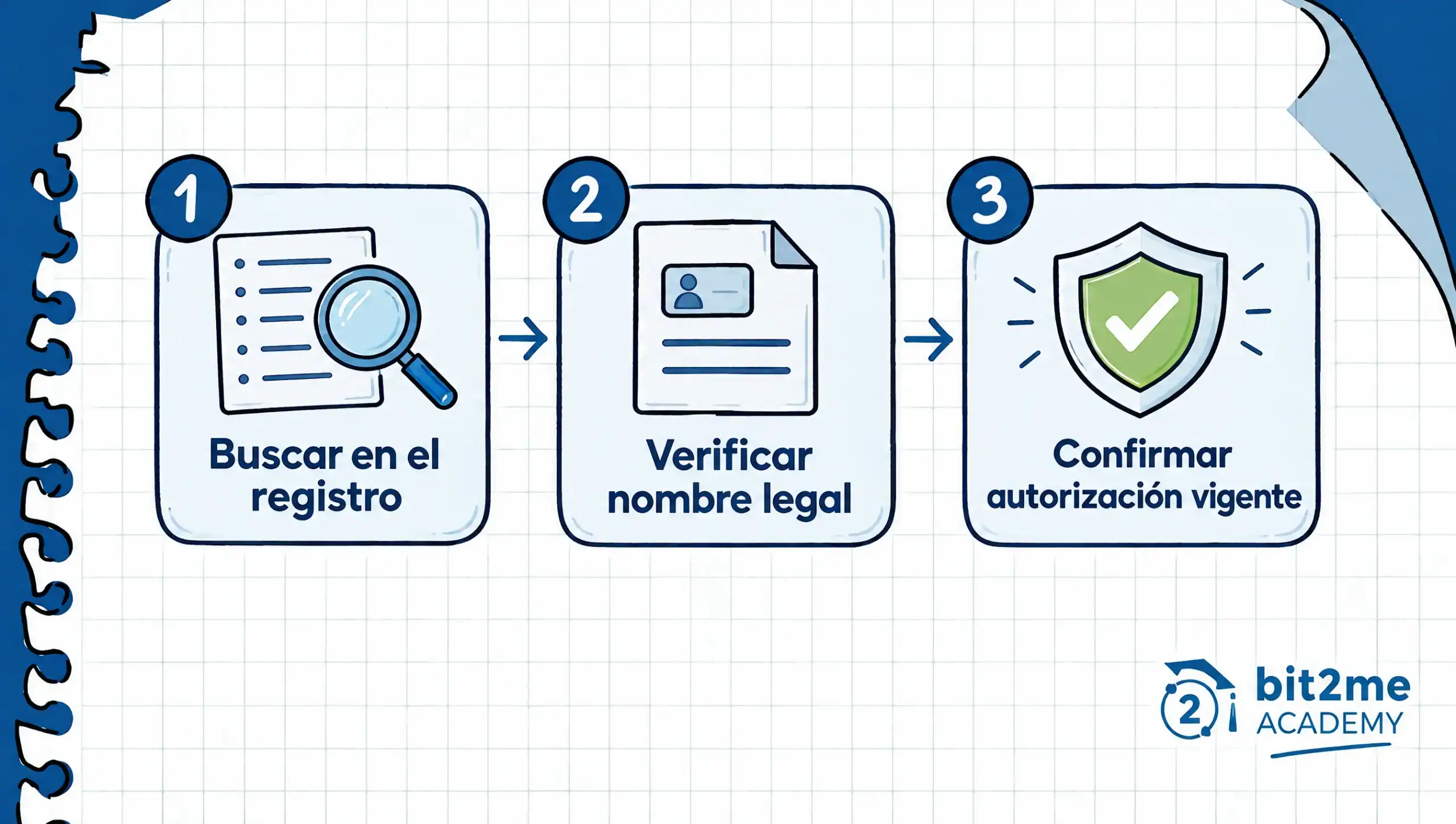
What can be stated based on the regulatory text itself is that, at this point, the relevant question for any user is no longer "when will my exchange be regulated?", but rather "does my exchange still have its authorization valid?". This is precisely the type of check you can perform yourself by consulting the public records of the CNMV or ESMA, something we explain in more detail in the guide. Bit2Me Academy dedicated to exchanges regulated under MiCA.
Structural trends that marked the crypto year 2026
Beyond the regulatory calendar, the crypto year 2026 was marked by underlying trends that don't depend on a specific announcement, but rather on the sector's gradual maturation. The first is the European Union's own regulatory maturity: as the first economic bloc with a comprehensive and harmonized framework for crypto assets, it served as a benchmark for regulatory debate in other jurisdictions, which closely observed how such a regime translates into concrete obligations for exchanges and issuers.
The second trend is the progressive increase in institutional interest in crypto assets as an asset class within a regulated framework. This dynamic is not a phenomenon exclusive to 2026, but rather the continuation of a process that has been underway for several years: traditional financial institutions, wealth managers, and institutional players have been exploring how to participate in the crypto ecosystem in a way that is compatible with their own regulatory compliance obligations. The existence of a framework like MiCA reduces much of the legal uncertainty that previously hindered this approach.
The third trend is the consolidation of regulated exchanges versus platforms that operated in regulatory gray areas. As the CASP regime takes hold, the market tends to concentrate around entities with verifiable authorization, while platforms that did not complete this process have seen their room for maneuver to operate within the European Union reduced. This is not a judgment on the technical quality of any particular platform, but rather a logical consequence of the fact that authorization is no longer optional or something that can be postponed indefinitely.
It is worth emphasizing that these three trends are structural, that is, they describe the general direction of the sector and do not replace the specific data on adoption or institutional participation that the editorial team must incorporate, with its corresponding source, before the final publication of this crypto 2026 summary.
What to watch in cryptocurrencies in 2027
Looking ahead to cryptocurrencies in 2027, the most useful exercise is not trying to predict price movements—something this article deliberately avoids as a matter of editorial principle—but rather identifying the thematic lines that are likely to remain in public discussion. The first is the evolution of CASP supervision: as regulators gain more experience with already authorized entities, it is reasonable to expect more detailed implementation guidelines and greater harmonization of criteria among the various Member States.
The second area to monitor is the integration between the crypto ecosystem and traditional finance. With a regulatory framework already in place, it is plausible that banks, asset managers, and other traditional players will deepen their relationship with crypto assets in increasingly integrated ways, from custody to the distribution of products that combine digital and conventional financial assets. This integration, if it occurs, would follow the pace set by each entity and its own regulatory compliance process, not a single timeline for the entire sector.
The third line of inquiry concerns the evolution of the EMT/ART stablecoin framework itself. Given that this regime is relatively recent in its full implementation, it is reasonable to anticipate technical adjustments and clarifications of criteria as European regulators gain experience supervising specific issuers, particularly regarding composition and audit of reservesFinally, it is advisable to closely monitor any regulatory developments under public discussion at the European or international level, as the very dynamism of the sector makes it likely that new regulatory proposals will emerge before the end of the decade.
How to check for yourself if a platform is still regulated
With a landscape as consolidated as the one described in this 2026 crypto summary, the practical question for any user is simple: how do I know if the platform I use, or the one I'm considering, maintains its authorization? The answer doesn't require technical knowledge, but rather consulting the correct source. CNMV public records In Spain and at the European level, ESMA allows you to check if an entity has a valid CASP authorization, always verifying the exact legal name and not just the trademark that appears on its website.
If you want to delve deeper into the regulatory framework that supports all of the above, in Bit2Me Academy A comprehensive guide on what MiCA is is available, designed to help you understand the regulations from their fundamentals to their practical implications for anyone who buys or holds crypto assets. It's the natural next step after this summary if you want to move from the general overview to the regulatory details.
Understanding this framework isn't just an exercise in regulatory curiosity; it's the foundation upon which you decide where to acquire your crypto assets with the oversight guarantees described in this article. If you already know what to look for in a regulated platform, you can create an account and start trading within a fully supervised environment.
Reviewing the crypto year 2026 from a regulatory perspective, rather than focusing on specific headlines, leads to a fairly clear conclusion: the sector has moved from debating whether there should be rules to discussing how those rules are applied in practice. This maturation is not the end of the process, but rather the foundation upon which the 2027 cryptocurrency conversations will be built, from integration with traditional finance to the next adjustments to the stablecoin framework. If this summary has helped you organize your thoughts on the year, share it with anyone else who needs to catch up before December ends.
Frequently Asked Questions about the 2026 Crypto Summary
What exactly is MiCA and why is it the focus of this 2026 crypto roundup?
MiCA (Markets in Crypto-Assets) is the European Union Regulation that establishes the comprehensive framework for crypto-assets and the entities that provide services related to them. It is the focus of this summary because its full implementation, achieved in phases between 2024 and 2025, defined the playing field on which the entire sector operated during 2026.
What really changed in the crypto year 2026 compared to previous years?
The main change was not the introduction of a new regulation, but rather that the national transition periods for the CASP regime had already ended across the European Union. This meant that supervision shifted from focusing on processing authorizations to monitoring the ongoing compliance of already authorized entities.
What is a CASP and how does it differ from a PSC?
CASP (Crypto-Asset Service Provider) is the term MiCA uses in English to designate any provider of crypto-asset services, while PSC is its equivalent in Spanish regulations. Both terms refer to the same regulatory entity and the same authorization requirements.
How can I check if an exchange is still authorized today?
Check the public register of the CNMV or ESMA and enter the exact legal name of the entity, not just its brand name. If the platform does not appear in any official register, this should be treated as a red flag before funding an account.
What are EMTs and ARTs in the stablecoin system?
Electronic money tokens (EMTs) are stablecoins pegged to a single official currency with reserves equivalent to 100% of their circulating value. Asset-backed tokens (ARTs) are stablecoins linked to a basket of assets or currencies, subject to even more stringent reserve and transparency requirements.
Is it safer to buy cryptocurrencies on a platform regulated under MiCA?
A platform with a valid CASP authorization is required to segregate user funds and maintain supervised corporate governance policies, which reduces certain operational and management risks. No regulatory framework eliminates the inherent volatility of crypto assets, which remains a risk associated with their acquisition.
How does the 2026 regulatory approach differ from the one that existed before MiCA?
Before MiCA, many financial institutions operated under regimes focused almost exclusively on preventing money laundering, with much more limited requirements. MiCA's CASP regime adds requirements for minimum capital, corporate governance, cybersecurity, and segregation of funds, along with continuous supervision.
What trends should we watch for in the cryptocurrency market in 2027?
It is advisable to monitor the evolution of CASP supervision, the progressive integration of crypto assets and traditional finance, and any potential technical adjustments to the EMT/ART stablecoin regime. It is also reasonable to keep an eye on any new regulatory proposals that enter public discussion at the European level.
Does this summary include price forecasts for 2027?
No. This article deliberately focuses on verifiable structural regulatory facts and underlying trends, avoiding any claims about the future value of crypto assets. Purchase decisions should be based on your own information and, where appropriate, qualified professional advice.
Where can I learn more about the MiCA framework mentioned in this 2026 crypto roundup?
En Bit2Me Academy You'll find a dedicated guide explaining what MiCA is in detail, as well as content on how to verify if an exchange is regulated. These are the natural readings to move from this annual overview to the complete regulatory details.


«Investment in cryptoassets is not fully regulated, may not be suitable for retail investors due to high volatility and there is a risk of losing all invested amounts»
Share this article!Continue learning

Glosario del préstamo cripto: términos que debes conocer
Glosario préstamo cripto: 22 términos citables, como colateral, LTV, margin call y liquidación, explicados con definiciones claras y enlaces internos.

Exchange vs wallet: diferencias y cuándo usar cada uno
Descubre la diferencia entre exchange y wallet, cuándo conviene usar cada uno y cómo combinarlos para comprar y guardar tus criptoactivos con seguridad.

Qué es el slashing y cómo te protege un CASP regulado
Qué es el slashing en staking, por qué penaliza a los validadores y cómo un CASP regulado bajo MiCA reduce el riesgo de errores operativos que lo provocan.

Staking institucional y nodos: infraestructura para empresas
Staking institucional para empresas: infraestructura HSM/MPC, riesgo de slashing y autorización CASP bajo MiCA para decidir externalizar o gestionar nodos.