Cryptocurrencies in Australia: buying guide 2026
- Currency
- AUD
- Legal status
- Legal and regulated (MiCA)
- Supervisor
- AUSTRAC / ASIC

 Australia
Overview in Australia
Buying cryptocurrencies in Australia is increasingly common: many Australians hold Bitcoin, Ethereum or stablecoins for diversification, trading or sending value overseas. The country combines high digital-banking penetration with instant PayID transfers and a clear requirement that digital currency exchanges register with AUSTRAC. Yet most online guides ignore AUD cost bases, CGT record-keeping and when ASIC treats a token as a financial product. This hub gathers what matters for Australian residency before you explore each asset.
Legally, crypto is not Australian legal tender — the RBA issues dollars — but buying and selling virtual assets is permitted when providers comply with AML/CTF law. AUSTRAC registers digital currency exchanges; ASIC supervises crypto products that fall under the Corporations Act. The ATO taxes crypto as a capital gains tax (CGT) asset: disposals, swaps and many spend events trigger reporting, with a potential 50% CGT discount after 12 months' holding for individuals.
Operationally, Australians fund local exchanges via PayID/Osko (near-instant AUD) or bank transfer, and international platforms via card or foreign-currency transfer. Sections below cover payments, regulation, market context, tax, security and the step-by-step buying process — plus why some users choose a MiCA-licensed European CASP alongside AUSTRAC-registered venues.
Key facts
- Currency
- AUD
- Legal status
- Legal and regulated (MiCA)
- Supervisor
- AUSTRAC / ASIC
- Tax authority
- ATO (Australian Taxation Office)
PayID, Osko and bank rails: how Australians fund crypto purchases
The New Payments Platform (NPP) enables near-real-time AUD transfers through PayID (email or phone alias) or Osko. Most AUSTRAC-registered exchanges display a PayID or BSB/account for deposits that credit within minutes, including evenings and weekends — a major reason retail onboarding accelerated compared with slower international wire cut-offs.
Debit and credit cards, Apple Pay and Google Pay suit first purchases on domestic or international platforms, often with a percentage surcharge. Standard bank transfer without NPP may take one business day. Compare total cost: PayID is usually free from personal accounts, while cards trade speed for higher fees.
European MiCA platforms such as Bit2Me typically do not offer PayID: Australians access via card or EUR/USD bank transfer after KYC. That adds FX spread but provides EU supervision and 400+ assets. Never send AUD to personal accounts promising "cheap USDT" — use identifiable, regulated businesses only.
Crypto regulation in Australia: AUSTRAC, ASIC and consumer protection
Australia's baseline is AML/CTF registration: any business exchanging fiat and crypto must register as a digital currency exchange (DCE) with AUSTRAC, implement KYC, monitor transactions and report suspicious matter. Operating without registration is a criminal offence. The public register lets you verify a provider before depositing AUD.
ASIC enters when crypto products resemble financial products — certain tokens, derivatives, managed schemes or misleading promotions. ASIC has taken action against unlicensed offerings and requires risk disclosure for some retail crypto products. MiCA in Europe is separate law, but the principle is similar: match the product to the supervisor.
For retail users, practical steps are: confirm AUSTRAC DCE registration (or MiCA CASP licence for offshore choice), read custody and insurance terms, enable 2FA and export trade history for the ATO. Registration does not prevent market loss — BTC can still fall sharply — but raises custody and AML standards.
The Australian crypto market: adoption, superannuation curiosity and stablecoins
Australia ranks among higher-adoption developed markets: SMSF (self-managed super) holders explore BTC within strict rules, traders run USDT pairs, and remittance corridors to Southeast Asia and the UK drive on-chain experiments. Motivations mix diversification, tech curiosity and hedge against AUD moves — not hyperinflation, but real interest-rate and housing-cost context.
Bitcoin and Ethereum dominate search volume; USDT anchors trading liquidity; XRP appears in cross-border payment narratives; Cardano attracts proof-of-stake enthusiasts. Domestic exchanges list AUD pairs; international CASPs quote EUR/USD with card entry.
Taxation of crypto in Australia: ATO, CGT events and the 12-month discount
The ATO treats crypto as a CGT asset (not currency). A CGT event occurs when you sell for AUD, swap crypto, gift it or use it to pay for goods at market value. Calculate gain as proceeds minus cost base (acquisition price plus allowable fees). Individuals may receive a 50% CGT discount if the asset was held 12+ months.
Crypto-to-crypto trades are disposals of the asset sold — even without AUD hitting your bank. Staking, airdrops and earn rewards may be ordinary income when received, then CGT when disposed. The ATO data-matching programme includes exchange reporting — keep CSV exports.
Educational information only; not tax advice. Use myTax or a registered tax agent and consult ATO guidance for complex DeFi or SMSF structures.
This information is educational and does not replace professional tax advice. Always consult your tax authority before filing.
Security and custody: protecting crypto as an Australian resident
Scams peak via SMS phishing impersonating banks, fake Binance support and romance fraud on dating apps. AUSTRAC registration and MiCA licensing reduce counterparty risk but not price risk. Use app-based 2FA, hardware keys where supported, and bookmark exchange URLs.
Split holdings: trading float on a regulated exchange, long-term BTC on a hardware wallet. Bit2Me adds MiCA supervision and custodial insurance on qualifying balances for users choosing EU-regulated custody alongside local AUD rails.
Ready to buy in Australia?
Create your free account, choose a method available for your market, and get started in minutes.
- Bank transfer
- Card
- Apple Pay
- Google Pay
How to buy cryptocurrencies in Australia
Three steps to get started with your local currency on a regulated platform.
Step 1
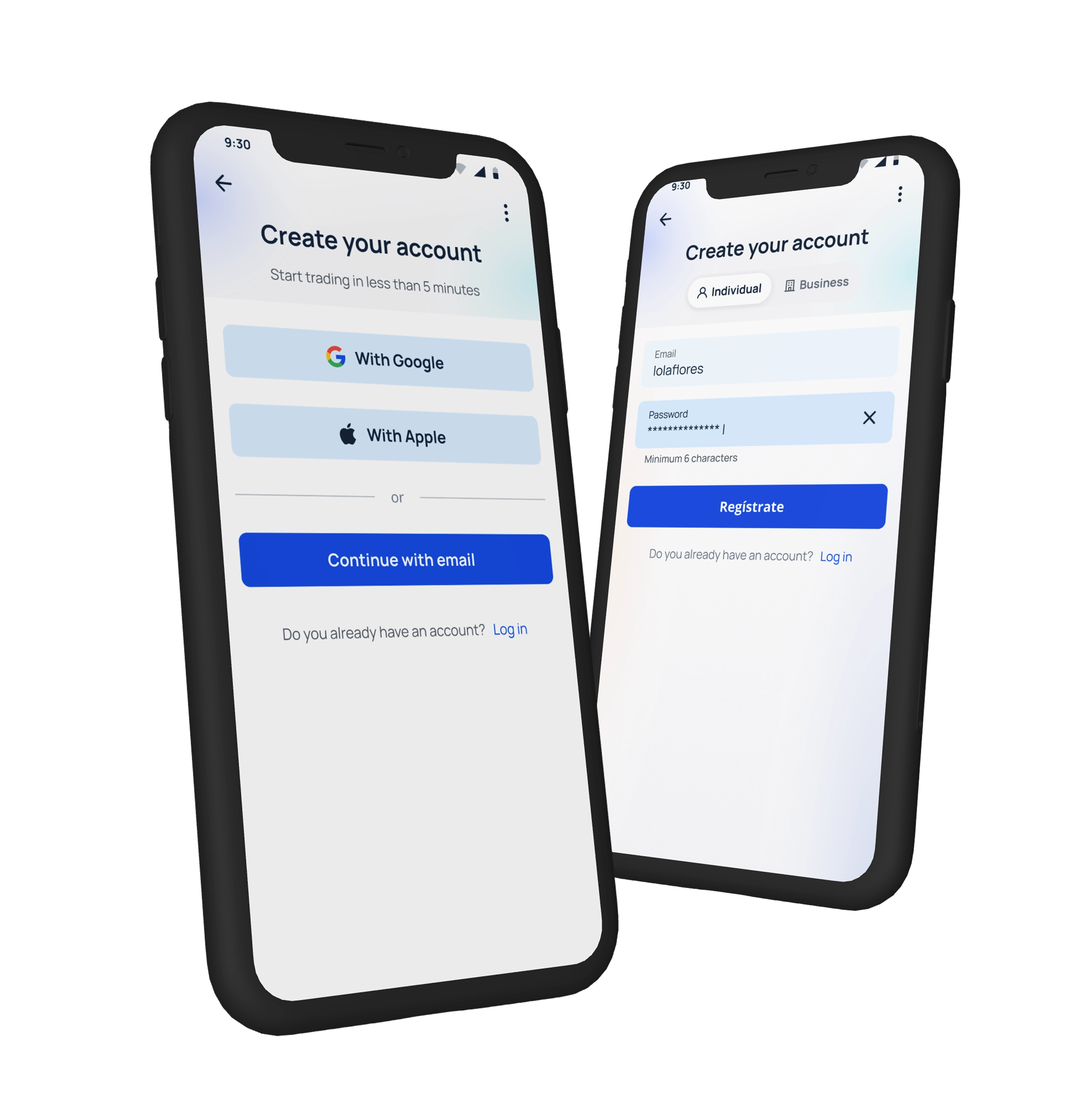
Open an account and complete KYC
Register on an AUSTRAC-registered exchange or MiCA-licensed platform. Verify with driver licence or passport plus selfie — required under AML law.
Step 2
Deposit AUD via PayID or card
Use PayID/Osko for instant local funding, or card/Apple Pay/Google Pay on supported platforms. International CASPs may accept card in EUR/USD.
Step 3
Buy your chosen crypto-asset
Select BTC, ETH, USDT, XRP, ADA or another asset. Review spread and fees before confirming. DCA suits long-term holders.

Step 4
Hold on-platform or withdraw to your wallet
Keep assets on-exchange for trading or withdraw on-chain — verify network and address. Export trades for ATO records.
Bit2Me products available in Australia
Services
8 of 10 products available in Australia
8
Available
2
Not available
- Available
Deposit with credit, debit, or prepaid card
- Available
Instant purchase with Card
- Available
Deposit with bank transfer
- Available
Transfers between own wallets
- Available
Deposits with cryptocurrencies
- Available
Transfers between Bit2Me users
- Not available
Withdrawal with bank transfer
- Available
Exchange between cryptocurrencies
- Available
Cryptocurrency withdrawals
- Not available
Crypto Mastercard debit card














Payment methods in Australia
With Bit2Me, you can buy and sell crypto using the methods available for this market, depending on the operations enabled in your country.
Local bank transfers
Credit and debit cards
Digital wallets and mobile pay
How to invest in cryptocurrencies in Australia?
Investing in crypto in Australia is easier than you think
Register, verify your account and choose how much to invest to buy Bitcoin, Ethereum and other cryptocurrencies from any device on a MiCA-regulated European platform.
Why Bit2Me lets you sleep at night
If you buy crypto from Australia and want European-regulated custody alongside local options, Bit2Me offers MiCA CASP authorisation, 400+ assets, insurance on qualifying custodial balances and card funding — operating since 2014 without known custody security incidents in its public record.
Crypto that doesn't stain you
Bit2Me complies with KYC/AML and is registered with the Bank of Spain: your operations don't mix with illicit-origin funds on a supervised platform.
Headquartered in Spain, not a tax haven
Bitcoinforme S.L. operates under European law with the CNMV as its direct supervisor.
Free, automatic tax report
Download it from the app or web for every tax year you've traded, at no extra cost. It generates itself from your activity.
No security incidents since 2014
Five consecutive independent audits back our operational soundness.
Human support in your language
24/7 support in your language, with a phone line (+34 910 91 37 88) and people — not bots — answering from Spain.
A platform that doesn't go down
Multi-region high availability, 24/7, 365 days a year, with ~100 ms average response.
Your funds, when you decide
Withdraw to your own wallet at any time. No lock-in, no penalty.
$150M insurance on custody
Assets in Bit2Me Custody are insured for $150M (USD), with segregated cold storage and multisig + HSM FIPS 140-2.
Trust and compliance
Bit2Me operates under European supervision with recognised security certifications.
Operational since 2014
First Spanish Fintech to obtain the MiCA License


Operational since 2014
First Spanish Fintech to obtain the MiCA License
Crypto guides in other countries
Explore crypto guides tailored to other markets.




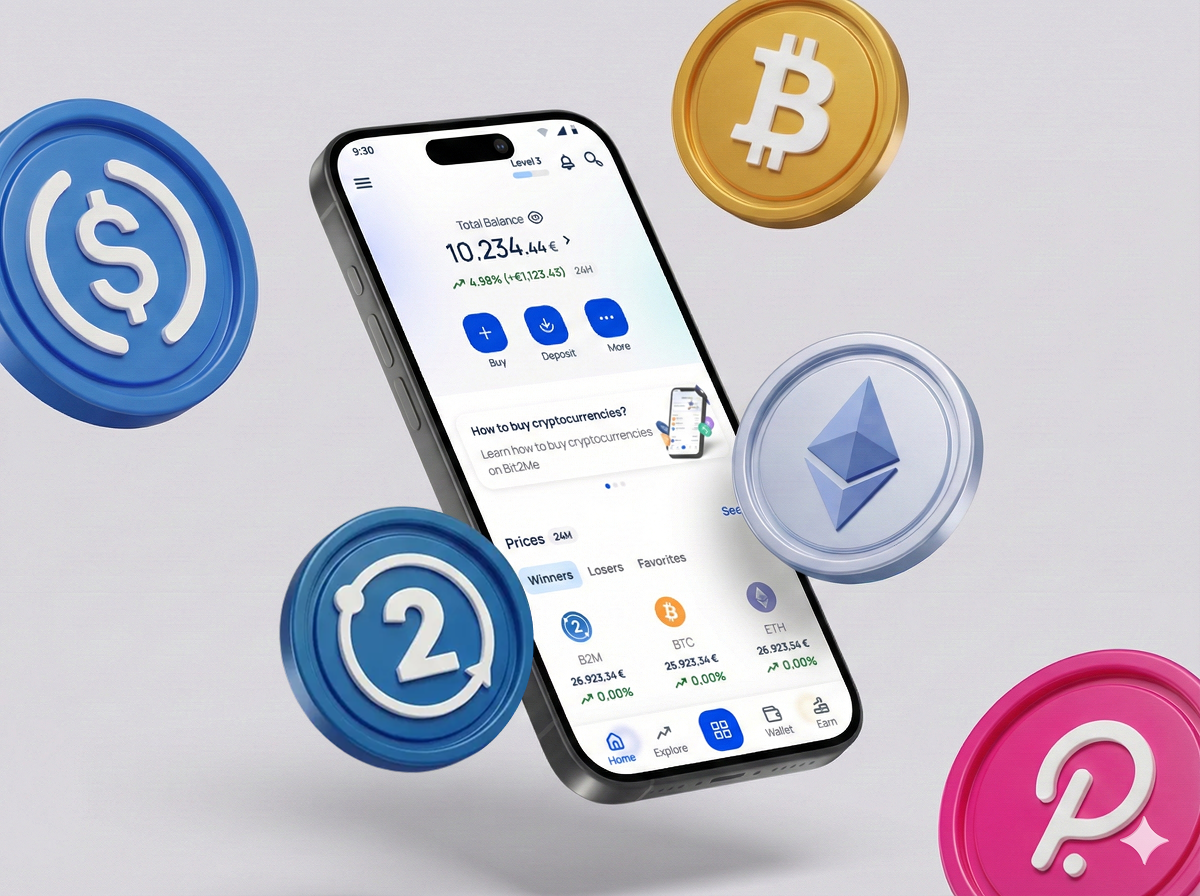
Get started in Australia with Bit2Me
Free account, buying methods available for your market, and 400+ cryptocurrencies under European supervision.
Frequently asked questions
Sources
- AUSTRAC — Digital currency exchange registration
austrac.gov.au
- ASIC — Crypto-assets guidance
asic.gov.au
- ATO — Crypto asset investments and CGT
ato.gov.au
- RBA — New Payments Platform (PayID/Osko)
rba.gov.au
Educational information; not financial or tax advice. Always verify with official sources.