Cryptocurrencies in Dominica: buying guide 2026
- Currency
- XCD
- Legal status
- Legal and regulated (MiCA)
- Supervisor
- Financial Services Unit (FSU)
 Dominica
Overview in Dominica
Buying cryptocurrencies in Dominica is increasingly part of how residents diversify savings, receive remittances from family abroad or access global digital assets beyond traditional bank products. Bitcoin, Ethereum, USDT, XRP and Cardano appear in investment conversations across Roseau, Portsmouth and the diaspora in London, New York and Toronto — yet most online guides ignore the local context: the East Caribbean dollar peg, the Virtual Asset Business Act (VABA), FSU registration rules and a tax system without capital-gains tax. This hub gathers what matters before you explore each asset in depth.
Dominica enacted the Virtual Asset Business Act (VABA) No. 1 of 2022 on 2 June 2022, harmonised with other Eastern Caribbean Currency Union (ECCU) members under ECCB guidance. The Financial Services Unit (FSU) registers and supervises virtual asset businesses operating in or from Dominica, with AML/KYC obligations and client-fund safeguards. That does not ban retail holding: individuals may buy and custody crypto through compliant providers. The ECCB clarifies that private cryptocurrencies are not legal tender — the EC dollar (XCD) and the regional DCash CBDC pilot are — and publishes risk advisories without prohibiting personal use.
Operationally, Dominica's economy runs on the East Caribbean dollar, pegged at EC$2.70 to US$1, which shapes how residents think about dollar-linked stablecoins and Bitcoin priced in USD. Funding international platforms typically means bank transfer or card from institutions such as the National Bank of Dominica or Republic Bank, sometimes complemented by Apple Pay or Google Pay. Tax is handled by the Inland Revenue Division: there is no capital-gains tax, but commercial crypto income may fall under general income tax. The sections below unpack regulation, market context, tax, security and the step-by-step buying process.
Key facts
- Currency
- XCD
- Legal status
- Legal and regulated (MiCA)
- Supervisor
- Financial Services Unit (FSU)
- Tax authority
- Inland Revenue Division
Crypto regulation in Dominica: VABA 2022, FSU and the ECCU framework
The legal baseline is the Virtual Asset Business Act (VABA) No. 1 of 2022, published in the Official Gazette on 2 June 2022. Any person who offers or operates virtual asset business in or from Dominica must register with the Financial Services Unit (FSU) unless an exemption applies. Registration brings AML/CFT duties — customer identification, transaction monitoring, record-keeping and cooperation with supervisors — plus client-fund protection requirements outlined in the Act.
The VABA was drafted under ECCB coordination to align ECCU members with FATF Recommendation 15 on virtual assets. Dominica joined the regional DCash CBDC pilot in 2021; DCash is explicitly excluded from the Act's definition of "virtual asset" because it is central-bank money. Private Bitcoin, Ethereum or USDT remain separate products — legal to hold through compliant channels, but not backed by the State.
For retail users, the practical takeaway is to prefer FSU-registered VASPs when operating locally, or international platforms with MiCA authorisation and transparent KYC when accessing a broader catalogue. The ECCB continues to warn about volatility and schemes it does not supervise; that is investor education, not a ban on personal ownership.
Educational best practice — not legal advice — is to verify FSU registration before large deposits, export trade history, enable two-factor authentication and never share seed phrases with anyone claiming to be "support". Offshore platforms without identifiable supervision increase counterparty risk if a dispute arises.
The crypto market in Dominica: XCD peg, tourism and diaspora remittances
Dominica's market is small by population — roughly 72,000 people — but globally connected through tourism, agriculture exports and a wide diaspora. The fixed XCD/USD peg means residents already think in dollar terms for imports, hotel pricing and overseas tuition, which partly explains interest in USDT and Bitcoin as globally traded assets. Unlike hyperinflation economies, the motivator is diversification and cross-border value transfer, not escaping a collapsing currency.
Roseau and Portsmouth concentrate retail adoption; families receiving remittances from the United Kingdom, United States or Canada explore on-chain rails alongside traditional money-transfer operators. Eco-tourism branding ("Nature Island") attracts international visitors who occasionally pay or tip in crypto, though merchants still invoice primarily in EC dollars. There is no domestic equivalent of Europe's SEPA — bank transfer and card remain the practical on-ramps to international exchanges.
Bitcoin and Ethereum dominate search interest, followed by stablecoins and payment-oriented tokens such as XRP. Dominica has no retail ban on particular tokens beyond what a compliant provider chooses not to list. Public debate sometimes mixes the Citizenship by Investment programme with crypto marketing — separate from the legality of buying BTC on a registered or MiCA-licensed platform as a private investor.
Taxation of crypto in Dominica: no capital gains and Inland Revenue guidance
Dominica imposes no capital-gains, wealth or inheritance tax, which distinguishes it from many larger jurisdictions. Typical retail trading profits therefore face no dedicated capital-gains levy. There is also no standalone crypto-tax statute; instead, general income tax principles may apply when crypto activity constitutes business or commercial income rather than personal investment.
Progressive income tax rates (roughly 15% to 35% depending on bracket) can apply to trading conducted as a business, mining at scale or professional advisory services. Simply buying Bitcoin or USDT, holding without commercial intent and selling later may fall outside business income — but the line depends on frequency, volume and intent. Keep dated records: asset, quantity, XCD/USD price, fees and counterparty.
Even without capital-gains tax, good record-keeping supports banking relationships and any future policy change. Export CSV histories from your exchange. Staking or earn rewards may create taxable income when received if classified as business revenue. This section is educational; consult the Inland Revenue Division and a qualified adviser for your situation.
This information is educational and does not replace professional tax advice. Always consult your tax authority before filing.
Security and custody: protecting crypto as a Dominica resident
Security has two layers: market risk (volatility, scams, failed projects) and operational risk (phishing, exchange insolvency, lost keys). FSU registration and MiCA licensing address operational standards for providers — AML programmes, custody rules, incident reporting — but never remove price risk. Verify who supervises your platform before the first deposit.
Bit2Me, as a reference European platform, has operated since 2014 without custody security incidents in that period, complements custody with insurance on qualifying balances, and supports two-factor authentication plus fraud monitoring. That is not a bank deposit guarantee: crypto remains a risky asset class. Larger holders often keep a trading balance on-exchange and move long-term savings to a hardware wallet they control.
Personal hygiene remains universal: use app-based 2FA instead of SMS where possible, never share seed phrases, bookmark exchange URLs, and hang up on "support" calls requesting remote access. English-language support on a MiCA CASP reduces friction when a wire from a local bank in Dominica is delayed. For self-custody, buy hardware wallets from official distributors.
Ready to buy in Dominica?
Create your free account, choose a method available for your market, and get started in minutes.
- Bank transfer
- Card
- Apple Pay
- Google Pay
How to buy cryptocurrencies in Dominica
Three steps to get started with your local currency on a regulated platform.
Step 1
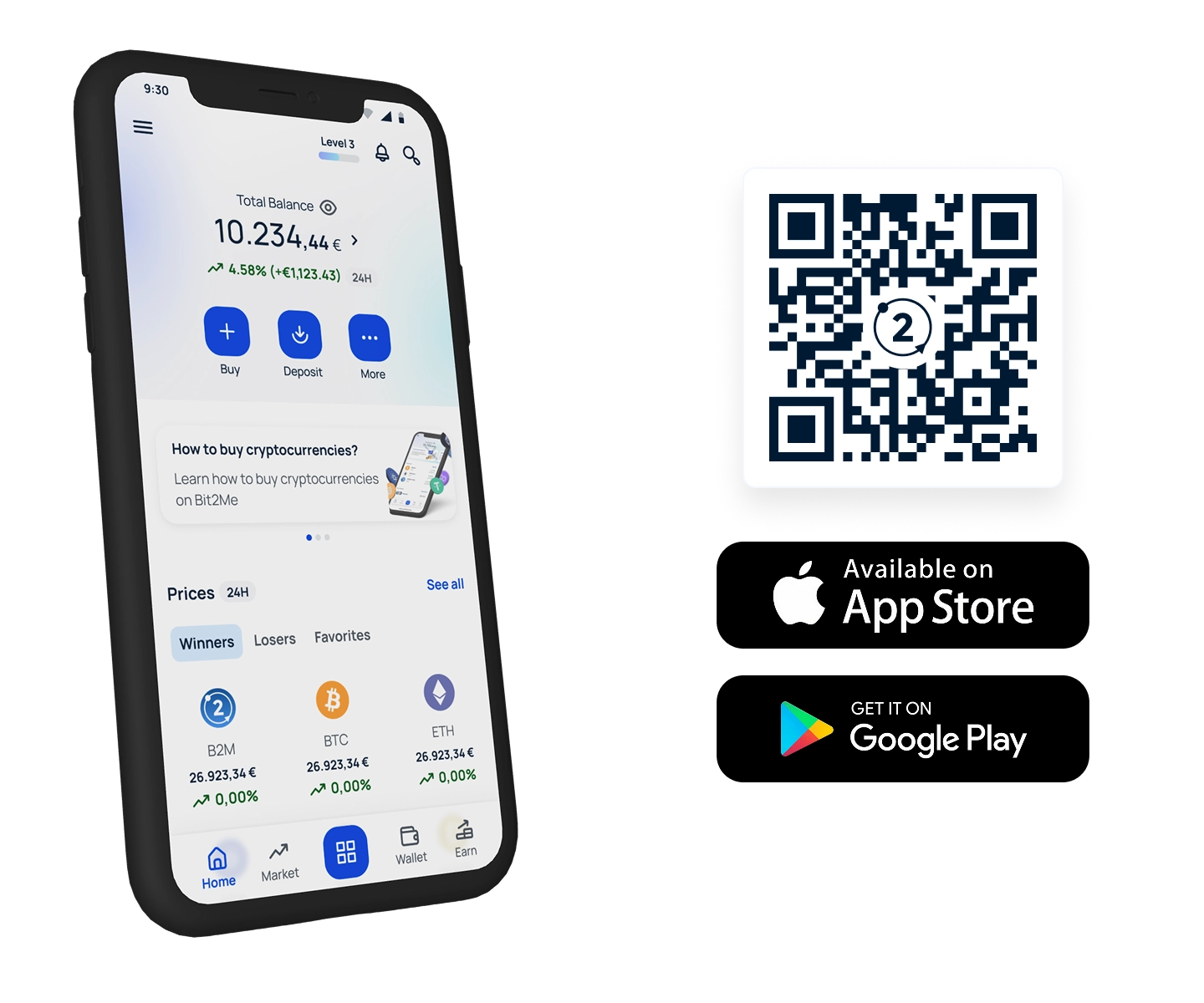
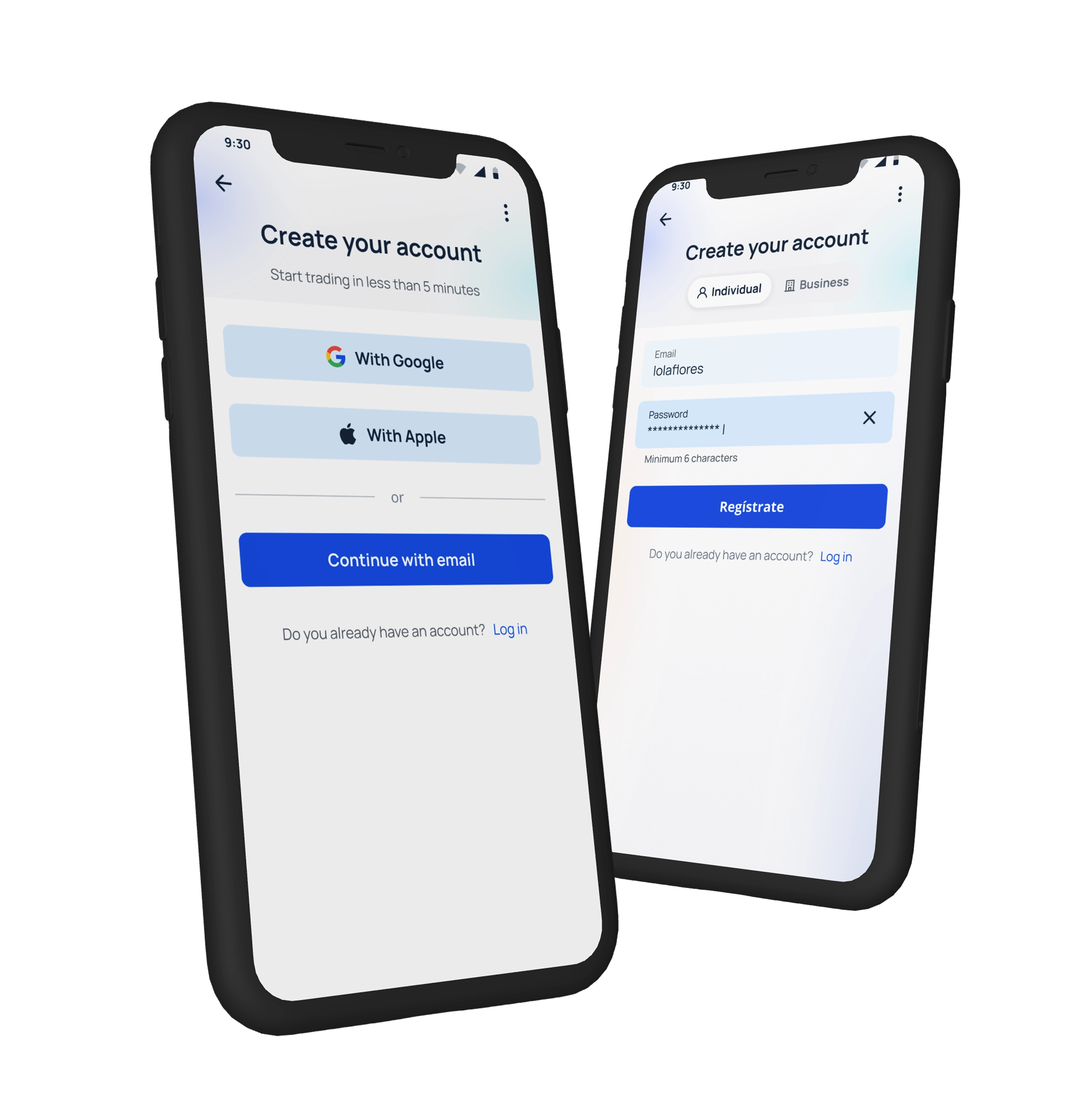
Open an account and complete KYC
Register on an FSU-registered VASP or a MiCA-licensed international platform such as Bit2Me with a secure password. Complete identity verification (KYC) with passport or Dominica national ID and a selfie — a legal AML requirement. Without KYC you cannot deposit or withdraw.
Step 2
Fund via bank transfer or card
Initiate a bank transfer from your XCD account (converted at the USD peg or bank FX rate) or use debit/credit card, Apple Pay or Google Pay if supported. Cards suit quick first purchases; transfers suit larger amounts. Confirm minimums and fees before sending.
Step 3
Buy your chosen crypto-asset
Open the market or converter, pick Bitcoin, Ethereum, USDT, XRP, Cardano or another of 400+ assets, and enter a USD amount or crypto quantity. Review price, spread and fees before confirming. Recurring buys help DCA investors smooth entry over time.
Step 4
Keep custody on-platform or in your wallet
After purchase, assets sit in your exchange account ready to sell or convert. For self-custody, withdraw to your wallet address — verify network and characters; mistakes are irreversible. Many users keep a spending balance on-exchange and cold-store the rest.
Bit2Me products available in Dominica
Services
8 of 10 products available in Dominica
8
Available
2
Not available
- Available
Deposit with credit, debit, or prepaid card
- Available
Instant purchase with Card
- Available
Deposit with bank transfer
- Available
Transfers between own wallets
- Available
Deposits with cryptocurrencies
- Available
Transfers between Bit2Me users
- Not available
Withdrawal with bank transfer
- Available
Exchange between cryptocurrencies
- Available
Cryptocurrency withdrawals
- Not available
Crypto Mastercard debit card








Payment methods in Dominica
With Bit2Me, you can buy and sell crypto using the methods available for this market, depending on the operations enabled in your country.
Local bank transfers
Credit and debit cards
Digital wallets and mobile pay
How to invest in cryptocurrencies in Dominica?
Investing in crypto in Dominica is easier than you think
Register, verify your account and choose how much to invest to buy Bitcoin, Ethereum and other cryptocurrencies from any device on a MiCA-regulated European platform.
Why Bit2Me lets you sleep at night
If you buy crypto from Dominica, doing it through a MiCA-licensed European CASP matters: card and bank funding options, EEA supervision alongside your local FSU framework, insurance on qualifying custodial balances, and a track record since 2014 without custody security incidents. Bit2Me brings those pieces together for English-speaking Caribbean residents who want a broad catalogue without offshore uncertainty.
Crypto that doesn't stain you
Bit2Me complies with KYC/AML and is registered with the Bank of Spain: your operations don't mix with illicit-origin funds on a supervised platform.
Headquartered in Spain, not a tax haven
Bitcoinforme S.L. operates under European law with the CNMV as its direct supervisor.
Free, automatic tax report
Download it from the app or web for every tax year you've traded, at no extra cost. It generates itself from your activity.
No security incidents since 2014
Five consecutive independent audits back our operational soundness.
Human support in your language
24/7 support in your language, with a phone line (+34 910 91 37 88) and people — not bots — answering from Spain.
A platform that doesn't go down
Multi-region high availability, 24/7, 365 days a year, with ~100 ms average response.
Your funds, when you decide
Withdraw to your own wallet at any time. No lock-in, no penalty.
$150M insurance on custody
Assets in Bit2Me Custody are insured for $150M (USD), with segregated cold storage and multisig + HSM FIPS 140-2.
Trust and compliance
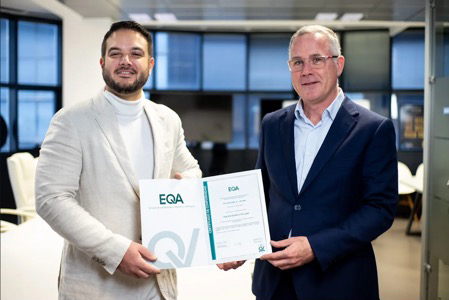
Bit2Me operates under European supervision with recognised security certifications.
Operational since 2014
First Spanish Fintech to obtain the MiCA License


Operational since 2014
First Spanish Fintech to obtain the MiCA License
Crypto guides in other countries
Explore crypto guides tailored to other markets.

Get started in Dominica with Bit2Me
Free account, buying methods available for your market, and 400+ cryptocurrencies under European supervision.
Frequently asked questions
Sources
- Virtual Asset Business Act No. 1 of 2022 (Official Gazette)
dominica.gov.dm
- Financial Services Unit — Dominica
fsu.gov.dm
- ECCB — Understanding Cryptocurrency in the ECCU
eccb-centralbank.org
- Inland Revenue Division — Dominica
ird.gov.dm
Educational information; not financial or tax advice. Always verify with official sources.