Cryptocurrencies in India: buying guide 2026
- Currency
- INR
- Legal status
- Legal with restrictions
- Supervisor
- FIU-IND (Financial Intelligence Unit)

 India
IndiaOverview in India
India's crypto market is enormous yet tightly framed: tens of millions of users trade virtual digital assets (VDAs) while policymakers emphasise taxation, AML registration and RBI consumer warnings rather than an outright ban. After the Supreme Court set aside the 2018 banking circular in 2020, on-ramps returned via UPI, IMPS and cards — though payment availability shifts as banks and NPCI update policies. This hub explains regulation, the 30% tax regime, TDS and practical buying paths before each asset spoke.
FIU-IND registers VDA service providers under PMLA amendments (2022): KYC, AML reporting and suspicious transaction monitoring are mandatory for exchanges serving India. The RBI repeats that VDAs are not legal tender and carry risk, but does not prohibit holding or trading on compliant platforms. SEBI may separately regulate tokenised securities.
Tax dominates the local story: Section 115BBH imposes a flat 30% rate on VDA gains (plus surcharge/cess) with limited loss offsetting, and Section 194S applies 1% TDS on many transfers. International MiCA CASPs offer card/EUR access when INR rails fail. Sections below cover payments, FIU rules, market notes, tax, security and buying steps.
Key facts
- Currency
- INR
- Legal status
- Legal with restrictions
- Supervisor
- FIU-IND (Financial Intelligence Unit)
- Tax authority
- CBDT / Income Tax Department
UPI, IMPS and cards: funding crypto from India
UPI (Unified Payments Interface) enables instant INR transfers from apps like PhonePe, Google Pay or Paytm — when an FIU-registered exchange supports UPI and the payer bank allows it. Availability fluctuates; always check the live deposit screen.
IMPS/NEFT bank transfer to exchange accounts remains the fallback when UPI is blocked. Debit/credit cards work on domestic and international platforms with issuer fees. MiCA platforms such as Bit2Me typically use card or foreign-currency transfer, not UPI.
Never pay INR to individuals promising "OTC USDT" on Telegram — use FIU-registered exchanges or licensed international CASPs only.
FIU-IND registration, RBI stance and compliance expectations
VDA service providers must register with FIU-IND as reporting entities, implement KYC (PAN typically required), file STRs and maintain records. Using unregistered apps increases fraud and enforcement risk.
RBI circulars caution consumers that VDAs lack sovereign backing and that banks should apply existing AML standards — not a retail ban. Policy evolution continues; follow official Ministry of Finance releases, not rumour channels.
India's VDA market: youth adoption, diaspora remittances and USDT
India consistently ranks among top countries by estimated crypto users, driven by mobile-first trading, Web3 developer communities and diaspora remittance experiments. BTC and ETH anchor portfolios; USDT supports trading pairs; XRP features in cross-border narratives; Cardano has educator communities.
Heavy taxation reshaped behaviour toward long-term holding and reporting discipline rather than high-frequency altcoin flipping — though retail volume remains significant on registered exchanges.
Section 115BBH (30% tax) and 1% TDS under Section 194S
VDA gains are taxed at a flat 30% under Section 115BBH plus surcharge and cess, without treating VDAs like equity long-term benefits. Losses generally cannot offset other income; VDA losses may only offset other VDA gains per current rules.
1% TDS under Section 194S applies to consideration paid on VDA transfers (with thresholds/exceptions). Exchanges deduct on trades; reconcile via Form 26AS when filing ITR. Every swap may trigger both TDS and gain calculation.
Educational only; engage a chartered accountant familiar with Schedule VDA requirements.
This information is educational and does not replace professional tax advice. Always consult your tax authority before filing.
Scams, exchange risk and custody for Indian users
WhatsApp/Telegram "double your Bitcoin" fraud is endemic. Verify FIU registration, enable 2FA, and reject remote-access "support". RBI warnings remind users VDAs are volatile and unbacked by government guarantee.
Split trading balances on registered exchanges from long-term cold storage. MiCA CASPs add EU supervision for users choosing international custody.
Ready to buy in India?
Create your free account, choose a method available for your market, and get started in minutes.
- Bank transfer
- Card
- Apple Pay
- Google Pay
How to buy cryptocurrencies in India
Three steps to get started with your local currency on a regulated platform.
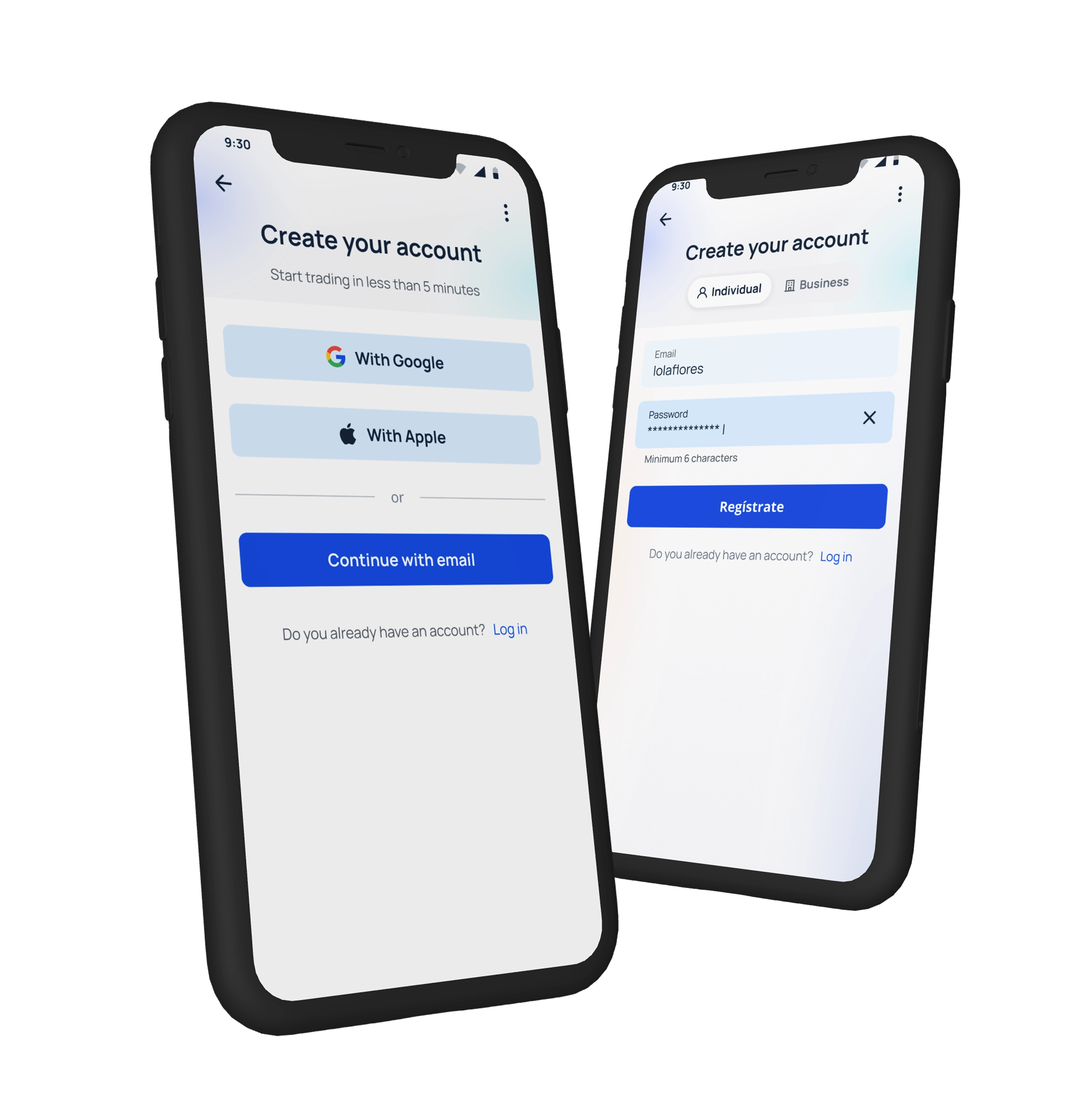
Step 1
Register on an FIU-registered or MiCA-licensed platform
Complete KYC with PAN, Aadhaar where accepted, ID and selfie. Unregistered apps are higher risk.
Step 2
Deposit INR via UPI, IMPS or card
Use live deposit options on your exchange. If UPI fails, try IMPS/NEFT or card; international CASPs use card/EUR.
Step 3
Buy your VDA
Select BTC, ETH, USDT, XRP, ADA or others. Note TDS and 30% tax implications on future gains.

Step 4
Hold, report and withdraw responsibly
Export trade CSV for ITR. Withdraw INR to bank or crypto to your wallet — verify network.
Bit2Me products available in India
Services
8 of 10 products available in India
8
Available
2
Not available
- Available
Deposit with credit, debit, or prepaid card
- Available
Instant purchase with Card
- Available
Deposit with bank transfer
- Available
Transfers between own wallets
- Available
Deposits with cryptocurrencies
- Available
Transfers between Bit2Me users
- Not available
Withdrawal with bank transfer
- Available
Exchange between cryptocurrencies
- Available
Cryptocurrency withdrawals
- Not available
Crypto Mastercard debit card















Payment methods in India
With Bit2Me, you can buy and sell crypto using the methods available for this market, depending on the operations enabled in your country.
Local bank transfers
Credit and debit cards
Digital wallets and mobile pay
How to invest in cryptocurrencies in India?
Investing in crypto in India is easier than you think
Register, verify your account and choose how much to invest to buy Bitcoin, Ethereum and other cryptocurrencies from any device on a MiCA-regulated European platform.

Why Bit2Me lets you sleep at night
When INR rails or asset lists feel limiting, Bit2Me offers MiCA CASP authorisation, 400+ VDAs, insurance on qualifying custodial balances and card funding — with English support and EU supervision alongside FIU-registered Indian venues.
Crypto that doesn't stain you
Bit2Me complies with KYC/AML and is registered with the Bank of Spain: your operations don't mix with illicit-origin funds on a supervised platform.
Headquartered in Spain, not a tax haven
Bitcoinforme S.L. operates under European law with the CNMV as its direct supervisor.
Free, automatic tax report
Download it from the app or web for every tax year you've traded, at no extra cost. It generates itself from your activity.
No security incidents since 2014
Five consecutive independent audits back our operational soundness.
Human support in your language
24/7 support in your language, with a phone line (+34 910 91 37 88) and people — not bots — answering from Spain.
A platform that doesn't go down
Multi-region high availability, 24/7, 365 days a year, with ~100 ms average response.
Your funds, when you decide
Withdraw to your own wallet at any time. No lock-in, no penalty.
$150M insurance on custody
Assets in Bit2Me Custody are insured for $150M (USD), with segregated cold storage and multisig + HSM FIPS 140-2.
Trust and compliance
Bit2Me operates under European supervision with recognised security certifications.
Operational since 2014
First Spanish Fintech to obtain the MiCA License


Operational since 2014
First Spanish Fintech to obtain the MiCA License


Crypto guides in other countries
Explore crypto guides tailored to other markets.




Get started in India with Bit2Me
Free account, buying methods available for your market, and 400+ cryptocurrencies under European supervision.
Frequently asked questions
Sources
- FIU-IND — Virtual Digital Asset service providers
fiuindia.gov.in
- Income Tax Department — FAQ on taxation of VDAs
incometax.gov.in
- NPCI — UPI product overview
npci.org.in
Educational information; not financial or tax advice. Always verify with official sources.