Cryptocurrencies in Malta: buying guide 2026
- Currency
- EUR
- Legal status
- Legal and regulated (MiCA)
- Supervisor
- Malta Financial Services Authority (MFSA)
 Malta
MaltaOverview in Malta
Buying cryptocurrencies in Malta is legal, accessible in euros and, since MiCA fully harmonised EU rules, increasingly supervised like any other financial service. Thousands of Maltese residents — in Valletta, Sliema, St Julian's or Gozo — have tried Bitcoin, Ethereum or stablecoins such as USDT, whether to diversify savings, move value across borders or explore digital assets alongside a euro salary. Yet the information available is often misleading: corporate press releases about which exchange incorporated on the island do not explain how to fund a retail account from BOV, what the Commissioner for Revenue expects on disposal, or which platform offers everyday custody with clear fees. This hub separates retail onboarding from Malta's licensing industry and gathers what you need before diving into each crypto-asset.
Malta shares with the European Union the MiCA Regulation (Markets in Crypto-Assets), which requires authorisation for crypto-asset service providers and raises standards of transparency, governance and client protection. The MFSA (Malta Financial Services Authority) is the competent authority for authorising and supervising CASPs on the island, building on Malta's earlier Virtual Financial Assets framework that made the jurisdiction a magnet for blockchain firms. For you as a user, the practical consequence is clear: prefer platforms with MiCA authorisation — whether MFSA-licensed or EU-passported — because they must segregate client funds, run AML programmes and answer to a supervisor you can identify before depositing euros.
Beyond regulation, Malta offers operational advantages as a euro island: SEPA transfers from Bank of Valletta, HSBC Malta or APS Bank reach MiCA platforms within hours; cards and Apple Pay or Google Pay speed up first purchases; and there is no FX layer when funding in euros. Taxation, however, sits with the Commissioner for Revenue (CFR): gains from virtual currency may be treated as capital or trading income depending on frequency, organisation and intent — not on Malta's "blockchain island" marketing. The sections below unpack MFSA supervision, the local market shaped by iGaming and international services, CFR classification, security and a step-by-step path to buying with confidence.
Key facts
- Currency
- EUR
- Legal status
- Legal and regulated (MiCA)
- Tax authority
- Commissioner for Revenue (CFR)
Crypto regulation in Malta: MiCA, MFSA and the licensing cluster
The starting point for legality is Regulation (EU) 2023/1114 — MiCA, applicable across all twenty-seven member states from 30 December 2024. MiCA creates a single framework for token issuers, stablecoins and CASPs (Crypto-Asset Service Providers): authorisation, minimum capital, conflict-of-interest policies, segregated custody and plain-language risk warnings for retail clients. A platform operating in Malta without the corresponding MiCA licence cannot legally offer custody, exchange or advice in the European market once transition ends. Malta's earlier Virtual Financial Assets (VFA) Act and related rules brought many firms to the island; those entities must now align with MiCA or cease EEA services.
The MFSA authorises and supervises CASPs headquartered or passporting from Malta, publishes register entries, conduct expectations and warnings about unauthorised activity. Malta hosts a dense cluster of licensed firms serving the wider EEA — which explains headlines about "blockchain island" — but that density confuses retail users. A globally marketed app may contract with a Lithuanian, Spanish or Maltese entity; your terms of service and the supervising authority of your counterparty matter for complaints. If a firm holds MFSA authorisation and passports across the EU, you gain traceability: national licensing history plus harmonised European supervision.
For the private investor, MiCA introduces tangible changes: white papers for certain tokens must meet minimum standards; significant stablecoins face stricter reserve and liquidity rules; providers must separate client assets, undergo audits and maintain business-continuity plans. The MFSA can impose sanctions, withdraw authorisations or alert the public about unlicensed operators. This does not remove market risk — Bitcoin can fall twenty per cent in a week — but it reduces counterparty risk: the chance that a platform vanishes with your funds without clear accountability. iGaming operators and international business services on the island increase crypto awareness; they do not exempt retail users from MiCA conduct rules or AML checks.
Before sending a SEPA transfer from your Maltese IBAN, verify MiCA status on the MFSA crypto register or the EU passporting list — not legacy VFA marketing from 2018. Educational best practice — not legal advice — is to choose authorised CASPs, read custody terms, enable two-factor authentication and confirm whether balances qualify for insurance described in the platform's policy. Operating with an offshore exchange without an EU service passport may leave you without effective recourse to the MFSA if a dispute arises.
The Maltese crypto market: euro island, iGaming and international flows
Malta's economy is built on euro-denominated services exports — online gaming, financial services, shipping and remote-work hubs — with a multilingual workforce comfortable with digital banking and cross-border payments. Crypto interest among residents spans long-term holding in euros, stablecoin treasuries for USD-denominated supplier invoices, and developer experimentation with smart contracts; it does not mean replacing euro cash at local shops or paying bus fares in Bitcoin. Unlike inflation-hit markets where stablecoins act as daily money, Malta's euro membership provides monetary stability and the dominant motivation is often portfolio diversification, tech curiosity or access to assets hard to replicate through traditional banking products.
The typical Maltese investor profile leans medium-to-long term: recurring euro purchases, accumulation on regulated platforms and less orientation toward high-frequency day trading than in some Asian or US retail markets. Universal euro banking — nearly everyone holds a current account and card with BOV, HSBC Malta, APS Bank or a digital bank — simplifies onboarding: verify identity, send a SEPA transfer from your usual IBAN and hold Bitcoin in custody within hours. SEPA is the default funding rail for medium and large amounts; cards, Revolut Malta and mobile wallets suit smaller first tickets. Because Malta is euro-native, FX friction is lower than in non-euro EU peers funding the same CASP.
Bitcoin and Ethereum concentrate most volume and search interest, followed by stablecoins such as USDT and USDC — useful for dollar-linked liquidity between SEPA cycles — and a long tail of altcoins tied to DeFi, layer 2 or sector narratives. Malta does not restrict which tokens a resident may buy on authorised platforms, except those a provider delists for compliance. The availability of 400+ crypto-assets on EU-passported exchanges such as Bit2Me reflects diversified demand without opening multiple non-EEA accounts. St Julian's and the gaming corridor employ thousands who encounter crypto in treasury or payroll contexts; retail buyers still need consumer-grade UX, English support and transparent euro fees separate from corporate licensing tours.
Taxation of crypto in Malta: CFR and capital vs trading classification
The Commissioner for Revenue (CFR) does not treat all virtual currency activity identically. Malta assesses gains based on whether disposals are capital in nature — occasional, organised as investment — or trading income when frequency, volume, leverage or professional organisation suggest a trading business. Simply holding crypto without selling does not, by itself, trigger income tax on unrealised gains; tax events typically arise when you dispose — sell to euro, swap one crypto for another, or use crypto to pay for goods or services where a gain exists.
Swapping Ethereum for USDT, Bitcoin for Cardano or any crypto-to-crypto trade can realise a gain CFR may assess even if you never touch euros. Keep a chronological record: date, quantity, euro market value, fees and counterparty. Staking, earn or lending rewards may be taxable when received depending on product structure and CFR guidance — log euro value at credit. Maltese residency status, total income and whether activity is personal or through a company affect rates and reporting obligations.
Under DAC8 and EU data-exchange rules, MiCA CASPs increasingly share transaction data with tax authorities, improving traceability without making crypto illegal. Non-compliance raises the cost of undeclared trading. If you make few disposals per year, a spreadsheet with CSV exports from your exchange may suffice; frequent traders should consult a qualified Maltese tax adviser. This section is educational and does not replace CFR publications or professional advice — verify your situation before filing.
Malta's tax story differs from Spain's IRPF model or Italy's flat substitute tax: classification is fact-driven rather than a single statutory rate on every crypto gain. Document honestly whether you DCA monthly and sell once a year versus running daily trades from a dedicated desk — CFR and courts look at patterns, not slogans. When in doubt, disclose activity and seek advice rather than assuming "blockchain island" status creates a special retail exemption.
This information is educational and does not replace professional tax advice. Always consult your tax authority before filing.
Security and custody: protecting crypto as a Maltese resident
Security in crypto has two dimensions: market risk (volatility, scams, failed projects) and operational risk (hacks, phishing, lost keys). No MiCA licence removes the first, but it mitigates the second when you choose a provider subject to custody, cybersecurity and audit requirements. Living in a licensing hub does not make you immune — scammers target Malta's expat and gaming communities with clone sites, Telegram "investment groups" and fake MFSA verification pages.
Bit2Me, as a reference European platform, has operated since 2014 and, according to its public record, has not registered custody security incidents since then; it complements custody with insurance on qualifying balances, two-factor authentication and fraud monitoring. That is not equivalent to Malta's bank deposit guarantee scheme: crypto-assets remain risky and insurance covers specific scenarios in the policy, not any market loss. For larger amounts, many users combine regulated exchange custody for daily use with periodic withdrawal to a hardware wallet where they control the private key.
Universal good practices apply: enable 2FA with an app rather than SMS when possible; never share seed phrases; verify URLs before login; distrust remote-access "support" calls. Malta's humid climate makes paper seed backups vulnerable — metal backup plates help for long-term cold storage. English-language support from a CASP you actually use beats a locally licensed brand you cannot reach when BOV flags your first SEPA to a new Lithuanian IBAN. Report incidents promptly and keep exchange tickets with timestamps for any future CFR or dispute file.
Ready to buy in Malta?
Create your free account, choose a method available for your market, and get started in minutes.
- SEPA transfer
- Card
- Apple Pay
- Google Pay
How to buy cryptocurrencies in Malta
Three steps to get started with your local currency on a regulated platform.
Step 1
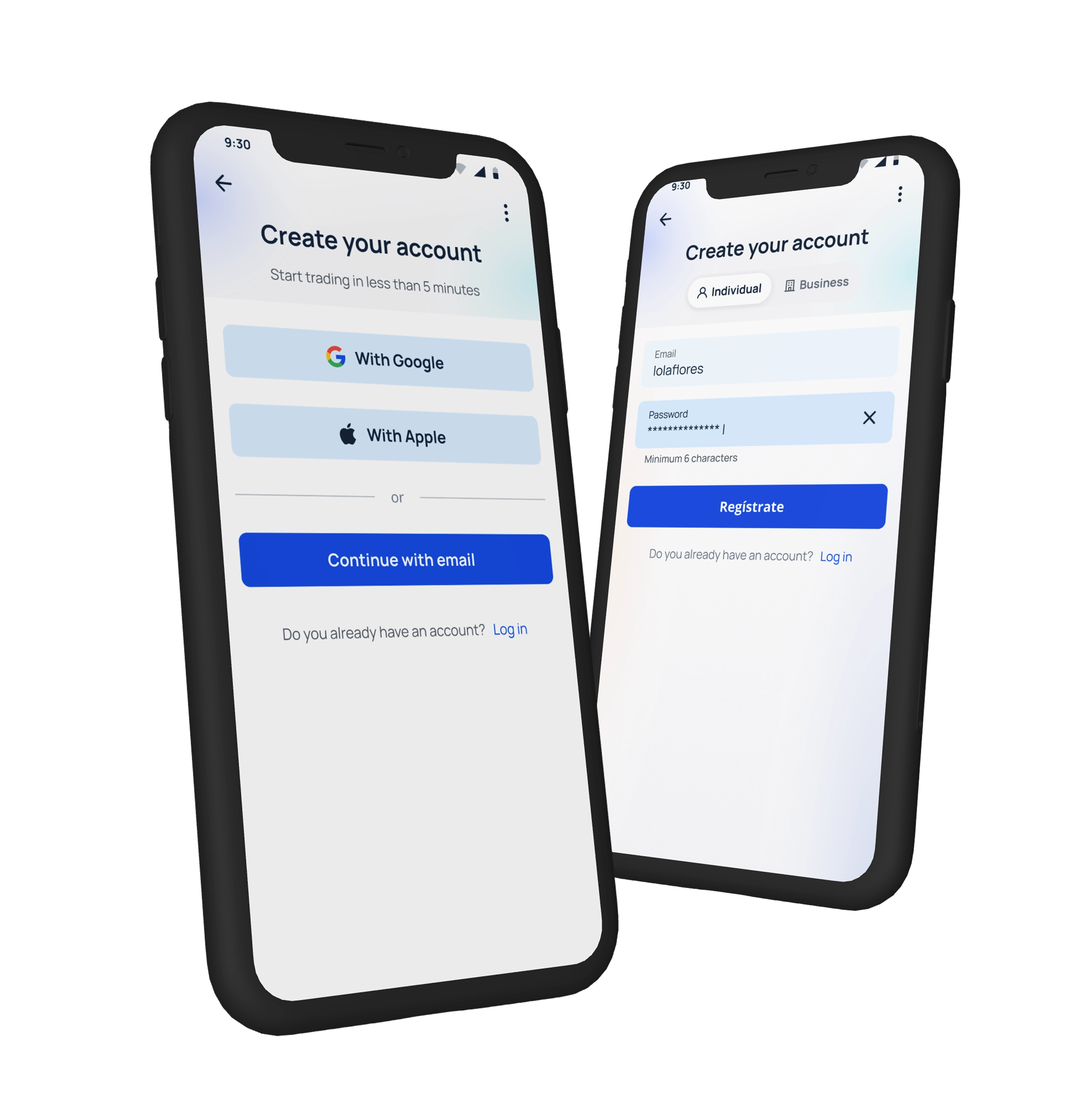
Create your account and complete verification (KYC)
Register on a platform with MiCA authorisation — such as Bit2Me — using email and a strong password. Complete identity verification (KYC): Maltese ID card or passport, selfie and, in some cases, proof of address. This is a mandatory anti-money-laundering requirement for all authorised providers; without KYC you cannot deposit euros or withdraw funds.
Step 2
Fund euros via SEPA, card or mobile wallet
Choose your payment method. A SEPA transfer from BOV, HSBC Malta, APS Bank or your digital bank is usually free or low-cost and arrives within business hours — your bank may review the first transfer to a new CASP IBAN. Debit or credit cards and Apple Pay or Google Pay are fastest for small first purchases but may carry a percentage fee. Check minimum and maximum limits before sending.
Step 3
Buy the crypto-asset you want
Navigate to the market or converter, select the asset (Bitcoin, Ethereum, USDT or another among 400+ available) and enter the amount in euros or crypto quantity. Review exchange rate, spread and fees before confirming. You can make a one-off purchase or set recurring buys (DCA) if the platform supports it — a common strategy among Maltese long-term holders.

Step 4
Custody on-platform or in your own wallet
After purchase, crypto stays in custody on your exchange account, ready to sell, convert or withdraw. If you prefer self-custody, request a withdrawal to your wallet address — verify network and address character by character; errors are irreversible. Test with a small amount first. Many users keep an operational balance on a regulated CASP and move long-term holdings to cold storage.
Bit2Me products available in Malta
Services
10 of 10 products available in Malta
10
Available
0
Not available
- Available
Deposit with credit, debit, or prepaid card
- Available
Instant purchase with Card
- Available
Deposit with bank transfer
- Available
Transfers between own wallets
- Available
Deposits with cryptocurrencies
- Available
Transfers between Bit2Me users
- Available
Withdrawal with bank transfer
- Available
Exchange between cryptocurrencies
- Available
Cryptocurrency withdrawals
- Available
Crypto Mastercard debit card









Payment methods in Malta
With Bit2Me, you can buy and sell crypto using the methods available for this market, depending on the operations enabled in your country.
Local bank transfers
Credit and debit cards
Digital wallets and mobile pay
How to invest in cryptocurrencies in Malta?
Investing in crypto in Malta is easier than you think
Register, verify your account and choose how much to invest to buy Bitcoin, Ethereum and other cryptocurrencies from any device on a MiCA-regulated European platform.
Why Bit2Me lets you sleep at night
If you buy cryptocurrencies in Malta, it is worth doing so with a provider that fits retail needs — not just licensing headlines: MiCA authorisation, euro deposits and withdrawals via SEPA, insurance on qualifying custodied balances, English support and an operating history since 2014 without custody security incidents in that period. Bit2Me brings those pieces together on one EU-regulated platform.
Crypto that doesn't stain you
Bit2Me complies with KYC/AML and is registered with the Bank of Spain: your operations don't mix with illicit-origin funds on a supervised platform.
Headquartered in Spain, not a tax haven
Bitcoinforme S.L. operates under European law with the CNMV as its direct supervisor.
Free, automatic tax report
Download it from the app or web for every tax year you've traded, at no extra cost. It generates itself from your activity.
No security incidents since 2014
Five consecutive independent audits back our operational soundness.
Human support in your language
24/7 support in your language, with a phone line (+34 910 91 37 88) and people — not bots — answering from Spain.
A platform that doesn't go down
Multi-region high availability, 24/7, 365 days a year, with ~100 ms average response.
Your funds, when you decide
Withdraw to your own wallet at any time. No lock-in, no penalty.
$150M insurance on custody
Assets in Bit2Me Custody are insured for $150M (USD), with segregated cold storage and multisig + HSM FIPS 140-2.
Trust and compliance
Bit2Me operates under European supervision with recognised security certifications.
Operational since 2014
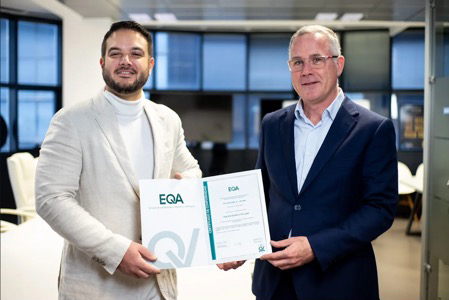
First Spanish Fintech to obtain the MiCA License


Operational since 2014
First Spanish Fintech to obtain the MiCA License
Crypto guides in other countries
Explore crypto guides tailored to other markets.


Get started in Malta with Bit2Me
Free account, buying methods available for your market, and 400+ cryptocurrencies under European supervision.
Frequently asked questions
Sources
- European Commission — Crypto-assets / MiCA
finance.ec.europa.eu
- CFR — Virtual currencies tax treatment
cfr.gov.mt
Educational information; not financial or tax advice. Always verify with official sources.